Clear Sky Science · en
Revisiting the greatness of Earth’s great oxidation
A Turning Point in Earth’s Breathable Air
The story of how Earth’s air became rich in oxygen is one of the most dramatic plot twists in our planet’s history. Around 2.4 billion years ago, the atmosphere shifted from almost no oxygen to levels that could eventually support complex life. But just how big was this “Great Oxidation Event,” and did it unfold as a single leap or a messy, back-and-forth struggle? This review pulls together the latest clues from ancient rocks, chemical fingerprints, and computer models to show that the rise of oxygen was far less straightforward—and far less certain—than many popular diagrams suggest.
From Barely Any Oxygen to an Ozone Shield
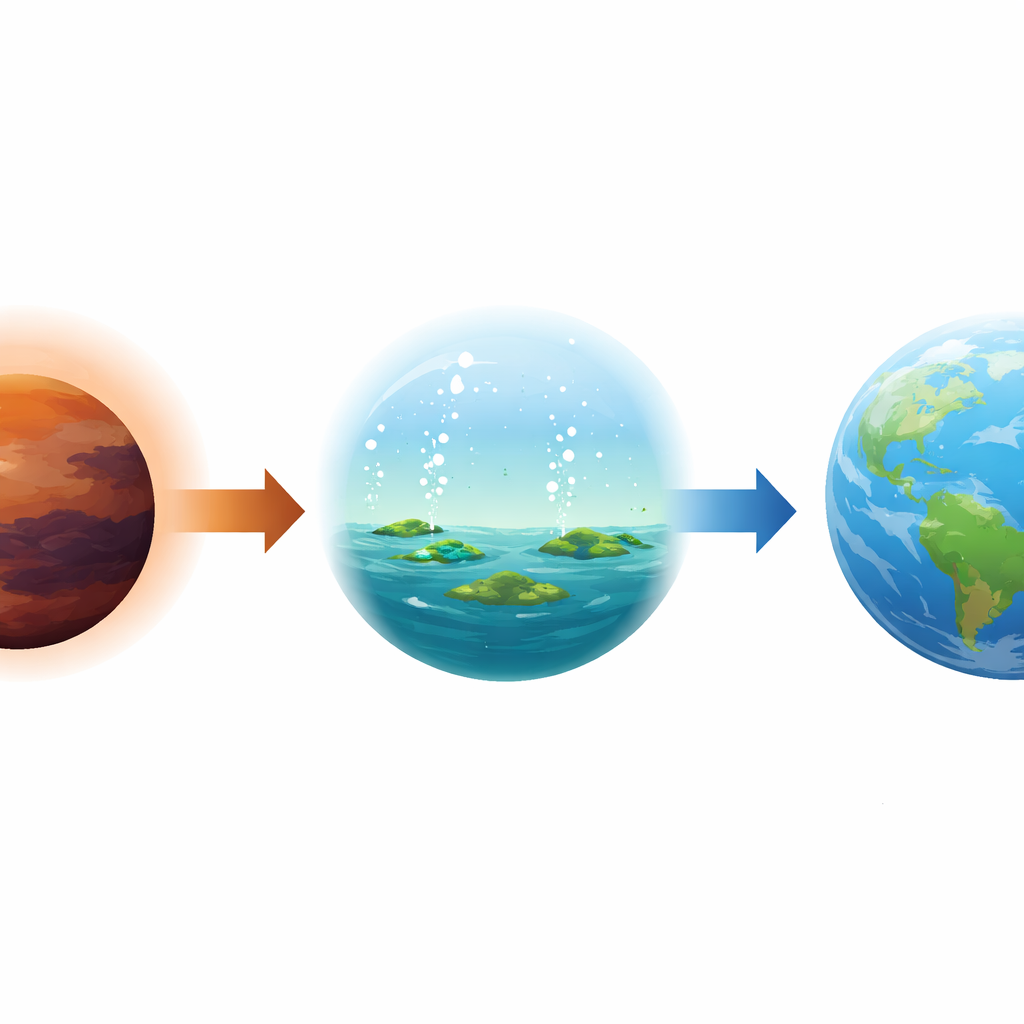
For most of Earth’s early history, the atmosphere contained only traces of free oxygen, even though microbes capable of using oxygen seem to have evolved long before the air changed. Geologists traditionally mark the Great Oxidation Event (GOE) by a distinctive sulfur signal disappearing from ancient sediments, which happens once oxygen crosses a very low threshold. That shift, combined with signs like the appearance of rusty red rocks on land, places the start of the GOE between about 2.5 and 2.4 billion years ago. As oxygen built up, it also formed an ozone layer, shielding surface life from damaging ultraviolet radiation and reshaping the chemistry of the atmosphere and rivers.
A Patchy and Problematic Record
Although scientists agree that oxygen rose during the GOE, they disagree strongly on how high it went and how steady it was. Some chemical indicators suggest oxygen may have climbed to a tiny fraction of modern levels, while others allow for the possibility that it briefly exceeded today’s concentration. On top of this, new sulfur evidence hints that oxygen levels may have swung up and down, with possible “Great Deoxygenation Events” after the first rise. The rock record is spotty: many layers are missing, disturbed, or altered by later processes, and different clues can be highly local—capturing conditions in a single bay or seafloor basin rather than the whole planet. As a result, plausible oxygen estimates for the GOE span several orders of magnitude.
Ice Ages, Nutrients, and Conflicting Clues
The GOE also overlaps with a series of ancient ice ages, including at least one episode where glaciers reached the tropics. Some models argue that rising oxygen helped trigger these deep freezes by destroying methane, a powerful warming gas. In turn, global ice cover could have slashed biological productivity, altering the balance between oxygen sources and sinks and pushing the atmosphere toward a new state. At the same time, a huge positive carbon isotope signal—the Lomagundi–Jatuli Event—has been interpreted by some as evidence for massive burial of organic carbon and a temporary oxygen “overshoot,” while others see it as a local coastal quirk. A growing toolkit of metal and isotope tracers was expected to resolve such debates, but instead it has revealed extra layers of complexity, including strong overprinting by later chemical reactions in the rocks.
Before and After the Great Change
Hints of oxygen appear in rocks hundreds of millions of years before the GOE, suggesting either early oxygen-producing microbes or alternative “dark oxygen” sources driven by minerals and radiation. If such pockets of oxygen existed, why did the atmosphere remain largely oxygen-poor for so long? Explanations range from low supplies of key nutrients like phosphorus to competition from microbes that did not release oxygen. Equally murky is the question of whether the GOE really ended around 2.0 billion years ago. Some chemical records imply a downturn in oxygen after the big carbon isotope excursion fades, while other data from intermediate ages point to continued or renewed oxygenation. In many cases, mid-Proterozoic signals once viewed as brief spikes may instead reflect a modest but persistent oxygen background.
Rethinking How We Reconstruct Ancient Air
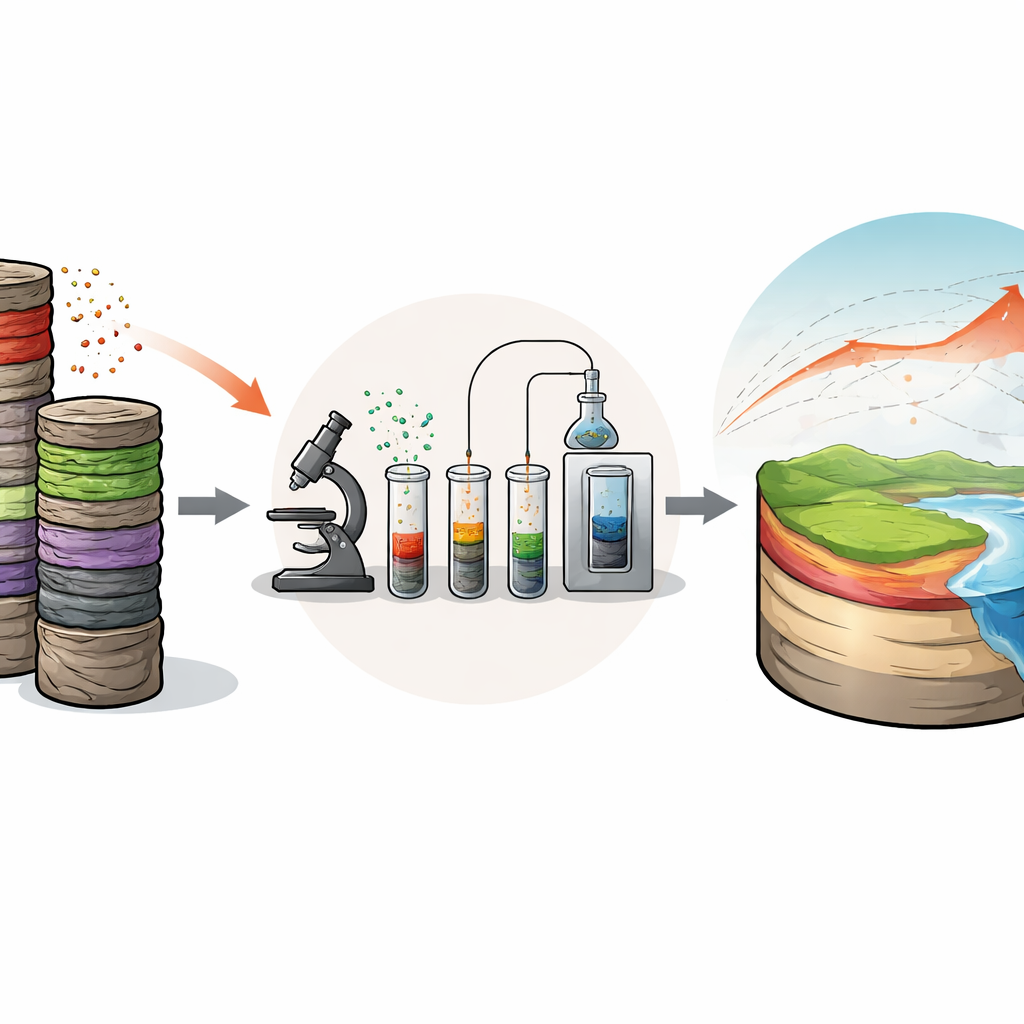
Rather than delivering a single neat oxygen curve, the review argues that today’s data allow many different, defensible histories for the GOE. Progress, the authors suggest, will come from three directions: better understanding how each chemical clue is created and altered; coordinated global sampling of comparable rock formations; and next-generation Earth system models that track oxygen as part of a dynamic, feedback-rich network involving life, climate, and the deep Earth. For non-specialists, the key message is that the Great Oxidation was indeed transformative, but its exact shape—how fast, how high, and how steady oxygen rose—remains one of the great open questions in Earth science. The “greatness” of the event may ultimately be defined less by a single number for oxygen concentration and more by how profoundly it reorganized the planet’s climate, chemistry, and living world.
Citation: Crockford, P.W., Sugiyama, I., Kipp, M.A. et al. Revisiting the greatness of Earth’s great oxidation. Commun Earth Environ 7, 348 (2026). https://doi.org/10.1038/s43247-026-03518-8
Keywords: Great Oxidation Event, ancient atmosphere, early life, Earth history, oxygen evolution