Clear Sky Science · en
Andean volcanism, ocean fertilization, marine ecosystem turnover, and global cooling in the Late Miocene
Volcanoes, Oceans, and an Ancient Cool-Down
The Late Miocene, about 7 to 5 million years ago, was a time when Earth’s climate cooled, ocean life reorganized, and great whales began their march toward giant size. This study asks a surprising question: could volcanoes along the Andes, by sprinkling nutrient-rich ash into the oceans, have helped feed marine life, pull carbon dioxide from the air, and nudge the planet toward cooler conditions? By tying together fossils, geochemical records, and sophisticated computer models, the authors explore how eruptions on land may have reshaped life and climate at sea.
Mountains That Feed the Sea
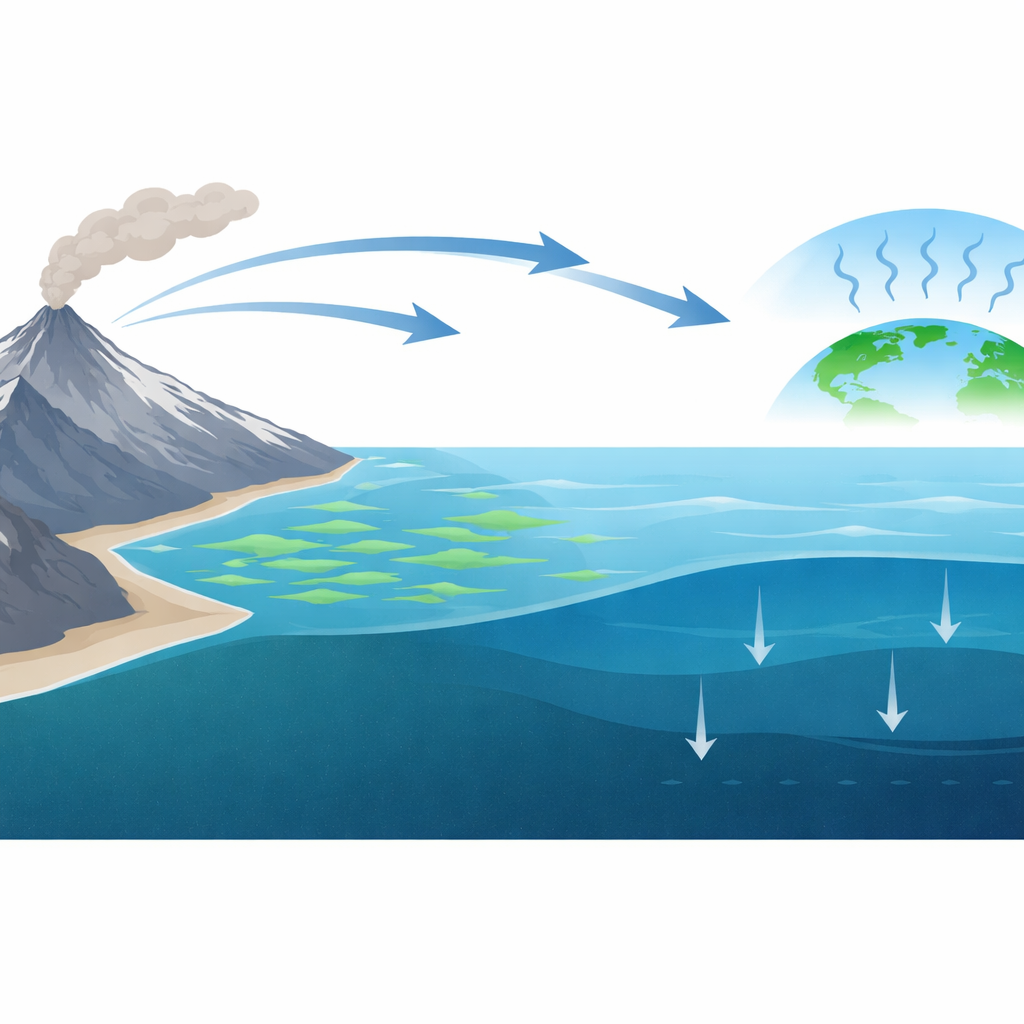
The Andes form the world’s longest active volcanic chain, towering over South America and sitting next to some of the planet’s most productive ocean regions, including the Humboldt Current and the Southern Ocean. When volcanoes there erupt explosively, they fling ash high into the atmosphere, where winds can carry it far over the sea. That ash is not just dust: it contains key nutrients such as iron, phosphorus, and silicon, which are often in short supply in surface waters. The study focuses on the Late Miocene, when Andean volcanism was especially intense. At the same time, global records show rising ocean productivity, widespread changes in marine ecosystems, falling atmospheric carbon dioxide, and overall cooling. The authors propose that repeated ash falls from the Andes helped fertilize the ocean, strengthening the link between life and climate.
Clues from Fossils and Ocean Mud
To test this idea, the researchers first combed through many independent records from around the world. Marine sediments in coastal Peru and Chile preserve ash-rich layers packed with microscopic algae (diatoms), sponge remains, and diverse vertebrate fossils, pointing to highly productive coastal seas and complex food webs. Global compilations of diatom remains, deep-ocean phosphate levels, and silica-rich deposits all show a marked rise in productivity during the Late Miocene. At the same time, records of whales and other large marine animals reveal a striking story: baleen whales rapidly increased in size, while extinction rates among marine megafauna climbed, especially into the Pliocene. These patterns suggest that sustained changes in ocean productivity and habitats—at least partly driven by nutrient delivery from land—placed powerful pressures on marine life.
Following Ash on the Wind and in the Water
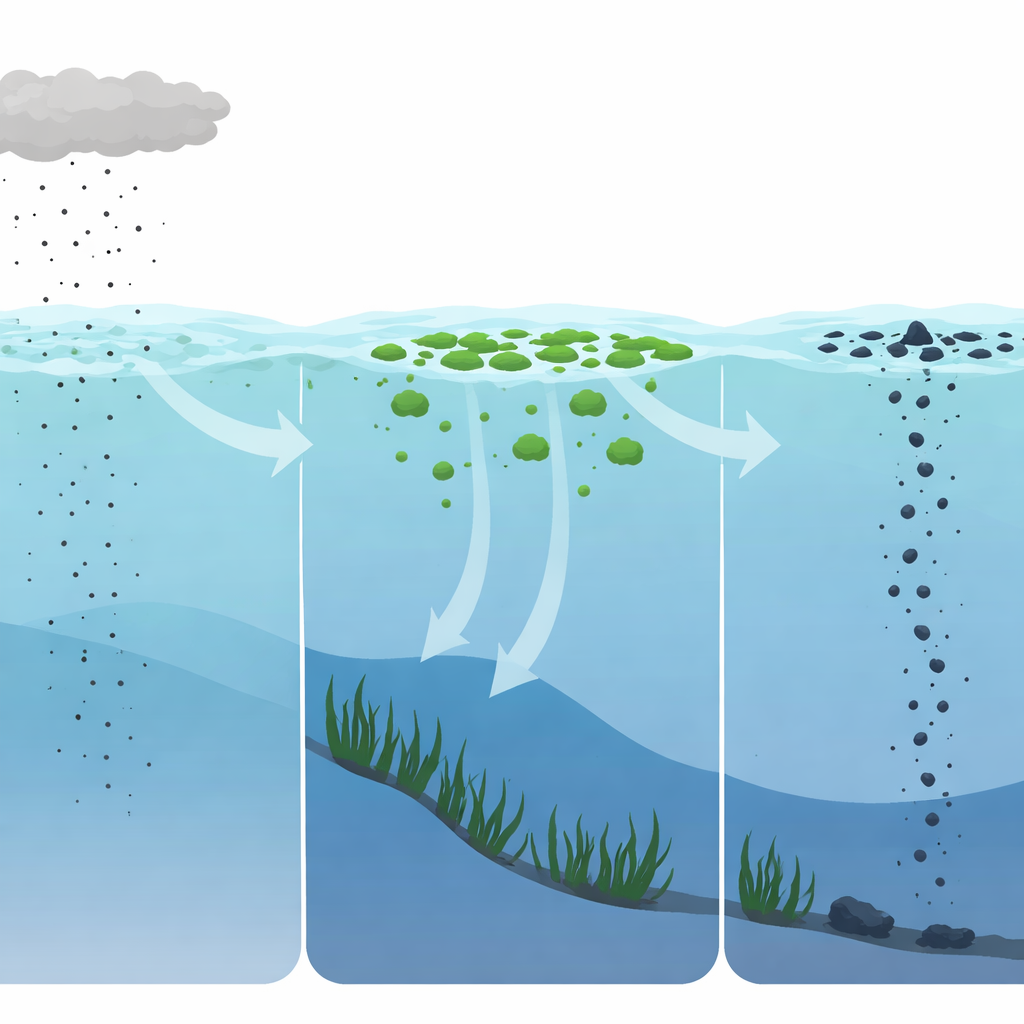
The team then turned to models to see whether Andean ash could reasonably have supplied enough nutrients to matter. Using an atmospheric transport model, they simulated how ash from the high Central Andes would travel under modern-like wind patterns. Most ash plumes were carried eastward over the South Atlantic and onward into the southern Indian Ocean, while a portion fell directly into the Pacific offshore of northern Chile. Next, they fed this ash-derived nutrient flux into an Earth system model that tracks ocean physics, biology, and carbon exchange. In short bursts representing individual eruptions, the model showed sharp increases in diatom blooms and extra uptake of carbon dioxide by the Southern Ocean. Repeated every few decades to centuries, these pulses built up a persistent boost to carbon export into deeper waters and sediments.
Long Memories in the Deep Ocean
Because the deep sea responds slowly, the authors also used a second, more idealized model capable of running for tens of thousands of years. This model followed nutrients and carbon as they were cycled through the ocean and buried in sediments. Single ash pulses caused only temporary drops in atmospheric carbon dioxide, as the deep ocean eventually returned stored carbon back to the surface. But when eruptions recurred frequently—especially when combined with increasing background dust from expanding arid regions—the model produced sustained declines of roughly 10 to 15 parts per million of carbon dioxide over several thousand years. While modest on their own, such reductions could become important when added to other processes active in the Late Miocene, such as mountain building, changing ocean circulation, and growing ice sheets.
How Ancient Ash May Have Helped Cool Earth
In the end, the study concludes that repeated Andean eruptions likely did more than darken ancient skies. By continually supplying iron- and phosphorus-rich ash to nutrient-poor Southern Ocean waters, they helped fuel diatom blooms, strengthen the biological pump that moves carbon into the deep ocean, and subtly lower atmospheric carbon dioxide. This fertilization, blended with rising dust inputs, shifting ocean currents, and feedbacks from expanding whale populations, could have contributed to the Late Miocene’s global cooling and the reshaping of marine ecosystems. The work highlights how tightly Earth’s solid, liquid, and living parts are intertwined—and how volcanic “fertilizer” from mountains can echo through the oceans and atmosphere for millennia.
Citation: Carrapa, B., Clementz, M.T., Cosentino, N.J. et al. Andean volcanism, ocean fertilization, marine ecosystem turnover, and global cooling in the Late Miocene. Commun Earth Environ 7, 335 (2026). https://doi.org/10.1038/s43247-026-03457-4
Keywords: Andean volcanism, ocean fertilization, Late Miocene cooling, Southern Ocean productivity, marine ecosystem change