Clear Sky Science · en
Pervasive contamination of the remote open ocean with anthropogenic zinc
Invisible Metal in a Seemingly Pristine Sea
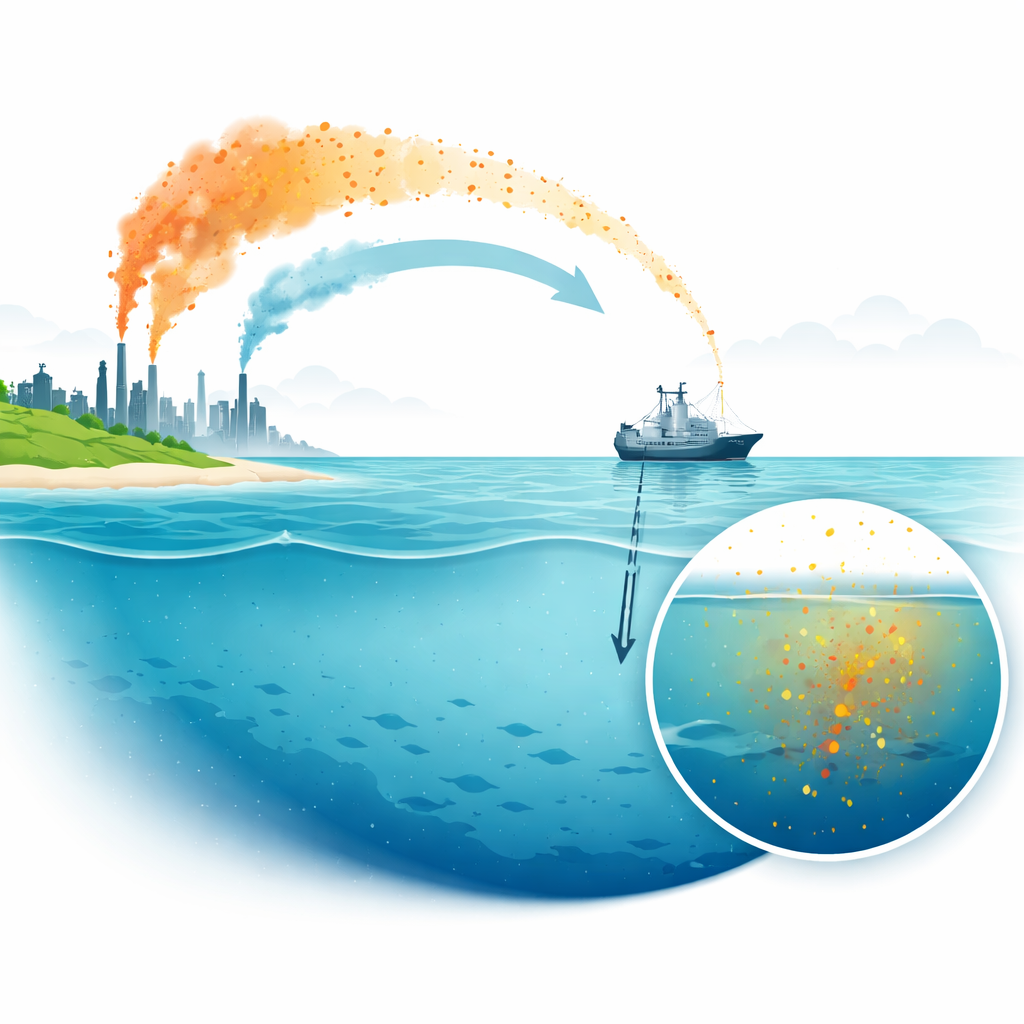
Far from busy coastlines, the middle of the South Pacific looks like one of the last untouched places on Earth. Yet this study reveals that even these remote blue waters are laced with a human fingerprint: a subtle but pervasive contamination by zinc, a metal released by industry and fossil fuel use. By tracking the chemical “accents” of zinc and lead in airborne dust and tiny marine particles, the authors show that pollution, not nature, now dominates an important part of the ocean’s metal cycle.
Why Zinc in the Ocean Matters
Zinc might sound like just another metal, but in the ocean it acts a bit like a vitamin. Microscopic plants, or phytoplankton, use it to run enzymes that help them tap into nutrients and draw carbon dioxide from the air. For years, oceanographers have puzzled over why the upper layers of warm, low-nutrient oceans carry unusually “light” zinc—zinc whose atoms are slightly different in mass from the global average. Some proposed that natural processes were selectively stripping “heavy” zinc from the water. Others suspected an extra dose of light zinc arriving from the atmosphere, but the evidence had been thin.
Following Dust Across the South Pacific
To untangle these possibilities, the researchers sailed across one of the most isolated stretches of ocean on Earth, between Chile and New Caledonia. Along the way they collected both airborne particles and suspended material from the upper 500 meters of seawater. Back in the lab, they carefully separated different particle types and measured not only how much zinc and lead they contained, but also the subtle variations in their isotopes—the different atomic forms of each element. Because industrial ores from different regions have distinctive isotope patterns, these measurements act like barcodes that can reveal where the metals came from.
A Pollution Signature in Every Sample
The zinc carried by marine particles turned out to be consistently lighter in its isotopic makeup than the zinc dissolved in surrounding seawater, and closely matched the airborne particles captured above the same region. The lead in those particles told a similar story. Its isotopes lined up along mixing paths between known industrial sources in Australia, South America, the United States, and China. In other words, the metals in the water column were closely linked to pollution-derived dust, not to rocks, river mud, or purely biological debris. When the authors compared zinc to other elements such as phosphorus, manganese, and aluminum, they found huge excesses of zinc that could not be explained by plankton growth, natural metal coatings, or mineral dust alone.
Weighing Natural and Human Sources
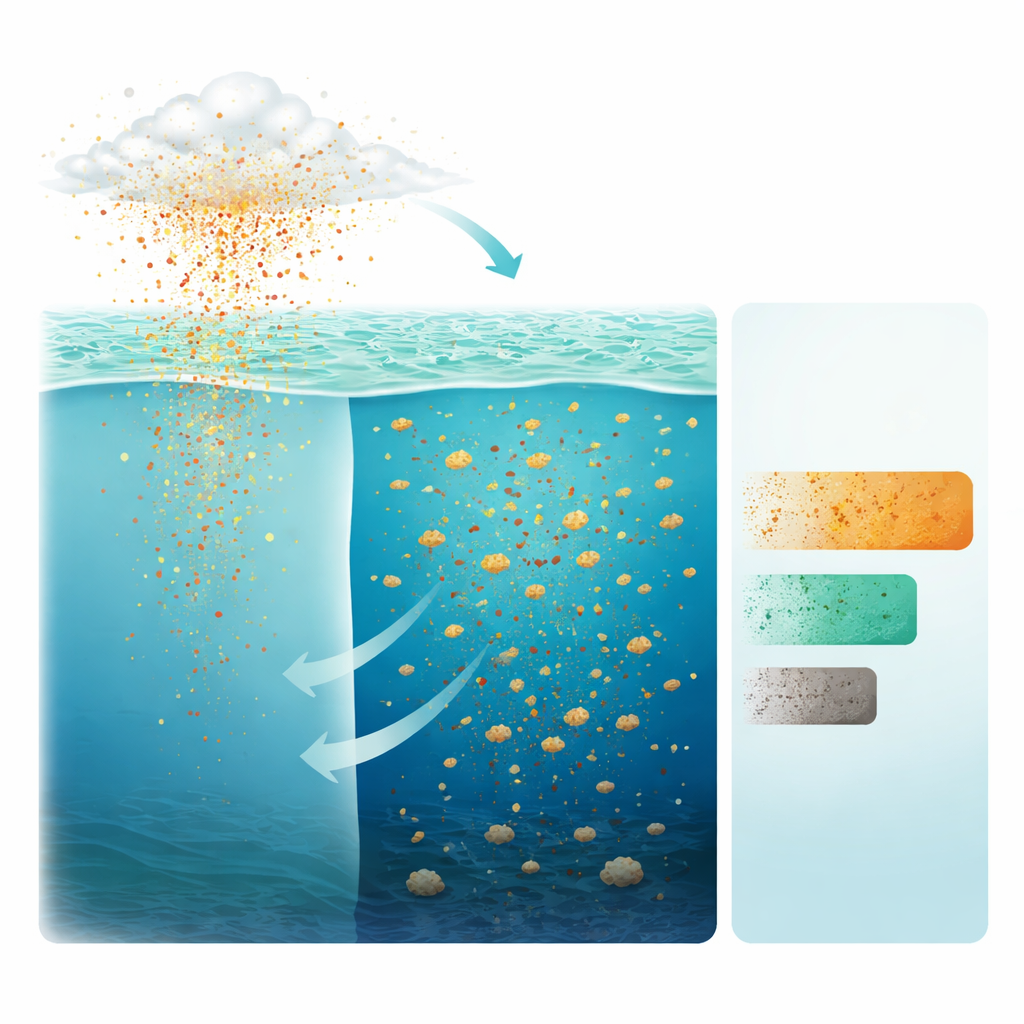
Using simple ratio-based models, the team estimated how much of the particulate zinc came from three broad sources: living material, natural metal oxides, and human-made aerosols. In more than four out of five samples, over 80 percent of the zinc was traced back to pollution. Calculations of the total zinc falling out of the atmosphere suggested that this human-driven supply is one to two orders of magnitude larger than the natural zinc delivered by mineral dust in this region, and rivals the contributions of rivers and seafloor vents on a global scale. Because zinc from these aerosols is highly soluble, it readily dissolves into the sunlit surface layer, where it can alter the isotopic balance and overall availability of this key micronutrient.
What This Means for Life in the Open Ocean
For a layperson, the central message is stark yet subtle: even in the most remote parts of the sea, the chemistry of essential nutrients is no longer purely natural. The study shows that human emissions of zinc-rich particles are now the dominant source of particulate zinc in the oligotrophic South Pacific, and likely explain the unusually light zinc signature that chemists see throughout much of the upper ocean. As industrial zinc emissions are expected to rise, this extra metal could shift nutrient balances and subtly reshape plankton communities that underpin marine food webs and help regulate Earth’s climate. The ocean may still look pristine from above, but at the atomic level it is increasingly stamped with our industrial age.
Citation: Benaltabet, T., Gosnell, K.J., de Souza, G.F. et al. Pervasive contamination of the remote open ocean with anthropogenic zinc. Commun Earth Environ 7, 373 (2026). https://doi.org/10.1038/s43247-026-03425-y
Keywords: ocean pollution, atmospheric aerosols, trace metals, zinc cycle, South Pacific Ocean