Clear Sky Science · en
Volcano-hydrothermal phosphorus pulses fostered ocean oxidation during Ediacaran phosphogenesis in South China
Ancient seas and the air we breathe
Today the oxygen in our air quietly sustains every breath we take, but more than 600 million years ago Earth’s oceans were only beginning to make that transformation possible. This study looks at rocks from South China to ask a big question: how did nutrients in the ancient sea, delivered in part by volcanoes, help flip Earth from a low‑oxygen world into one that could support complex animals? 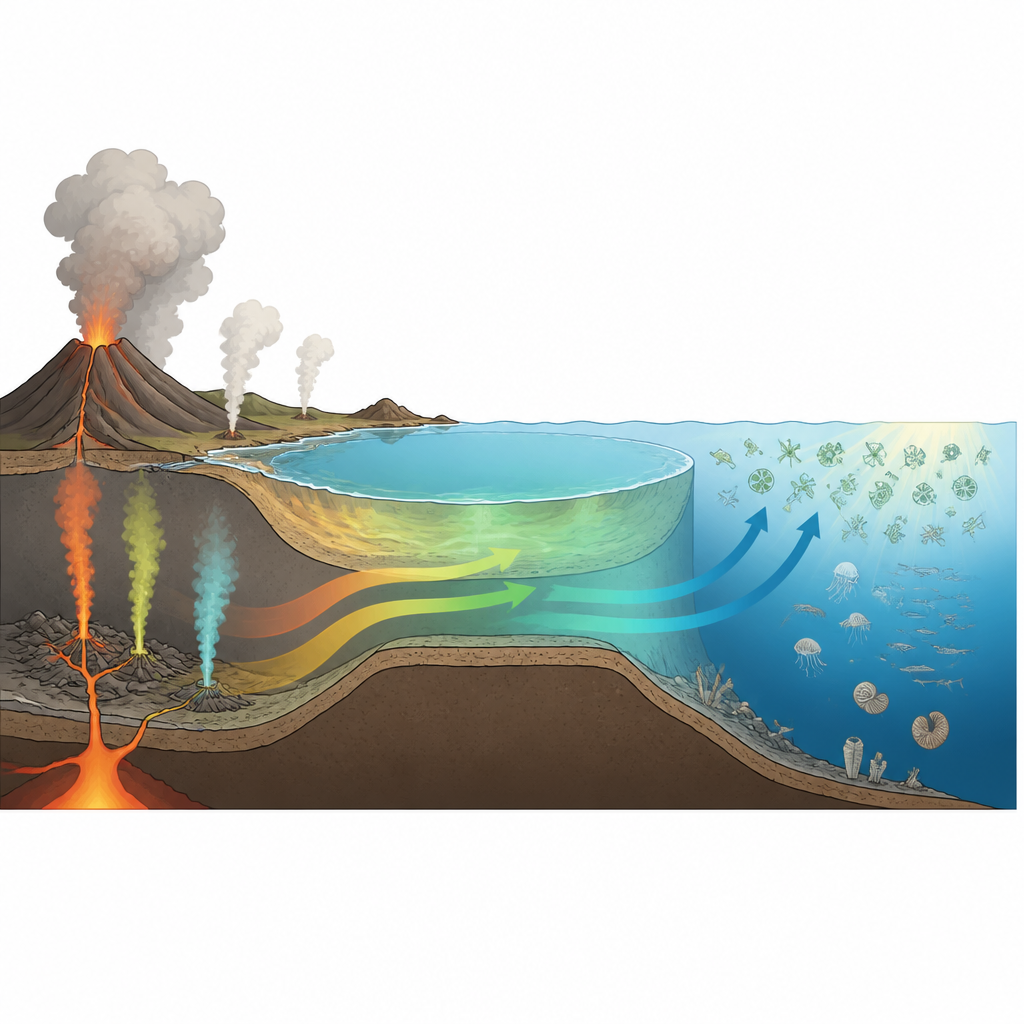
Clues locked in phosphate rich rocks
The researchers focused on phosphorites, rocks rich in the nutrient phosphorus, preserved in the Ediacaran Doushantuo Formation at a site called Longxi in South China. Phosphorus is a key ingredient for life and often limits how much microscopic plant life the ocean can support. By examining rock textures under the microscope and measuring the chemistry of 63 samples, they reconstructed how these phosphorites formed in a shallow but somewhat restricted sea that lay on the margin of the ancient Yangtze continental block.
Volcanoes as nutrient suppliers
Several lines of evidence point to an important role for volcanic and hydrothermal activity in supplying phosphorus to these seas, in addition to normal river input from land. The rocks contain shards of volcanic glass, unusually high ratios of uranium to thorium, and rare earth element patterns typical of fluids that circulate through hot seafloor rocks. High ratios of silica to aluminum also suggest that much of the dissolved material did not come from ordinary clay washed off the continents. Mass‑balance calculations indicate that regular weathering alone could not have delivered enough phosphorus fast enough to build the thick phosphorite layers that are observed, whereas short‑lived, powerful pulses from volcanic‑hydrothermal systems could.
Three stages in a changing seafloor
Rock textures and chemical fingerprints reveal that phosphorite formation at Longxi unfolded in three main stages. First, during a hydrothermal and reducing stage, phosphorus‑rich fluids from volcanic sources entered largely low‑oxygen bottom waters and precipitated inorganic phosphate minerals while supporting blooms of cyanobacteria and algae. Next came an episodic concentration stage, when sea‑level changes and the growth of the mineral dolomite helped focus and lock in phosphorus. As magnesium was drawn into newly forming dolomite, it became easier for apatite, the main phosphate mineral, to crystallize within alternating bands of dolostone and phosphorite. Finally, in a re‑enrichment stage, the water column became more oxygen‑rich, microbial communities continued to trap and convert phosphorus, and distinctive microbial structures such as oncoids and filament networks grew within the deposits. 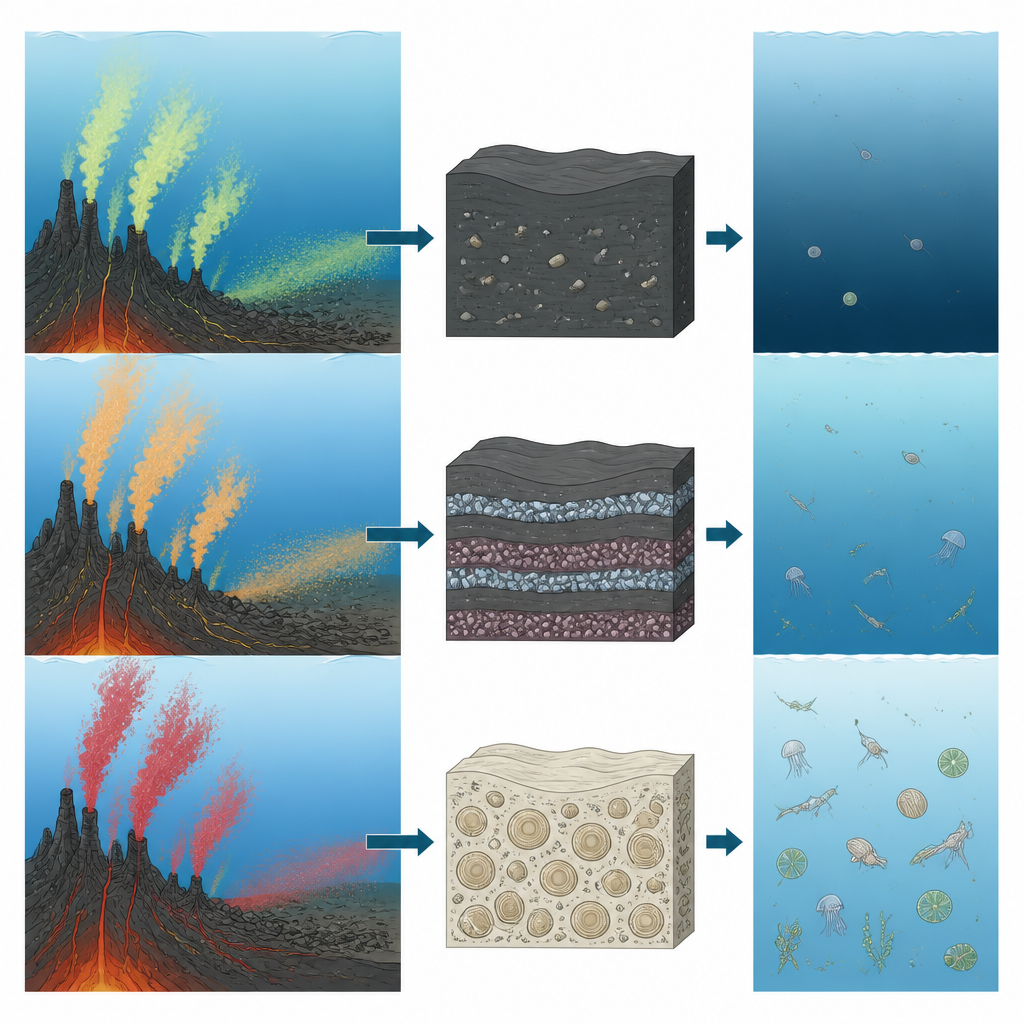
Oceans gaining breath
Chemical tracers that respond to oxygen levels, including rare earth element patterns, trace‑metal ratios, and the presence or absence of different forms of pyrite, show a shift from more reducing seafloor conditions in the earlier rocks to more oxidizing conditions in the later microbial phosphorites. This matches evidence from other regions that the Ediacaran oceans experienced pulses of rising oxygen. The study suggests that bursts of phosphorus from volcanic‑hydrothermal systems temporarily lifted nutrient limits, boosting marine productivity and helping drive episodes of local ocean oxygenation, even though much of the produced organic matter was still rapidly recycled.
Why this ancient story matters today
By tying together volcanic activity, nutrient delivery, microbial growth, and changing oxygen levels, the work paints a picture of a tightly linked Earth system during the Ediacaran. Instead of a slow, even rise in oxygen, the oceans appear to have responded to short phosphorus pulses that sparked local bursts of productivity and oxygenation. These events, recorded in the Longxi phosphorites, likely contributed to creating the more breathable oceans that later allowed large, complex animals to flourish, offering a deeper perspective on how geological processes can set the stage for biological innovation.
Citation: Han, C., Li, Q., Han, Y. et al. Volcano-hydrothermal phosphorus pulses fostered ocean oxidation during Ediacaran phosphogenesis in South China. Commun Earth Environ 7, 420 (2026). https://doi.org/10.1038/s43247-026-03422-1
Keywords: phosphorus cycle, Ediacaran ocean, volcanic hydrothermal activity, ocean oxygenation, phosphorite deposits