Clear Sky Science · en
Hybrid nature–infrastructure adaptation shapes multidecadal mangrove–shoreline dynamics in a tropical delta
Why this coast matters to people
Along the southern edge of Vietnam, a broad river delta feeds millions of people and shelters towns and farms from the sea. Here, bands of mangrove trees form a living barrier that can soften waves and hold mud in place, while concrete dykes and other structures offer hard protection. This study asks a simple but vital question: over the past few decades, how have these trees and walls worked together to shape the coastline, and what lessons does that hold for crowded, low-lying shores around the world?
Watching a changing shoreline over decades
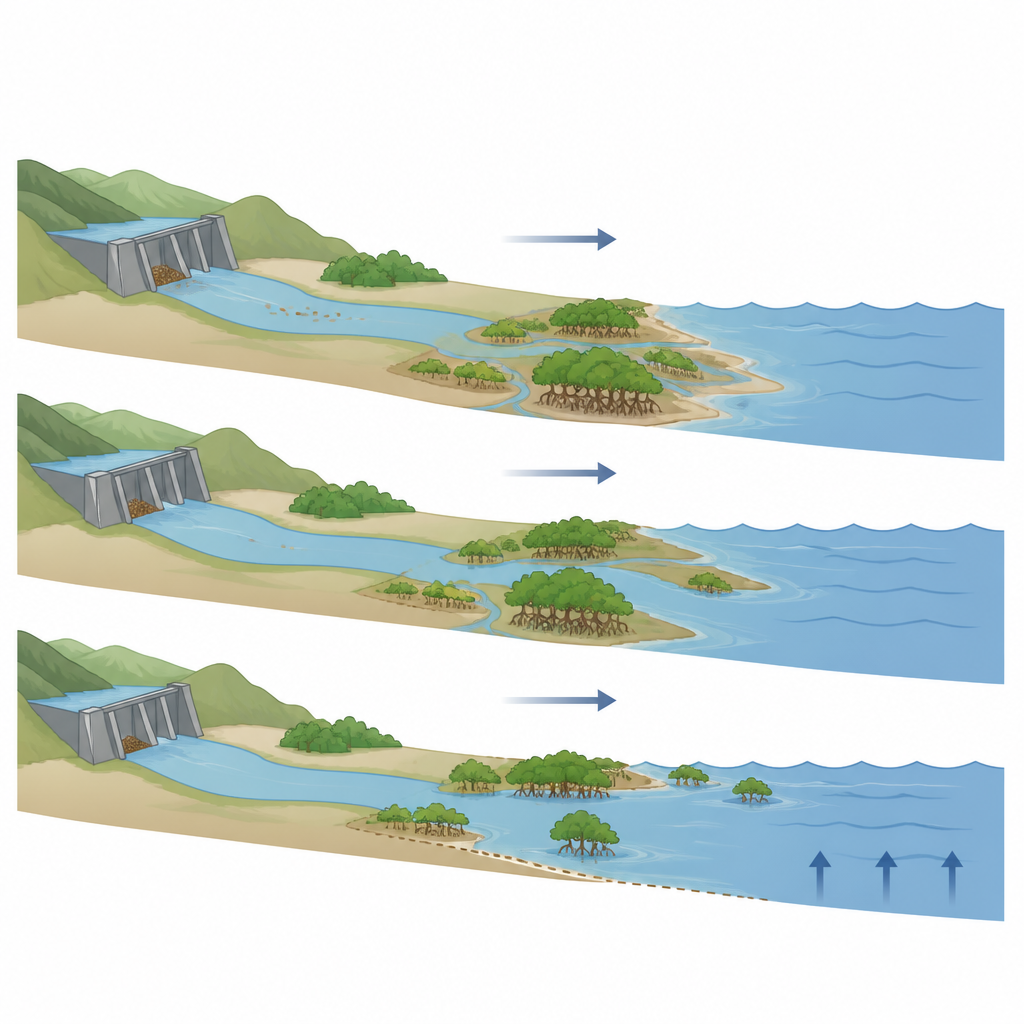
The researchers examined 36 years of satellite images, from 1988 to 2023, along more than 1,100 kilometers of Vietnam’s Southern Coastline. From these pictures they traced yearly shoreline positions, estimated mangrove cover using a vegetation index, and gauged how much fine sediment was suspended in coastal waters. By cutting the coast into over 11,000 narrow strips, they could see where the shoreline was creeping seaward, where it was retreating, and where it stayed roughly stable. On average the coast edged seaward by almost three meters per year, but this headline figure hid sharp contrasts between growing and shrinking stretches.
Where mud is plentiful, trees help land grow
On parts of the delta that still receive plenty of river-borne sediment, mangroves and shoreline gain tended to go hand in hand. In these “sediment-rich” zones, the water carries enough mud to build new ground. Young mangroves take root on these fresh surfaces, their dense roots slowing waves and trapping even more particles. The study’s spatial analysis showed that in such places, increasing mangrove greenness was usually matched by the shoreline marching seaward. Here, nature on its own can still keep pace with rising seas and moderate storms.
When mud runs short, walls become crucial
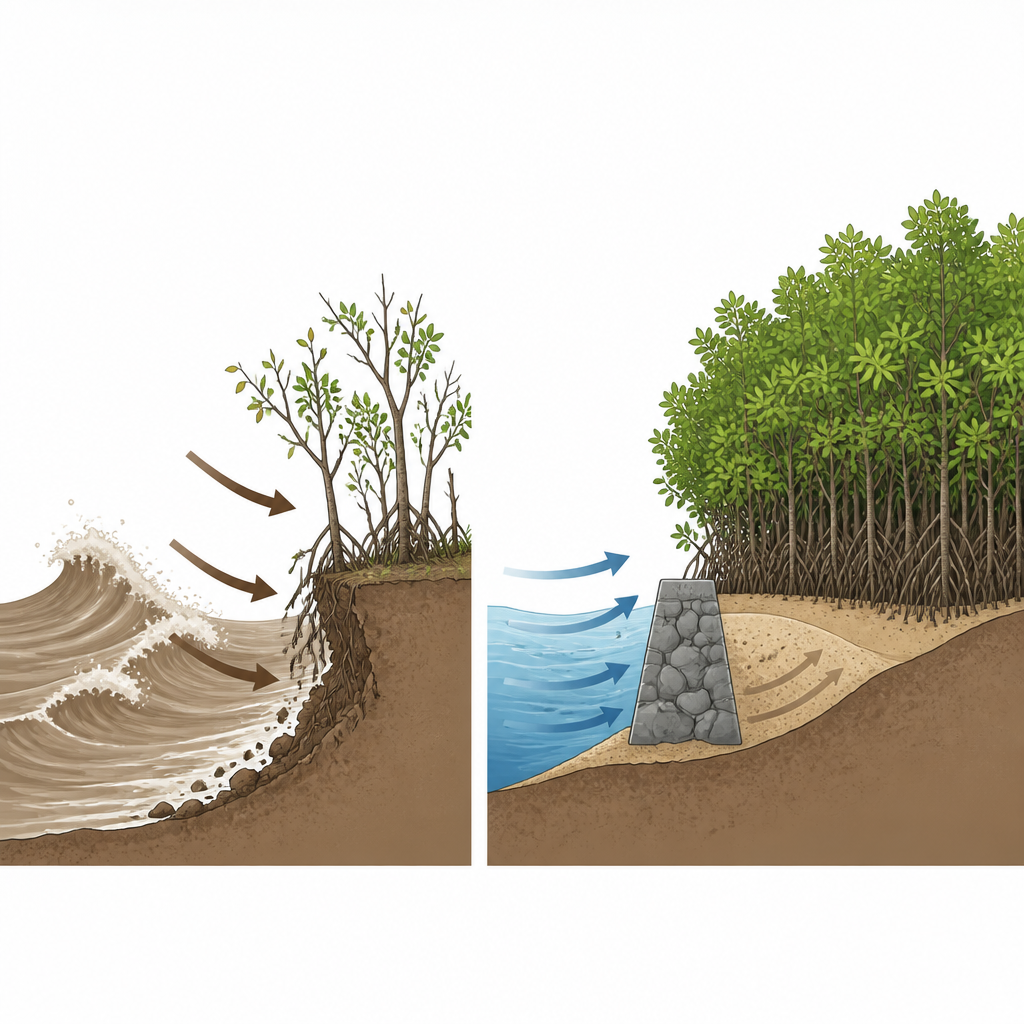
In other stretches, especially in provinces like Bac Lieu and eastern Ca Mau, river sediment has dwindled due to upstream dams and altered river flows. There, waves can chew away the shore faster than new mud arrives. The satellites showed coastlines retreating and mangrove bands thinning, even when the water looked cloudy with stirred-up material. That cloudiness often signaled erosion, not fresh supply. Field visits confirmed that in such areas, mangrove roots were being undercut and trees toppled. Where simple sea-facing dykes had been built, however, the picture changed: shorelines held steady, and mangrove cover stayed dense or even improved despite low natural sediment input.
Mixed solutions, mixed outcomes
The team used advanced mapping tools to capture how these relationships vary place by place rather than assuming a single rule for the whole coast. They found that while sediment availability remains important, it does not act alone. In some sites, dykes reduce wave energy and help trap what little sediment is available, allowing mangroves to persist. Elsewhere, aggressive land-reclamation projects push new embankments seaward, creating bare artificial land that may lack space or conditions for mangroves to return. Even within mangrove-friendly zones, mature forests can eventually calm the water enough that less sediment shows up in satellite measures, even as the shoreline continues to gain ground.
What this means for future coastal protection
For people living in deltas, this study delivers a clear message: there is no single recipe for a safe shoreline. Where rivers still bring ample mud, protecting and restoring mangroves can harness natural processes to build land and buffer waves. Where sediment has become scarce, thoughtfully placed dykes and other structures can buy time and support existing mangrove belts, but may also limit their ability to shift inland as seas rise. The authors show that successful adaptation depends on blending living defenses and engineered works in ways that fit each local setting, rather than assuming that sediment alone or structures alone will secure the coast.
Citation: Tran, T.V., Reef, R., Zhu, X. et al. Hybrid nature–infrastructure adaptation shapes multidecadal mangrove–shoreline dynamics in a tropical delta. Commun Earth Environ 7, 399 (2026). https://doi.org/10.1038/s43247-026-03402-5
Keywords: mangroves, shoreline change, Vietnam Mekong Delta, coastal adaptation, sea dykes