Clear Sky Science · en
Dormant microbes dominate soils across China and are regulated by water and resource availability
Hidden life beneath our feet
Every handful of soil teems with microscopic life, yet most of those tiny organisms are not busy breaking down leaves or cycling nutrients. They are asleep. This study reveals that across China’s deserts, grasslands, croplands, and forests, the overwhelming majority of soil microbes lie dormant, forming a vast underground “seed bank” that can spring into action when conditions improve. Understanding how and when these invisible sleepers wake up matters for everything from crop yields to how much carbon soils store in a warming world.
Sleeping armies in every kind of soil
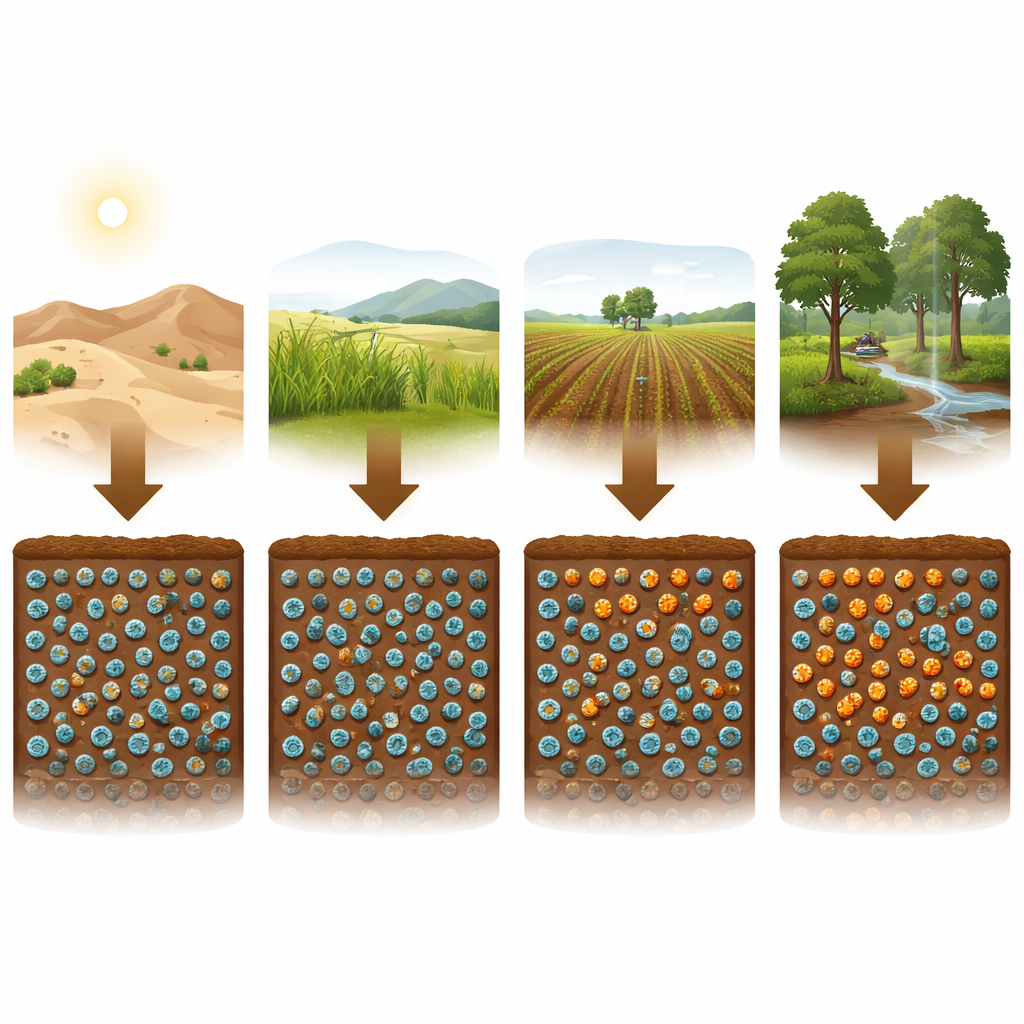
The researchers sampled 591 soils from 197 locations spanning China’s major ecosystems, from arid deserts to lush forests. They used fluorescent stains and flow cytometry to sort living cells into three groups: active, dead, and dormant. By subtracting the active and dead fractions from the total, they could estimate how many microbes were simply biding their time. Across all sites, an average of 95.48% of soil microbes were dormant, with values ranging from about 83% to nearly 100%. In other words, for every microbe currently hard at work, roughly twenty or more are resting in reserve.
Different landscapes, different levels of rest
Although dormancy was high everywhere, clear patterns emerged among ecosystems. Forest soils had the lowest share of dormant cells, a bit under 94%, while deserts and croplands had the highest, around 97%, with grasslands in between. These differences may sound small, but at the scale of whole landscapes they translate into big shifts in how many microbes are ready to respond when rain or fresh plant material arrives. Forests tend to receive steady inputs of leaves and root exudates and experience relatively stable conditions, supporting a somewhat larger active microbial community. Deserts, by contrast, are dry and stressful, pushing more microbes into long-term survival mode.
Water and food as wake-up calls
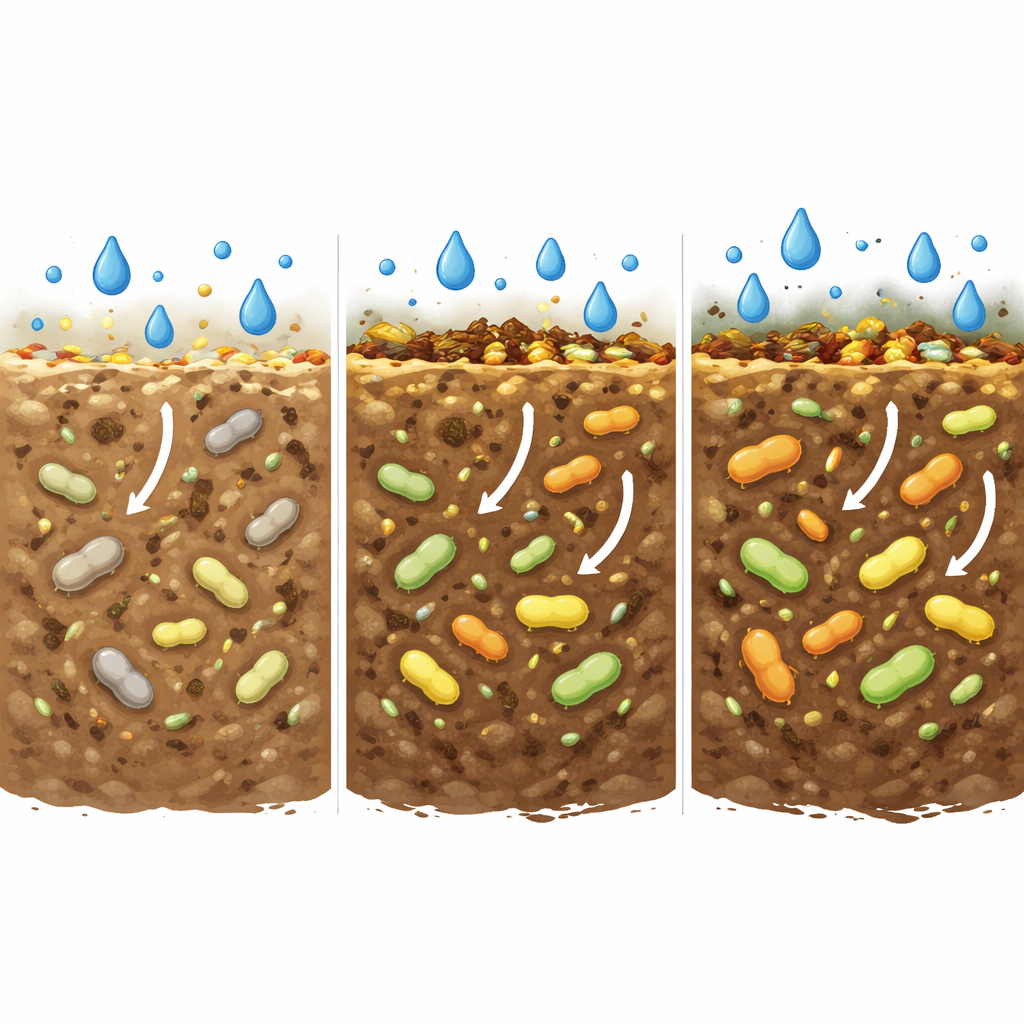
To untangle which environmental factors matter most, the authors turned to machine-learning models and structural equation modeling, combining climate records with detailed soil measurements. They found that two immediate triggers strongly reduced dormancy when present in higher amounts: the soil’s water-holding capacity and the activity of an enzyme that releases simple sugars from plant material. Soils that can retain more water ease the physical stress on microbes and allow nutrients to move more freely, making it easier for cells to stay active. At the same time, higher enzyme activity produces glucose, a ready-to-use energy source that also acts like a chemical “wake-up” signal, encouraging dormant microbes to switch on.
Slow reserves that support fast responses
Behind these direct triggers lies a deeper layer of control: the soil’s carbon stocks. The study shows that carbon tightly bound to minerals acts as a long-term reserve, feeding into a smaller pool of dissolved organic carbon and microbial biomass that can be used right away. These resource pools do not wake microbes directly, but they support the communities and enzymes that do. In this way, stable carbon stores quietly maintain a capable workforce of microbes and enzymes, ready to respond when soil becomes moist and fresh substrates appear. The result is a tiered system in which long-lived carbon reserves underpin the rapid on/off switches of microbial dormancy.
Why these sleepers matter for the future
By mapping soil microbial dormancy at a continental scale, this study reveals that most of the biological potential in soils is held in reserve, not constantly expressed. Microbes rely on a combination of physical conditions and chemical signals—especially water availability and sugar-releasing enzymes—to decide when to sleep and when to work. At the same time, slow-turnover carbon stocks help sustain large dormant communities over long periods. For a layperson, the takeaway is simple: soils act like a living savings account, storing both carbon and microbial potential that can buffer ecosystems against droughts, disturbances, and climate change. How we manage water and organic matter in soils will help decide when this underground bank pays out—and how strongly it shapes the planet’s future climate.
Citation: Zhao, X., He, L., Wang, G. et al. Dormant microbes dominate soils across China and are regulated by water and resource availability. Commun Earth Environ 7, 374 (2026). https://doi.org/10.1038/s43247-026-03377-3
Keywords: soil microbes, microbial dormancy, soil carbon, ecosystem resilience, climate change