Clear Sky Science · en
Climate warming advances flowering and fruiting but drives divergent changes in reproductive season length
Why flowering seasons are shifting
People notice when trees bloom earlier than they used to or when fruits appear on branches at unexpected times. These changes are more than curiosities; they signal how forests are responding to a warming climate. This study tracks when woody plants across China flower and set fruit, revealing that rising temperatures are quietly reshaping the calendar of plant reproduction in complex ways.
Watching trees over nearly three decades
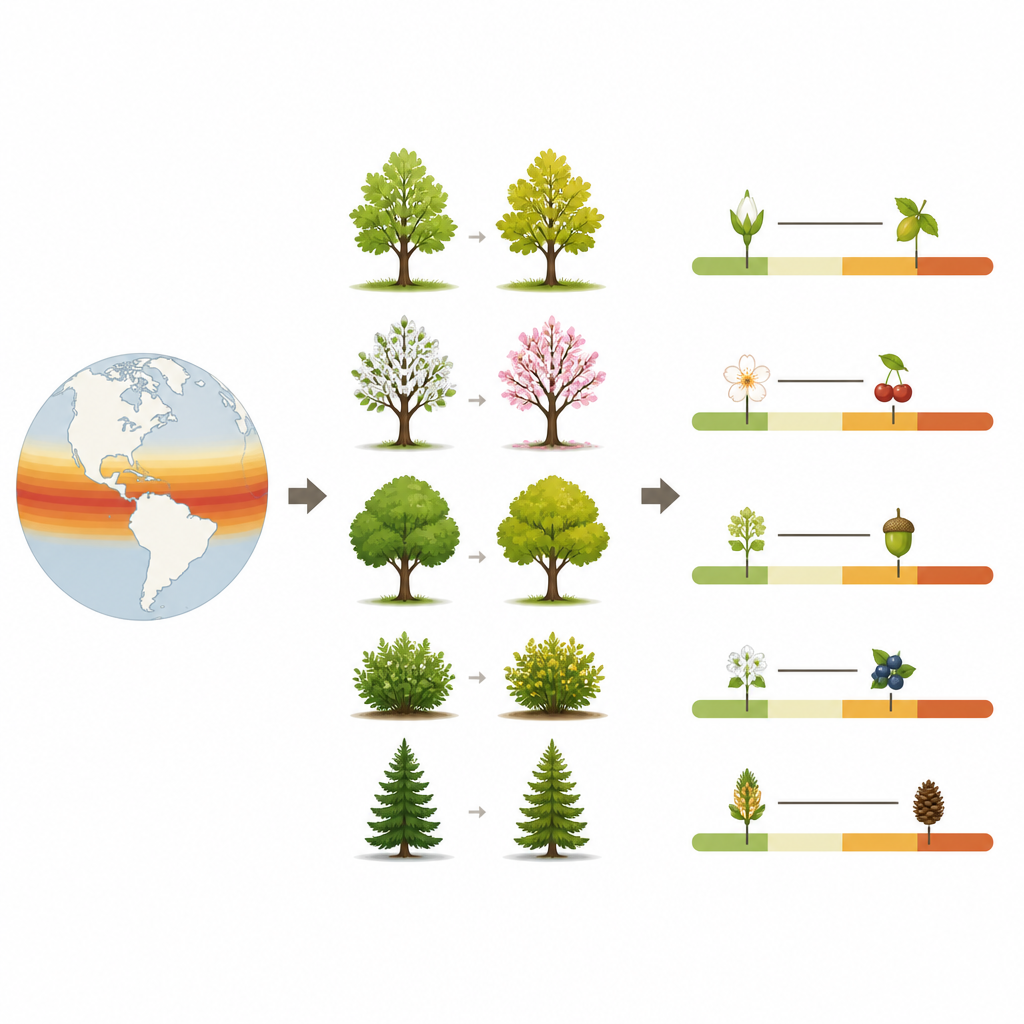
To uncover these changes, researchers drew on thousands of careful field observations collected between 1980 and 2008. At 31 sites from temperate to tropical regions of China, observers recorded the date when the first flower opened and when the first fruit fully ripened for 102 species of trees and shrubs. By comparing these dates with local temperature and rainfall records, the team could see how a warming climate alters the timing and length of the reproductive season, defined as the span between flowering and fruiting.
Flowers and fruits are both earlier
Across all sites, air temperatures rose by about a quarter of a degree Celsius per decade, while yearly rainfall showed no clear trend. In step with this warming, most woody species began both flowering and fruiting earlier in the year. About three quarters of the species flowered earlier and just over half fruited earlier. On average, flowering shifted forward faster than fruiting, though individual species showed a wide variety of responses, with some even delaying these stages. Deciduous species, which shed their leaves annually, tended to advance their flowering and fruiting more than evergreen species.
Reproductive season length does not change in one simple way
Because flowering and fruiting did not shift at exactly the same pace, the length of the reproductive season changed in different ways among species. Roughly half of the woody species showed longer periods between flowering and fruiting, while the other half showed shorter ones, and only a small fraction of these changes were statistically strong. For many plants, advances in flowering and fruiting largely kept in step, so the overall duration between them stayed similar. This balance suggests that, for most species, the two stages remain tightly coordinated even as the calendar moves earlier in the year.
How warmth can both speed up and slow down fruit development
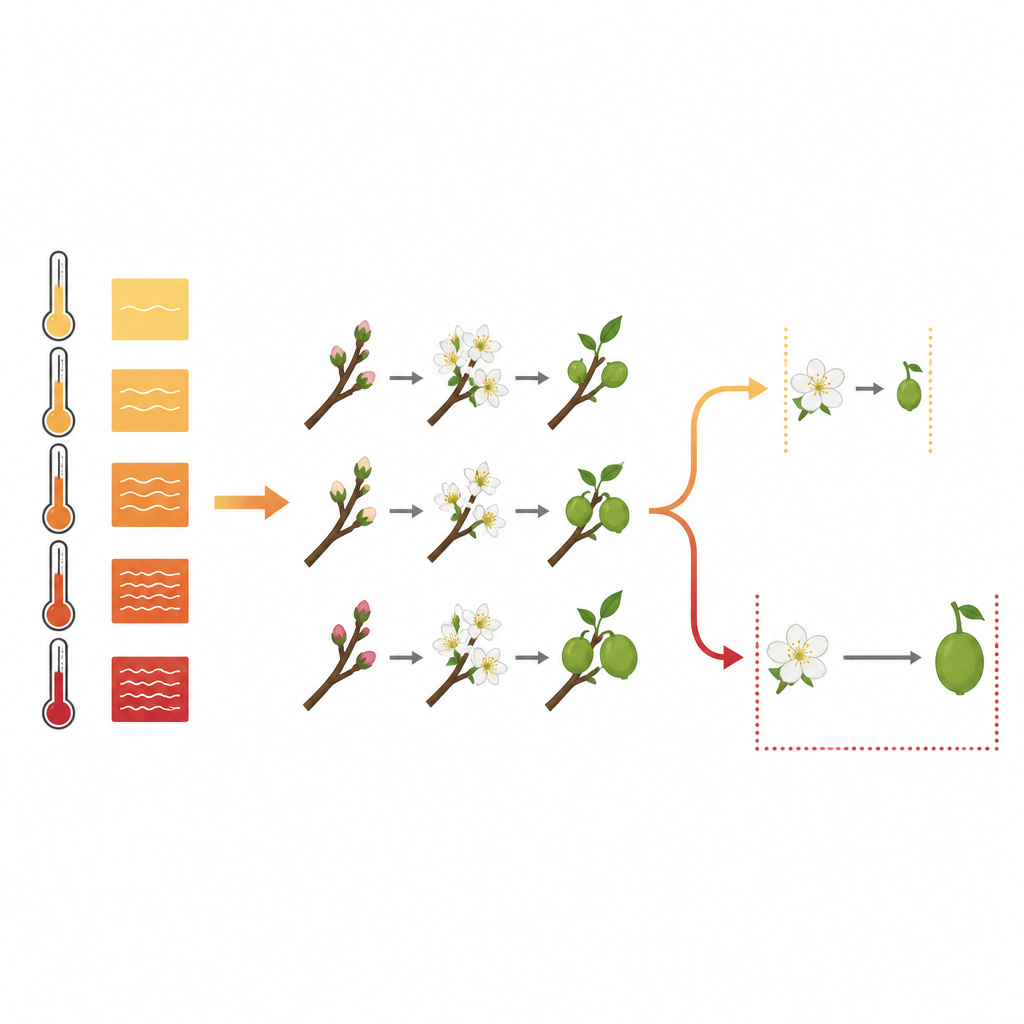
To understand why some species lengthened their reproductive season while others shortened it, the researchers examined conditions during the period between flowering and fruiting. Higher average temperatures during this window tended to shorten the reproductive season, suggesting that warmth speeds up the development from flower to ripe fruit. At the same time, greater build up of heat over the season was linked to longer reproductive periods, hinting that under warmer conditions some species need more total warmth to fully mature their fruits. Rainfall during this period had little consistent effect. Species whose reproductive seasons shortened tended to experience stronger warming, while those with longer seasons tended to accumulate more heat overall.
What shifting seasons mean for forests and wildlife
These mixed patterns in reproductive timing matter because they can ripple through entire ecosystems. Earlier flowering and fruiting can change how plants share resources between growth and reproduction, and can alter their exposure to late frosts, heat, or drought. Changes in the length of the reproductive season may influence fruit size and quality, affecting the animals that depend on these fruits for food and that help spread seeds. If plants and their pollinators or fruit eaters no longer stay in sync, both sides may suffer. By revealing that woody species respond to warming in diverse but coordinated ways, this study provides an important foundation for predicting how forests will cope with continued climate change.
Citation: Ji, G., Peng, Y., Li, X. et al. Climate warming advances flowering and fruiting but drives divergent changes in reproductive season length. Commun Earth Environ 7, 424 (2026). https://doi.org/10.1038/s43247-026-03374-6
Keywords: plant phenology, climate warming, flowering time, fruiting season, woody plants