Clear Sky Science · en
Drought is associated with human migration in agriculture-dependent middle-income countries
Why water stress can push people to move
Across the world, more families are finding that rain they once relied on no longer comes when it should. Fields dry out, crops fail, and household budgets tighten. This study asks a pressing question for our warming planet: when drought hits places that depend heavily on farming, does it actually push people to leave their homes, and if so, where and under which economic conditions does this happen most?
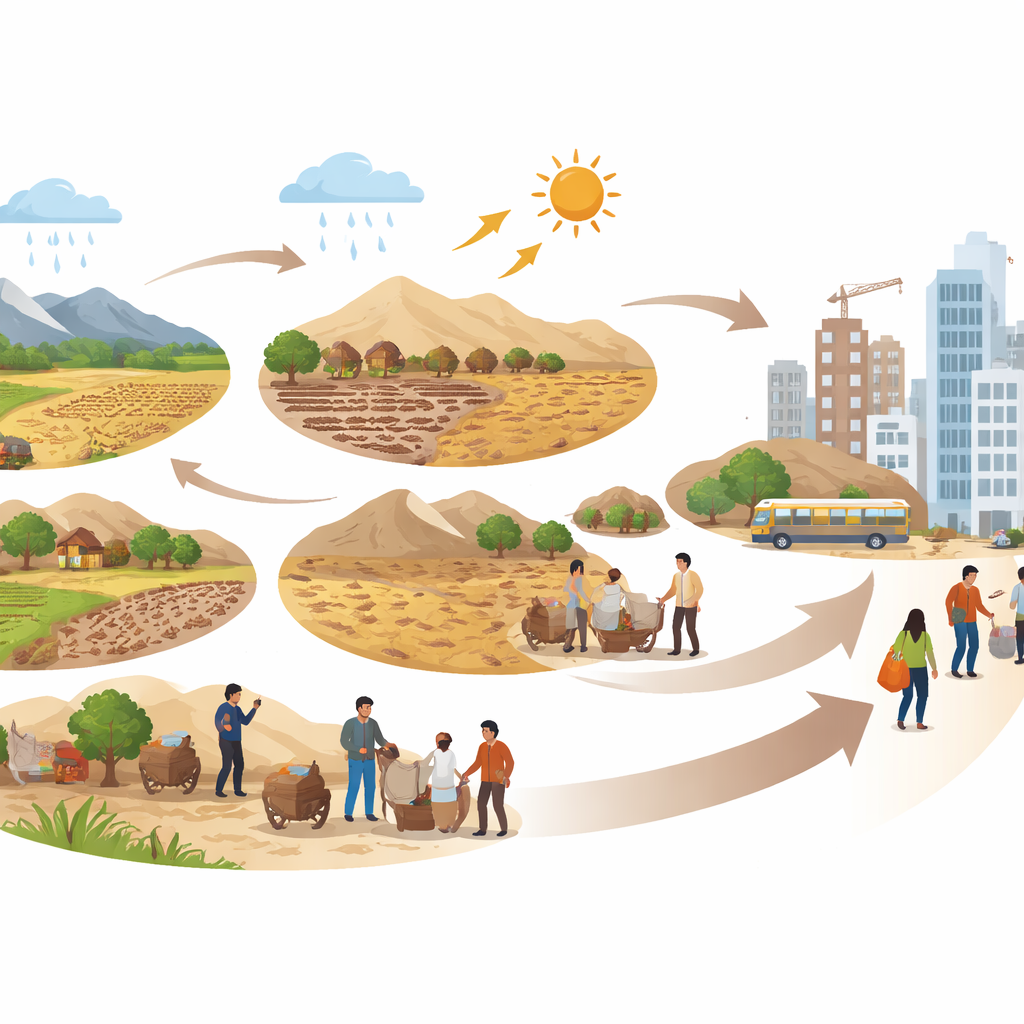
Looking at people on the move worldwide
The researchers combined several global databases to examine migration patterns from 2000 to 2019 in more than a thousand regions where agriculture makes up a significant share of the economy. They tracked how many people were leaving or arriving in each region, how often serious droughts occurred, how much water was being taken from rivers and aquifers, how crop yields were changing, and how local living standards evolved over time. To avoid confusing the effects of war with those of climate, they removed regions that had seen high levels of conflict-related deaths from the analysis.
Money and opportunities still matter most
When the team compared all these factors, one clear message emerged: social and economic conditions are still the main forces behind both emigration and immigration. Places with poor access to education, health care, and decent incomes tended to lose people, while regions with better living standards drew newcomers. This pattern held across low-, middle-, and high-income countries. In many of the poorest regions, severe drought did not show up as a strong driver of people leaving, likely because families simply lack the money, contacts, or legal channels needed to move, even when conditions become harsh.
Drought’s strongest pull is in the middle
The picture changed sharply in agriculture-dependent regions with middle incomes. Here, droughts were often closely tied to spikes in people leaving as well as to changes in where migrants arrived. Using both long-term comparisons and event-based analysis of sudden changes, the authors found that intense droughts preceded marked jumps in emigration in about one in ten regions, most of them in middle-income areas of Africa, South America, and South Asia. In these places, many households still rely on rain-fed crops, so failed harvests hit hard—but there is just enough financial capacity and transport access for migration to become a realistic response.
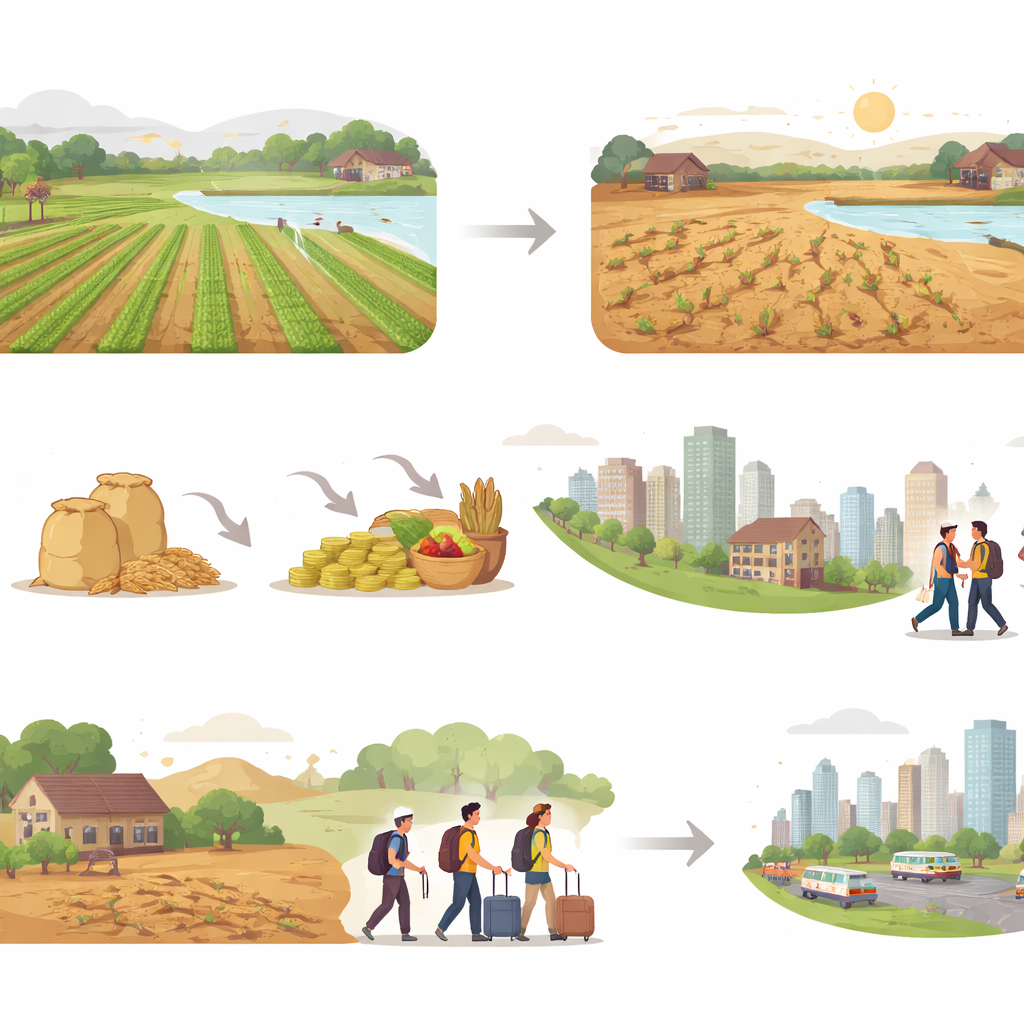
Water use and farming add to the story
Water withdrawals—the amount of water pumped or diverted for farms, cities, and industry—also helped explain when and where people moved. In some farming regions, higher withdrawals seemed to cushion the blow of drought by supporting irrigation, which could limit the need to move and even attract migrants looking for work. But when water use fell, signalling shortages or restrictions, out-migration often followed. Changes in crop yields, surprisingly, played a smaller global role than expected, although they mattered in some low-income areas. In richer countries, shifts in income and water use were more closely linked to movements of people than drought itself, reflecting how well-built systems and safety nets can buffer climate shocks.
What this means for our shared future
For non-specialists, the takeaway is straightforward: climate-driven drought is already nudging migration patterns, but its effects are strongest where people still depend on the land and yet have just enough resources to leave. In the poorest rural regions, people may be effectively trapped, enduring harsher conditions without the option of safe relocation. In richer areas, jobs, services, and infrastructure tend to outweigh drought in shaping where people go. The study argues that as droughts become more frequent and severe, we need policies that both strengthen farming communities—through better water management, education, and health care—and recognize migration as one way people adapt. Preparing for safe, orderly movement, rather than treating it only as a crisis, will be crucial to managing the human side of climate change.
Citation: Mazzoleni, M., Di Baldassarre, G., Hagström, A. et al. Drought is associated with human migration in agriculture-dependent middle-income countries. Commun Earth Environ 7, 248 (2026). https://doi.org/10.1038/s43247-026-03358-6
Keywords: drought and migration, climate-driven mobility, agriculture-dependent regions, water scarcity, middle-income countries