Clear Sky Science · en
Hydrous multi-stage mantle melting controls gold enrichment in mafic Kermadec arc magmas
Why buried volcanoes matter for gold
Some of the richest known gold deposits sit not on land, but on the deep ocean floor above subduction zones, where one tectonic plate dives beneath another. Along New Zealand’s Kermadec arc, underwater volcanoes host unusually gold‑rich mineral deposits, yet it has been unclear why the magmas feeding these volcanoes contain so much gold. This study tackles that mystery by sampling young volcanic glass from across the arc and showing that the key lies deep in the mantle, where water‑rich, repeated melting events concentrate gold before it ever nears the seafloor.
Hidden conveyor belt beneath the sea
The Kermadec arc stretches for about 1,300 kilometers between New Zealand and Tonga. Here, the Pacific Plate sinks beneath the Australian Plate, driving magma production and seafloor volcanism. Many of these submarine volcanoes vent hot, metal‑bearing fluids and some host massive sulfide deposits unusually rich in gold compared with those at mid‑ocean ridges. The authors collected 66 samples of fresh volcanic glass—rapidly chilled magma—from 17 arc volcanoes and the adjacent Havre Trough back‑arc basin. Because these glasses formed directly from erupting magmas, their chemistry preserves a detailed record of how the mantle melted and how metals like gold, copper, silver, and selenium behaved on their way to the surface. 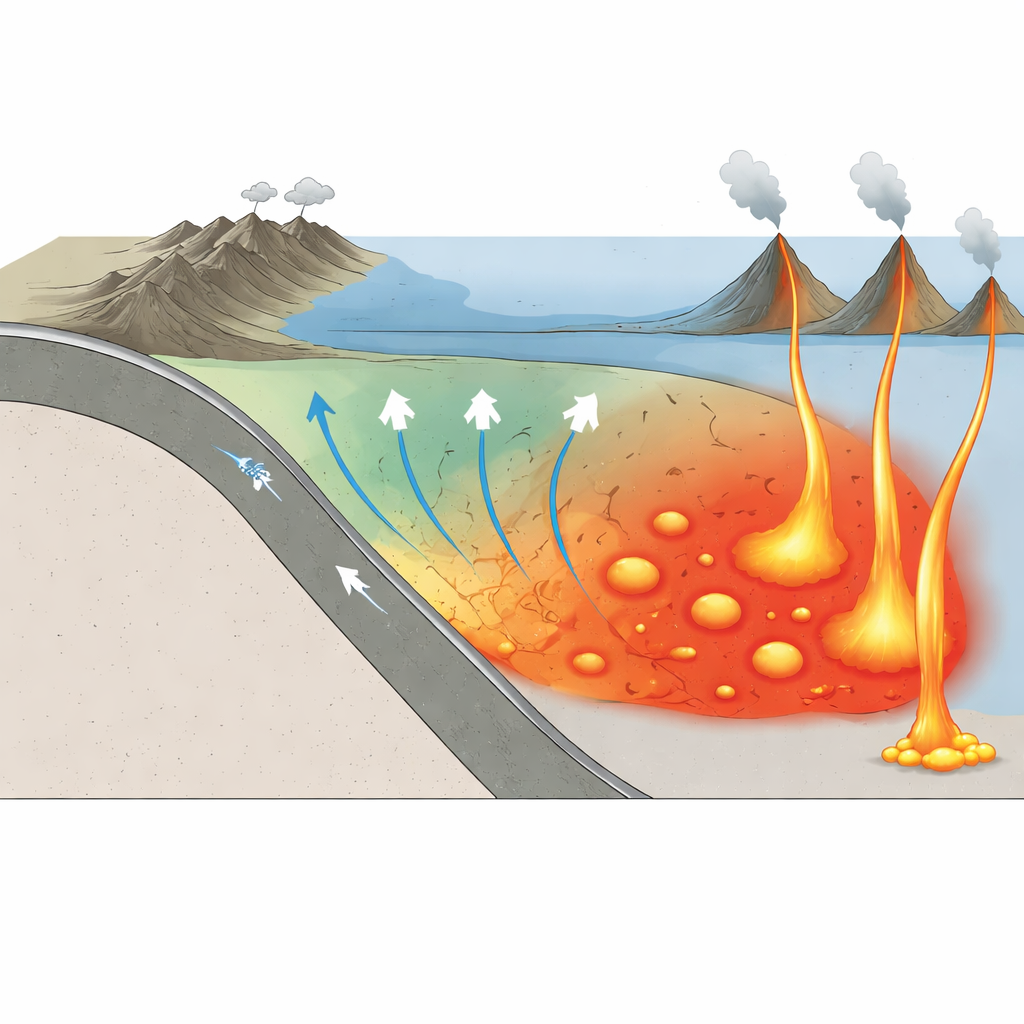
Gold’s tug‑of‑war with sulfur
Gold prefers to bond with sulfur and often hides in tiny sulfide droplets deep in the mantle. When those sulfides are present, they tend to lock up gold, copper, and silver; when they are exhausted or absent, gold behaves more like an incompatible element, concentrating in the melt. By comparing gold with other sulfur‑loving elements in the glasses, the authors show that most Kermadec magmas began as hot, water‑rich melts produced at temperatures above the point where sulfide droplets melt. In these conditions, small amounts of sulfide liquid are quickly consumed during high degrees of melting, releasing gold and copper into the magma. As the magma cools and crystallizes nearer the surface, new sulfide and iron‑titanium minerals form, stripping copper more efficiently than gold and silver and further pre‑conditioning some magmas to feed metal‑rich hydrothermal systems.
Melting the mantle more than once
The Kermadec glasses contain up to about six nanograms of gold per gram of magma and display gold‑to‑copper ratios that are significantly higher than in typical mid‑ocean ridge basalts or fertile mantle. Simple, one‑off melting of an ordinary mantle source cannot easily reach such values. Instead, the chemical patterns point to a mantle that has been melted, left depleted in sulfide and copper, and then melted again under hydrous, oxidized conditions. In the first melting episode, sulfide liquid preferentially removes copper relative to gold from the residual mantle. When that partially depleted mantle is re‑melted, the resulting magmas inherit higher gold‑to‑copper ratios even though their overall metal contents remain compatible with what mantle melting can produce. The strongest gold enrichment occurs in the northern Kermadec segment, where geophysical and geochemical data also indicate particularly depleted mantle beneath the arc front. 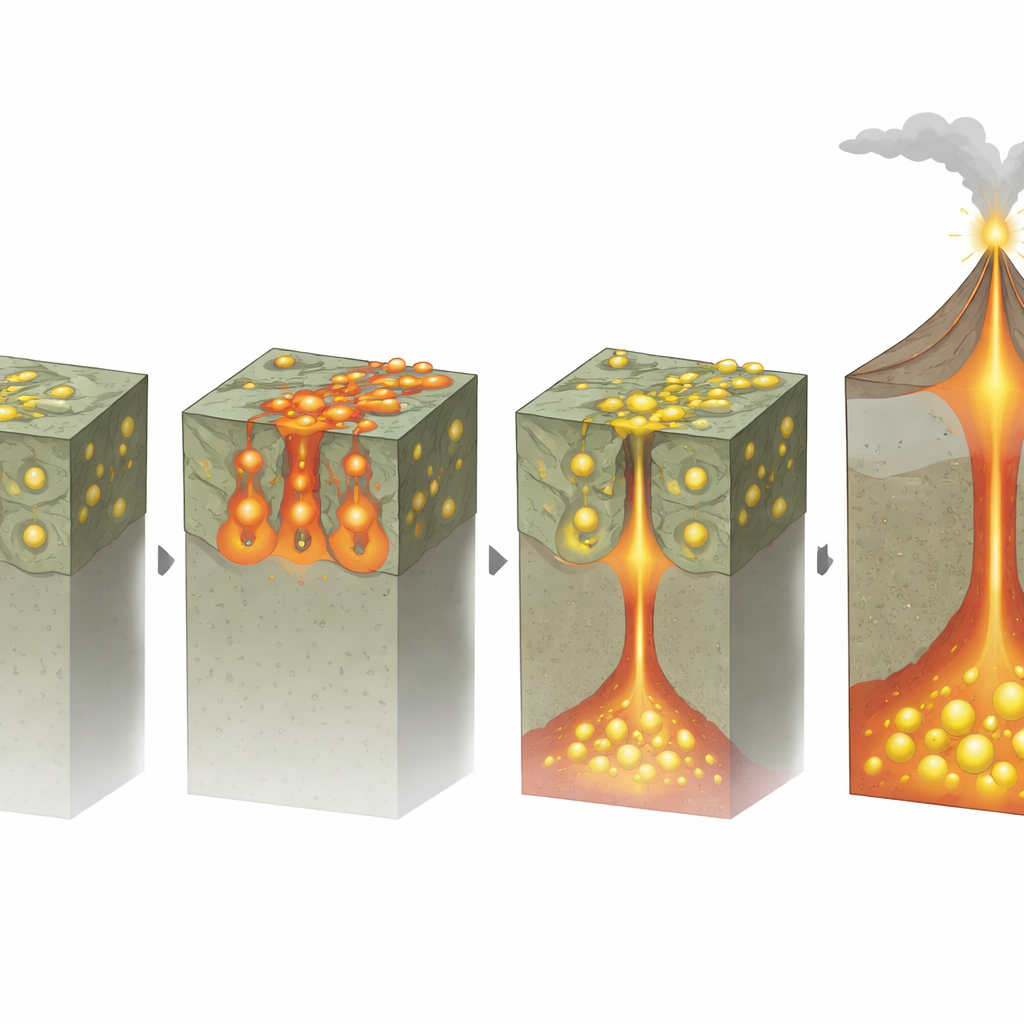
Limited role for the sinking plate
Because fluids released from the subducting plate can carry metals, one obvious possibility was that gold is directly added from the downgoing slab into the mantle wedge. The team tested this by comparing gold with elements known to be highly mobile in slab‑derived fluids, such as chlorine, barium, uranium, and lead. Gold shows only weak or inconsistent links with these fluid‑mobile tracers, and segments of the arc underlain by a thick, gold‑richer oceanic plateau do not systematically produce more gold‑rich magmas. Together, these observations argue that slab fluids mainly supply water and help oxidize the mantle—conditions that favor extensive melting and high sulfur solubility—rather than delivering large extra doses of gold themselves.
From deep melting to seafloor treasure
The study concludes that the remarkable gold fertility of Kermadec magmas is controlled primarily by the state and history of the mantle beneath the arc. Water‑rich, high‑temperature, multi‑stage melting of an already depleted, oxidized mantle wedge can generate magmas with gold concentrations and gold‑to‑copper ratios high enough to feed exceptional seafloor deposits, without needing substantial gold directly from the subducting plate or recycled crustal sulfides. In simple terms, the mantle under the Kermadec arc has been “roasted” more than once by hydrous melting, stripping out copper‑rich sulfides and leaving behind a source that naturally yields gold‑enhanced magmas—raw material for some of the ocean’s richest hidden ore fields.
Citation: Timm, C., Portnyagin, M., de Ronde, C.E.J. et al. Hydrous multi-stage mantle melting controls gold enrichment in mafic Kermadec arc magmas. Commun Earth Environ 7, 281 (2026). https://doi.org/10.1038/s43247-026-03338-w
Keywords: subduction zone, mantle melting, gold deposits, Kermadec arc, submarine volcanism