Clear Sky Science · en
Warming overwhelms CO2-driven drought mitigation in alpine vegetation on the Qinghai-Tibetan Plateau
Why this high mountain story matters
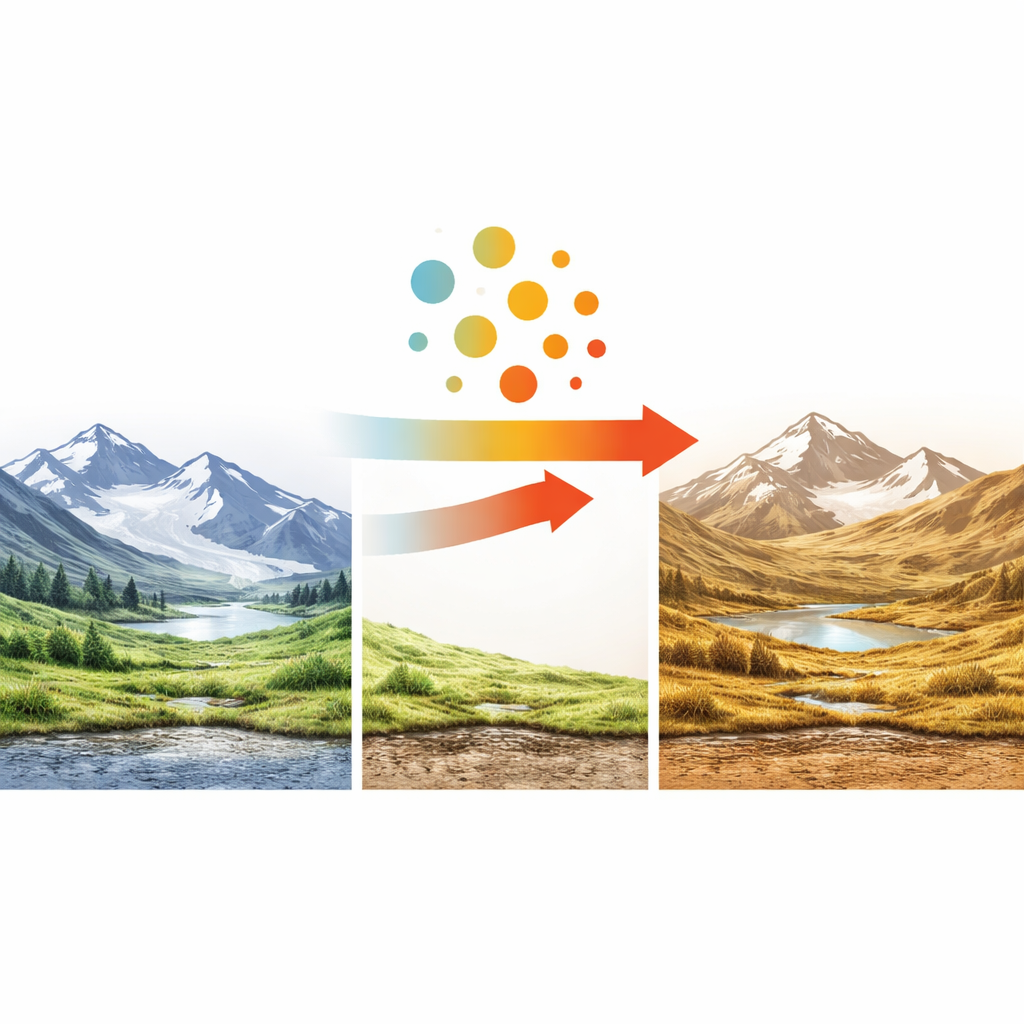
High on the Qinghai–Tibetan Plateau, often called Asia’s “water tower,” grasses and low shrubs quietly help regulate water and carbon for billions of people downstream. This study asks a deceptively simple question with global importance: as carbon dioxide in the air keeps rising, will it help plants ride out droughts, or will a warming climate undo those benefits? By zooming in on this vast alpine region and its frozen soils, the authors uncover how extra CO2 and higher temperatures interact in ways that could tip these ecosystems toward greater drought risk.
Rising carbon dioxide: a mixed blessing for plants
Plants need carbon dioxide to grow, and many experiments show that extra CO2 can help leaves use water more efficiently. In theory, that should make vegetation more resistant to dry spells. On the Qinghai–Tibetan Plateau, satellite records and field measurements already hint that greener landscapes and more vigorous growth are linked to rising CO2. The authors used these observations together with global vegetation models to see how much this “CO2 fertilization” actually softens the blow of droughts. Under conditions where temperature was kept constant in the simulations, they found that the last 40 years of CO2 increase reduced drought-related losses in plant productivity by almost six percent across the plateau, and by much more in areas underlain by permafrost.
When warmth turns help into harm
The picture shifts once warming is added. The plateau has been heating at more than twice the global average, and warmer air drives more water loss from soils and leaves. To untangle these forces, the team customized a detailed ecosystem model to the region’s unique climate, vegetation, and frozen ground. They ran “what-if” scenarios that separately changed CO2 and temperature. With warming included, the same CO2 rise that once cushioned plants instead made drought damage worse: overall, drought impacts on plant growth intensified by about five percent. The key reason is that CO2-driven growth expands leaf area, and in a warmer world that larger leafy surface pulls much more water from the ground, outpacing what precipitation and thawing ground can supply.
Frozen ground, fragile balance
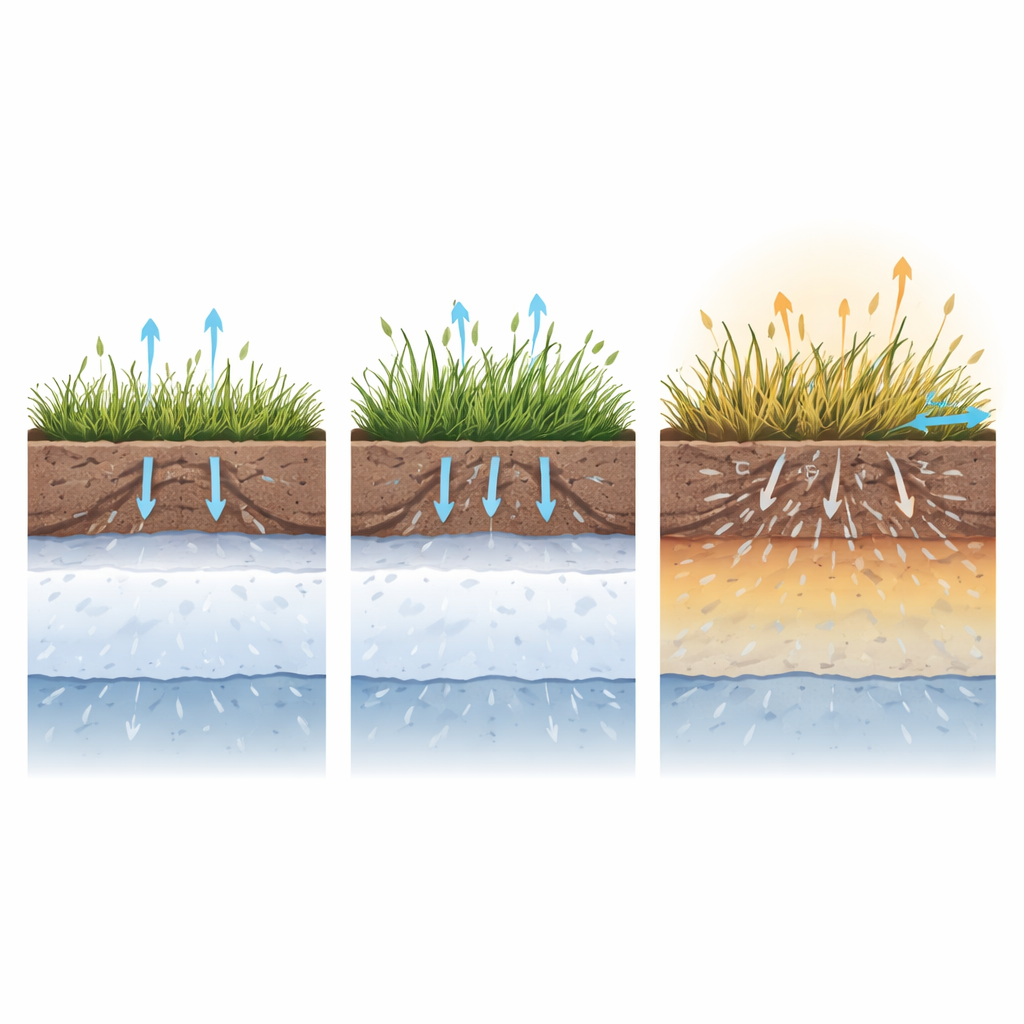
Permafrost—the long-frozen ground beneath much of the plateau—emerged as a crucial part of the story. In cooler conditions, permafrost zones were relatively protected: extra CO2 improved plant water efficiency and boosted growth without a huge jump in water loss, so drought effects were strongly softened there. But as the ground warmed and the seasonally thawed layer deepened, plants could tap more soil and meltwater and expanded quickly. The model shows that this growth surge, combined with higher temperatures, drove up total water use and turned once-resilient permafrost areas into drought hot spots. Grassy communities that dominate these regions were especially sensitive, with their CO2-related drought relief almost completely cancelled or reversed under warming.
Plants, water, and a tightening drought trap
The study also examined how plant structure and water flows differ between permafrost and non-permafrost landscapes. Forested and mixed areas outside the permafrost zone already consume more water, because trees have deeper roots and higher transpiration. There, rising CO2 and warming increased both plant growth and water loss, but the extra stress from drought was less extreme than in the permafrost grasslands. In the frozen-ground regions, improved growing conditions and deeper thaw did not translate into more standing water or runoff; instead, the added moisture was largely soaked up by expanding vegetation. This growing demand widened the gap between how much water plants needed and how much drought years could provide, tightening the trap of water scarcity.
What this means for a warming world
For non-specialists, the takeaway is clear: more CO2 in the air is not a reliable safety net against drought in high mountain ecosystems once strong warming is underway. On the Qinghai–Tibetan Plateau, the same factor that helped plants cope with dry years under cooler conditions is now, in a warmer climate, amplifying drought stress—especially where permafrost is thawing. Because many northern regions with frozen soils face similar warming trends, these findings suggest that climate change could weaken the ability of alpine and Arctic vegetation to buffer drought, with consequences for water resources and carbon storage far beyond the plateau itself.
Citation: Lyu, H., Zhang, X., Su, J. et al. Warming overwhelms CO2-driven drought mitigation in alpine vegetation on the Qinghai-Tibetan Plateau. Commun Earth Environ 7, 293 (2026). https://doi.org/10.1038/s43247-026-03308-2
Keywords: Tibetan Plateau drought, permafrost ecosystems, climate warming impacts, CO2 fertilization, alpine grasslands