Clear Sky Science · en
Reworked staurolite-rich metamorphic belts as lithium-fertile terranes
Why Rocks Deep Underground Matter for Batteries
Lithium is essential for the batteries that power electric cars, phones, and the broader clean-energy transition, yet rich lithium deposits are rare and unevenly scattered around the globe. This study asks a deceptively simple question with big consequences: how does ordinary crustal rock become transformed, over hundreds of millions of years, into lithium-rich source material that can feed giant ore deposits? By tracing lithium’s journey through deeply buried, repeatedly reworked rocks, the authors reveal a hidden "sponge" in the middle crust that soaks up lithium and later helps generate rich deposits.
Rocks That Go From Barren to Battery-Relevant
Most surface sediments and mudstones contain very little lithium, far too little to directly explain the rich ore bodies mined today. The researchers focused on a particular kind of mountain-belt rock called Barrovian metamorphic sequences—thick packages of mud-rich layers that have been heated and squeezed during past collisions between tectonic plates. These sequences crop out in classic regions such as the Himalaya, Norway, New England in the United States, and especially the Chinese Altai in Central Asia. Nearby, many important lithium-cesium-tantalum (LCT) pegmatites—coarse-grained, lithium-rich veins—are found, hinting that the metamorphic rocks themselves may have been quietly storing lithium before it was remobilized into ore. 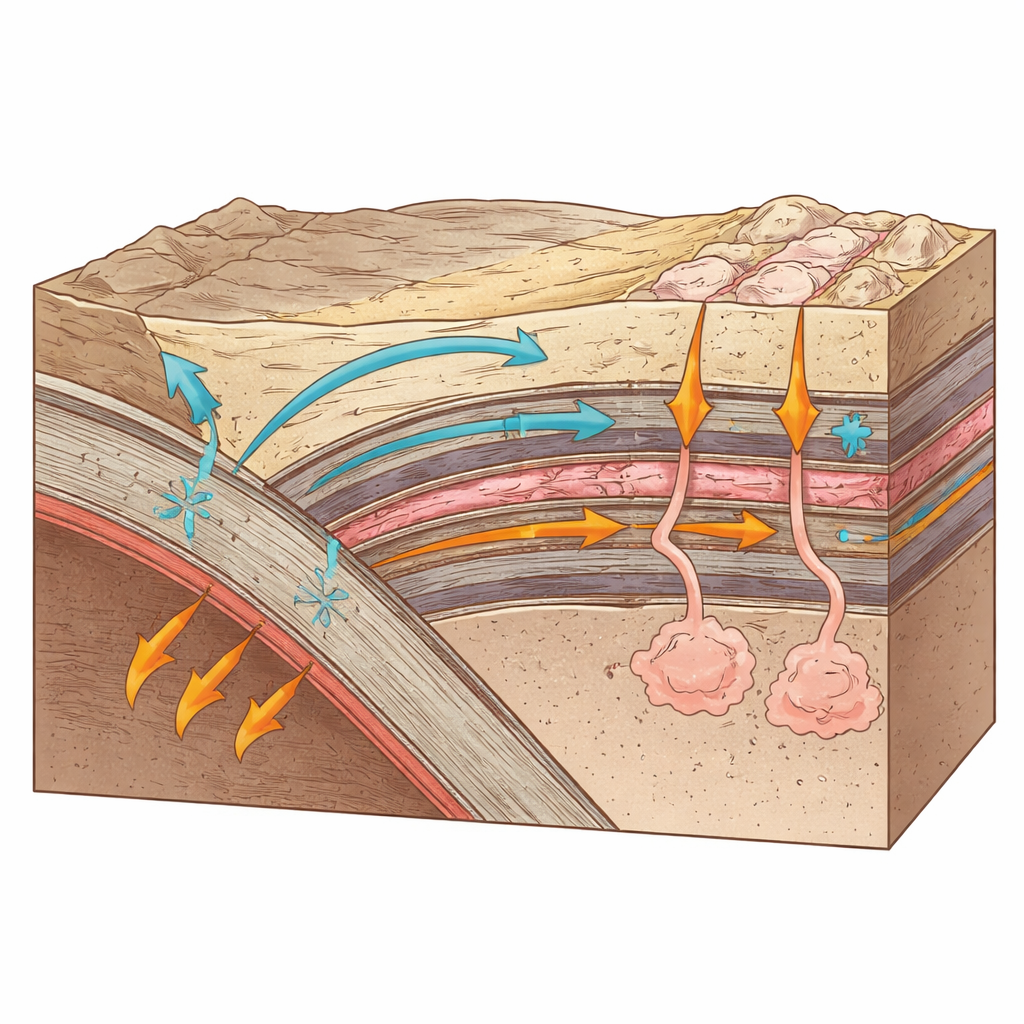
Staurolite Layers as Hidden Lithium Sponges
Using detailed mineral and whole-rock chemical analyses from seven metamorphic belts and country rocks around eleven lithium deposits, the team identified which minerals actually hold lithium. They found that two minerals in particular—staurolite and biotite—dominate the lithium budget in these rocks, with staurolite being especially powerful. Even when it makes up only a few percent of a rock’s volume, staurolite can host six to seven times more lithium than coexisting biotite, making layers rich in staurolite and biotite extremely effective "lithium sponges". In the Chinese Altai, for example, rocks far from intruding granites contain modest lithium levels, but the same rock types within a few hundred meters of evolved granites and lithium-rich pegmatites show lithium concentrations that are several times higher. This pattern appears consistently in metamorphic belts from Asia to Europe and North America.
Fluids, Heat, and the Slow Cooking of the Crust
The lithium enrichment does not happen all at once. As mountain belts form and evolve, rocks are heated, buried, and partially melted in multiple cycles of orogenesis. During early, solid-state metamorphism, water-rich fluids released from dehydrating minerals move through the rocks, stripping lithium from unstable phases like chlorite and muscovite and feeding it into newly growing staurolite and biotite. Later, when granites and pegmatites intrude, their hot, lithium-bearing fluids further overprint surrounding rocks, pumping more lithium into the existing "sponge" minerals and depleting them in magnesium, which opens additional structural space for lithium. Phase-equilibrium modeling—computer simulations of mineral stability at different pressures and temperatures—shows that, under typical mid-crustal conditions, staurolite and biotite can together make up nearly half the mass of certain layers, giving them immense capacity to store lithium and other incompatible elements.
From Lithium Sponge to Ore-Forming Melt
Eventually, as tectonic conditions change again and the crust heats up further, the staurolite- and biotite-rich layers begin to partially melt. When staurolite breaks down, it releases its stored lithium into the melt; biotite either holds additional lithium or passes it into the liquid as temperatures climb. Because lithium lowers melt viscosity, these lithium-charged magmas move readily through the crust and can segregate into pegmatites. Modeling in the study indicates that melting of strongly enriched staurolite-biotite rocks can generate magmas with far higher lithium contents than melts produced from unmodified sediments, meaning they require less fractional crystallization to reach ore grades. This helps explain why many large LCT pegmatites occur in regions where older metamorphic belts have been overprinted by later heating and magmatism.
Guiding the Hunt for Future Lithium Resources
To a non-specialist, the key takeaway is that certain deep crustal rock packages—those rich in staurolite and biotite and repeatedly reworked by heat, pressure, and invading magmas—act as long-lived lithium reservoirs. Over multiple tectonic cycles, they soak up lithium from fluids, hold it securely, and then release it into melts that can crystallize as lithium-rich pegmatites nearer the surface. 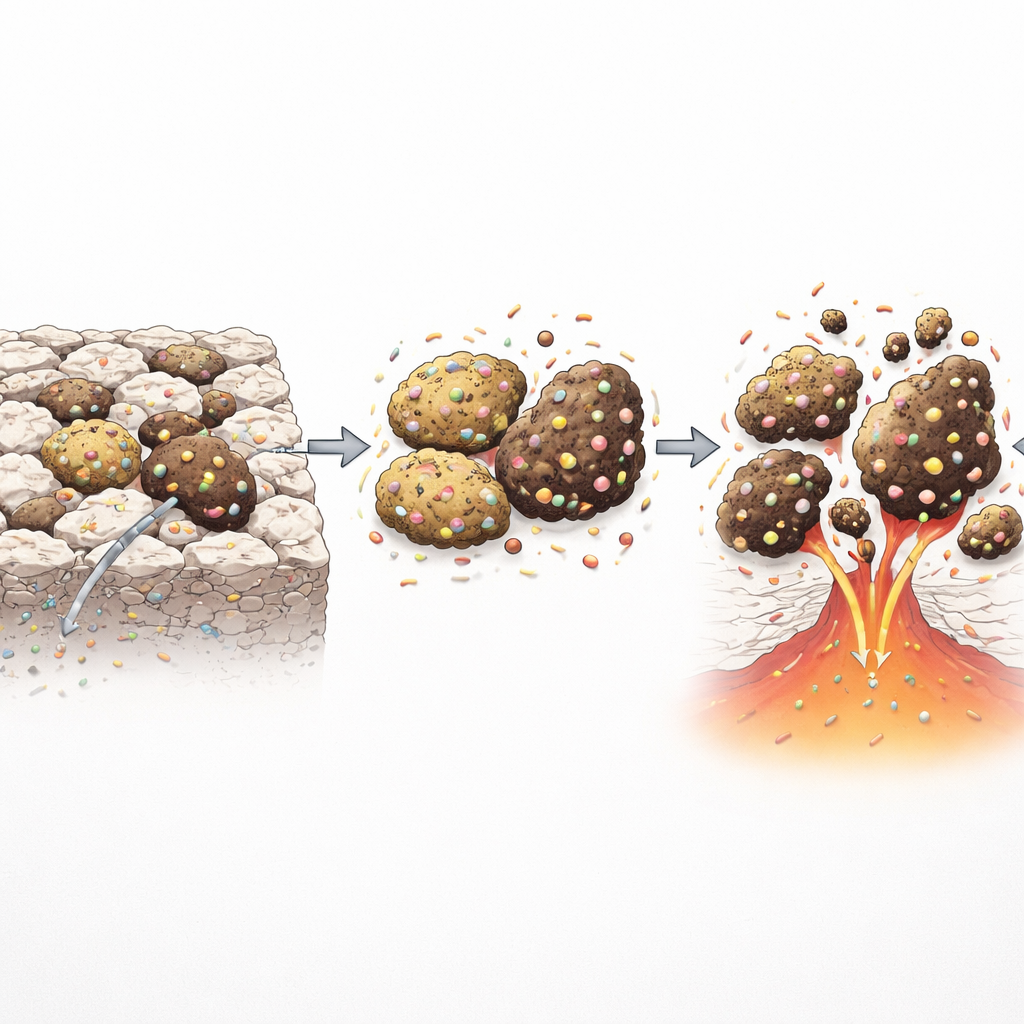
Citation: Xiao, M., Zhao, G., Jiang, Y. et al. Reworked staurolite-rich metamorphic belts as lithium-fertile terranes. Commun Earth Environ 7, 280 (2026). https://doi.org/10.1038/s43247-026-03293-6
Keywords: lithium deposits, metamorphic belts, staurolite, pegmatites, crustal reworking