Clear Sky Science · en
Coating strategies for improving electrochromic WO3 quantum-dots
Windows That Can Think About Sunlight
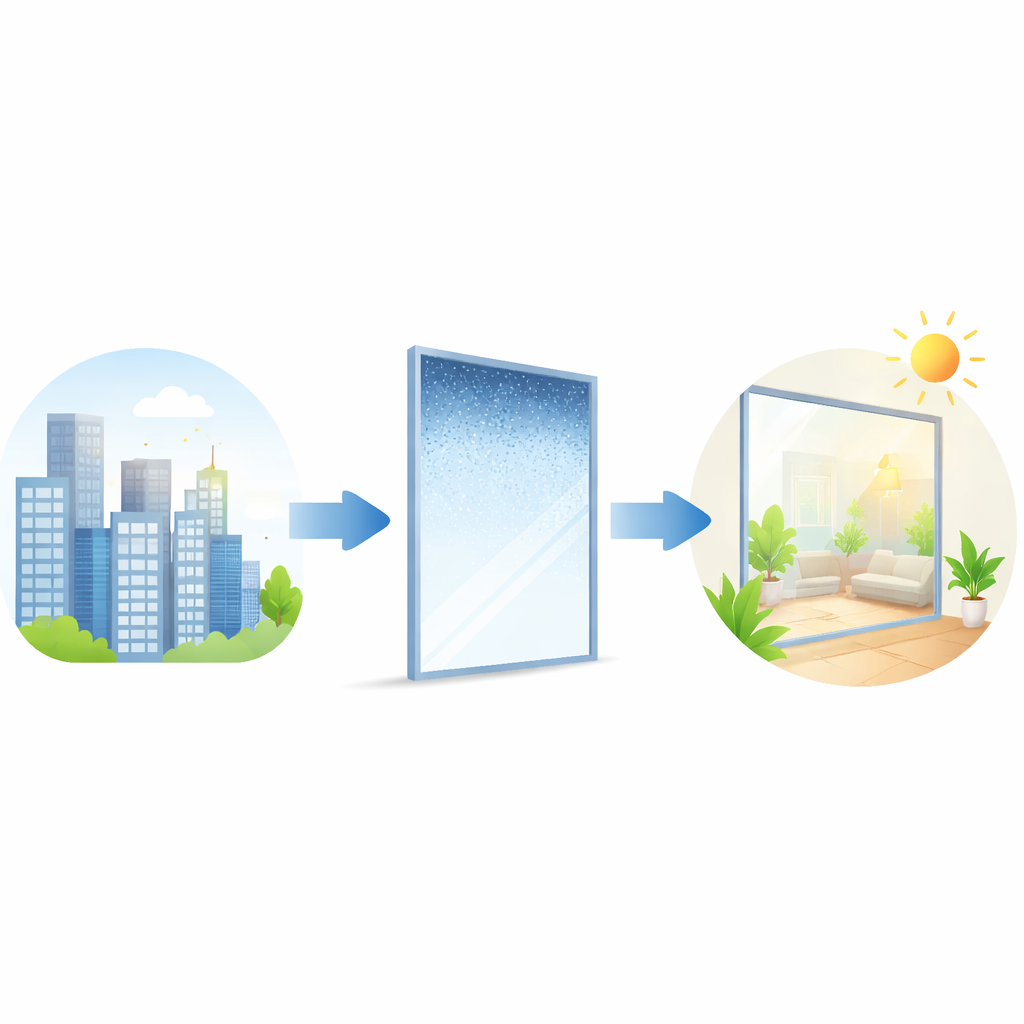
Imagine a window that darkens on a bright summer day to keep your room cool, then turns clear again when the sun goes down—all automatically, with very little power. This study explores how to make that kind of "smart window" work faster, last longer, and be cheaper to manufacture by improving some of the tiniest building blocks inside: nanoscale color-changing particles based on tungsten oxide.
Why Tiny Dots Matter for Smart Windows
Many smart windows rely on a material called tungsten oxide that changes how much light it lets through when small charged particles move in and out of it. Shrinking tungsten oxide down into extremely small grains, called quantum dots, makes this effect quicker and more efficient. These dots can be sprayed or printed over large areas, offering a low-cost path to smart glass for buildings, cars, and electronics. But there is a catch: bare quantum dots tend to clump together and can be slowly eaten away by the liquid inside the device, which shortens the window’s working life and reduces performance.
Wrapping Each Dot in a Protective Jacket
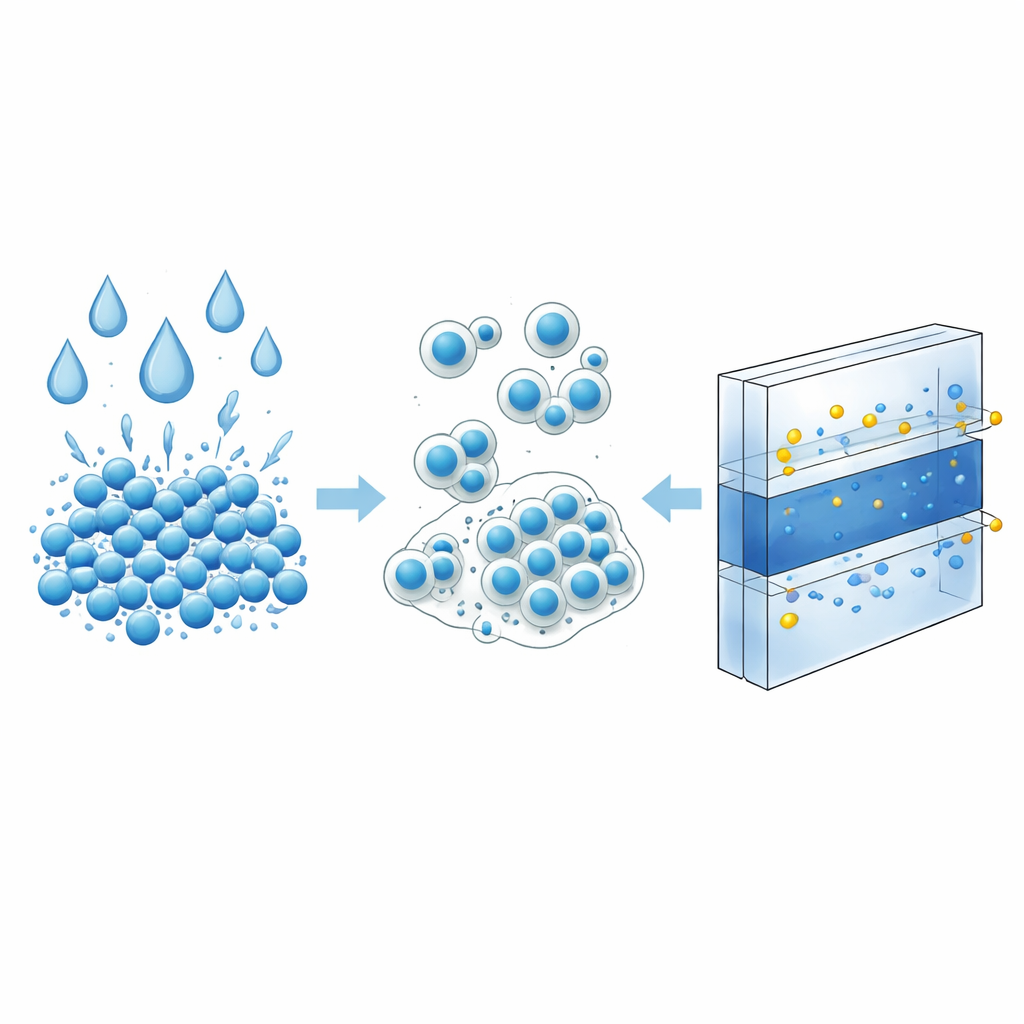
The researchers tackled this problem by wrapping the tungsten oxide dots in an ultra-thin layer of another familiar material, titanium oxide. Rather than using larger particles, they controlled the chemistry so that the coating forms right on the scale of individual dots. In one approach, each dot is coated on its own, like beads each given a clear jacket. In the other approach, several dots are embedded together inside a fine titanium oxide network, like berries inside a gel. In both cases, the dots stay tiny—about one to three billionths of a meter across—preserving their speed and precision while gaining protection from damage and clumping.
How the Coatings Change Light and Charge
To see whether these jackets actually help, the team built complete smart-window test devices using sprayed films of the coated dots on transparent conducting glass. They then measured how much the devices could swing between clear and tinted states, how quickly they switched, and how stable they remained after thousands of on–off cycles. When each dot was individually coated, the windows still switched within a few seconds, but the change in light transmission became larger than with uncoated dots. At certain mixing ratios of tungsten to titanium, the devices blocked or passed more than half of the incoming light in key parts of the visible and near‑infrared range, while the internal electrical resistance dropped—signs that charges were moving more freely and more of the material was taking part in the color change.
Bundling Many Dots for Toughness
The second strategy, where many dots are encapsulated together inside a titanium oxide framework, turned out to be especially promising for durability. These films were still very thin—around two tenths of a micrometer—but they produced even larger changes in transparency, up to around four‑fifths of the incoming light at some wavelengths. Electrical tests showed that these multi-dot layers let charges move with relatively low resistance while keeping the overall behavior similar to that of the original dot films. Most importantly, after ten thousand rapid switching cycles, the devices still had plenty of active charge and continued to bleach and darken reliably, suggesting they could withstand long-term use.
Balancing Speed, Strength, and Simplicity
The protective coatings come with a trade-off: thicker titanium oxide paths slow down the motion of the small charged particles that drive the color change, slightly lengthening the switching time. Still, the devices remained faster than many conventional smart-window films made by older methods. The coated dots also allowed more flexible manufacturing: because the performance of the multi-dot structures was strong over a wider range of recipes, large-area production by spraying or printing becomes easier to control. The authors conclude that carefully designed coatings at the molecular level can give tungsten oxide quantum-dot windows both high contrast and long life, opening the door to practical, energy‑saving smart glass that can be made cheaply and applied to complex surfaces.
Citation: Yang, D., Deng, S., Jin, Z. et al. Coating strategies for improving electrochromic WO3 quantum-dots. Commun Mater 7, 106 (2026). https://doi.org/10.1038/s43246-026-01117-w
Keywords: electrochromic smart windows, tungsten oxide quantum dots, thin film coatings, titanium dioxide layers, energy efficient glazing