Clear Sky Science · en
Silk fibroin-coated nanoparticles for safe and efficient antithrombotic drug delivery
Why tiny drug carriers could matter to you
Many people with heart disease or a history of blood clots must take blood-thinning drugs for months or years. These medicines can save lives by preventing dangerous clots, but they also raise the chance of serious bleeding. This study explores a new way to package an existing clot-preventing drug so that it works longer and more steadily in the body, with less risk of sudden overdose and bleeding.
The problem with today’s clot-preventing drugs
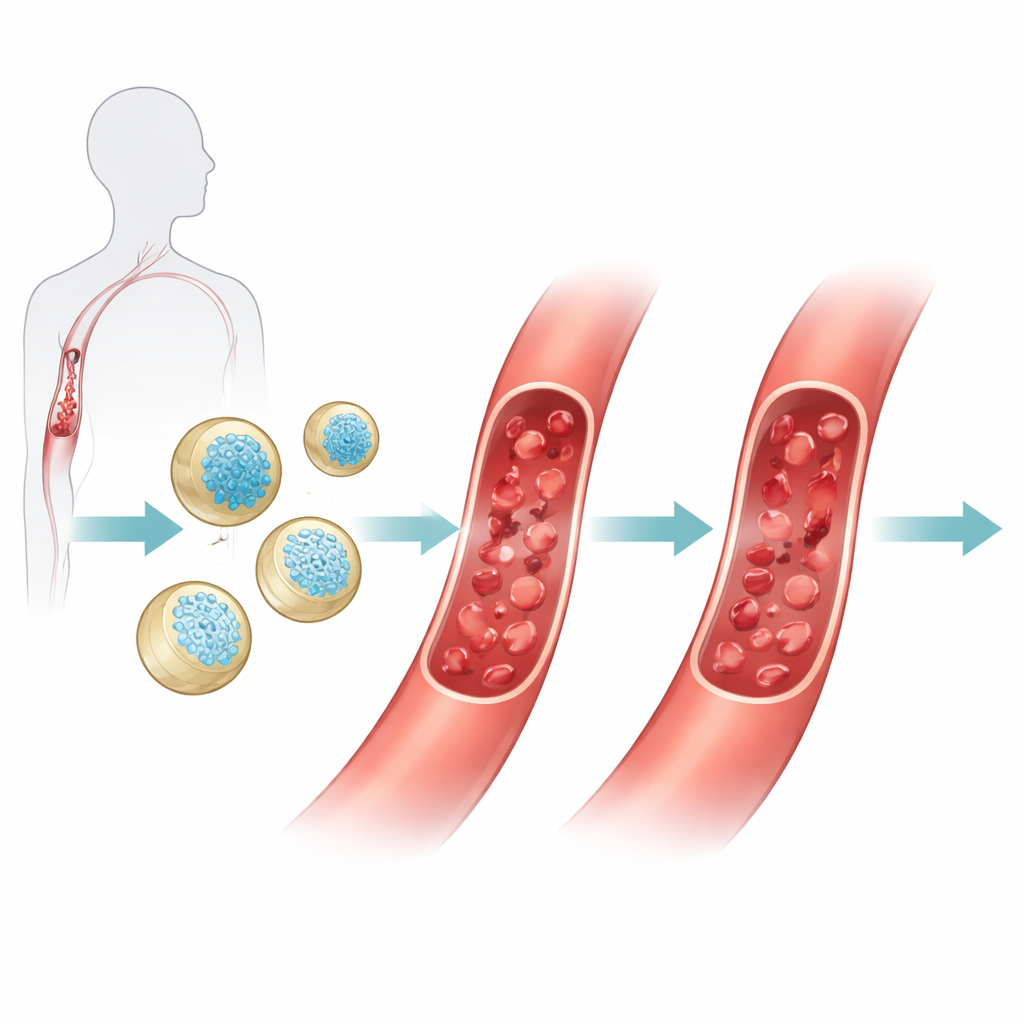
Blood clots that block arteries can trigger strokes, heart attacks, and damage to organs. Doctors often rely on drugs like heparin to stop clots from forming or growing. However, these drugs clear from the bloodstream quickly and must be given in relatively high and repeated doses. That can push the body’s natural clotting system too far, leading to uncontrolled bleeding from simple injuries or internal sites. Finding a way to keep the drug level in a safer, more even range over time is a key challenge in caring for people with long‑term clotting risks.
Building a tiny sponge with a soft protective jacket
The researchers created a two-part nano-sized carrier that acts like a sponge wrapped in a gentle shell. The inner core is made of mesoporous silica, a form of glass riddled with regularly spaced holes. By enlarging these holes to about 10 nanometers across, they built particles that can soak up large amounts of heparin. Around this core they added a thin coating of silk fibroin, a protein taken from silk that is already known to be friendly to living tissues. Tests with electron microscopes and chemical fingerprinting confirmed that the particles were uniform in size, had enlarged pores, and were successfully wrapped with the silk layer while carrying the drug.
Slow and steady medicine release with better blood compatibility
When the team compared uncoated and silk-coated particles in laboratory tests, they found that the silk jacket changed how the drug left the particles. Uncoated particles released most of their heparin within a day, like a burst dam. Silk-coated particles instead let the drug seep out gradually over at least three days, stretching out the time during which helpful levels were present. The silk layer also made the particles friendlier to cells and red blood cells. At high concentrations, bare silica particles damaged more cells and triggered more breaking of red blood cells, while silk-coated ones left most cells alive and blood cells intact, showing that the soft coating improved safety for use in the bloodstream.
Putting the new particles to the test in living mice
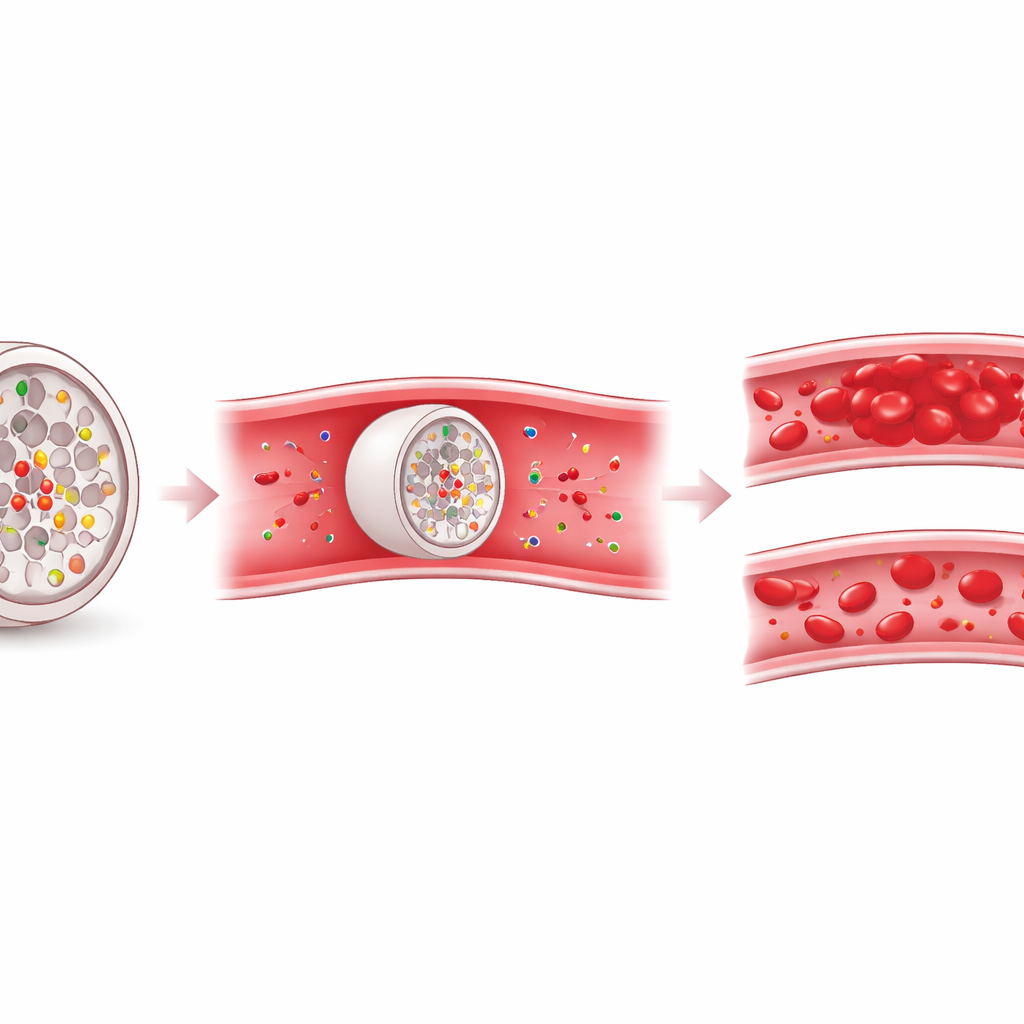
The scientists then moved to mouse models that mimic clotting in neck arteries and in the tail. In both situations, free heparin reduced clots but required doses that strongly weakened the blood’s ability to clot, as shown by longer clotting times and heavy bleeding from tail cuts. Heparin packed inside plain silica particles worked better than free drug alone but still showed limits in control. In contrast, silk-coated, heparin-loaded particles gave the highest protection against clots, shrinking clot size and length while causing much less extra bleeding. Markers of inflammation that usually rise after clot-triggering treatments were also lower in mice given the new particles, suggesting an added calming effect on the body’s response.
Safety of the new approach inside the body
Beyond clot results, the team carefully checked whether repeated injections harmed major organs. Tissue slices from the heart, liver, spleen, lungs, and kidneys looked healthy after short- and longer-term treatment. Standard blood tests for liver health stayed in normal ranges. Imaging of fluorescently tagged particles showed that they mainly collected in the liver and gradually faded over a week, consistent with normal clearance. Together these findings indicate that the silk-coated carriers are well tolerated in mice under the tested conditions.
What this could mean for future patients
In everyday terms, the study shows that wrapping a common clot-preventing drug in a porous glass core and a silk jacket can turn it into a slower, steadier medicine. In mice, this design prevented clots more effectively than the drug alone while cutting the risk of dangerous bleeding and tissue damage. Although much more work is needed before such particles could be used in people, the approach points toward a future in which long-term blood-thinning therapy is safer, more comfortable, and less likely to force a trade-off between stopping clots and avoiding hemorrhage.
Citation: Lu, L., Cheng, Q., Cai, J. et al. Silk fibroin-coated nanoparticles for safe and efficient antithrombotic drug delivery. Commun Mater 7, 90 (2026). https://doi.org/10.1038/s43246-026-01093-1
Keywords: blood clots, nanoparticles, drug delivery, heparin, silk protein