Clear Sky Science · en
Tucatinib–trastuzumab–capecitabine for treatment of leptomeningeal metastasis in women with HER2+ breast cancer: TBCRC049 phase 2 study results
Why this study matters to patients and families
Cancer that spreads to the thin layers and fluid surrounding the brain and spinal cord, called leptomeningeal metastasis, is one of the most feared complications of advanced breast cancer. Symptoms such as headaches, trouble walking, and changes in thinking can appear quickly, and historically patients have lived only a few months after diagnosis. This study tested whether a modern three-drug combination, already known to help patients whose breast cancer has spread to the brain, could also help women facing this particularly grim form of disease.
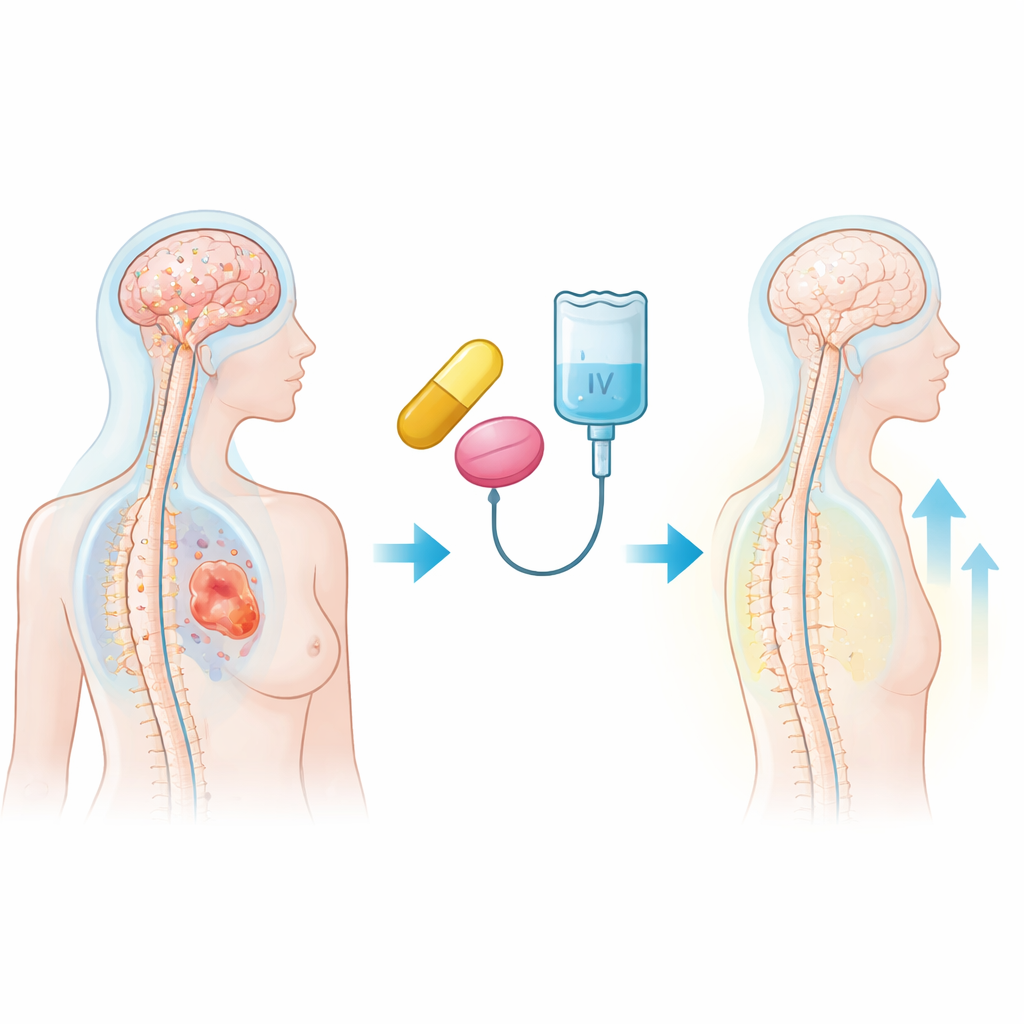
A dangerous spread to the brain’s lining
As people with cancer live longer thanks to better treatments, doctors are seeing more cases where tumor cells escape and seed the delicate coverings and fluid around the brain and spinal cord. In women with HER2-positive breast cancer—a type driven by extra copies of the HER2 growth signal—this spread is especially ominous. Once leptomeningeal metastasis appears, options are limited: radiation, direct injections of drugs into the spinal fluid, and occasionally whole-body medicines. These approaches can be invasive, hard to tolerate, and only modestly effective, with typical survival of four to five months. Researchers have hoped that newer HER2-targeted pills that reach the brain more easily could change this outlook.
A trio of drugs designed to reach the right place
The team focused on a combination of three medicines: tucatinib, a highly selective HER2-blocking pill; trastuzumab, an antibody given by vein that latches onto HER2 on cancer cells; and capecitabine, a chemotherapy pill. This regimen had already improved survival for patients with HER2-positive breast cancer that had spread to the brain. The key question was whether tucatinib could reach the cerebrospinal fluid at meaningful levels, and whether the full three-drug program could slow or shrink leptomeningeal disease while keeping symptoms and side effects manageable.
What the trial did and who took part
In this phase 2 study, 17 women with metastatic HER2-positive breast cancer and newly diagnosed leptomeningeal metastasis were treated at four centers in the United States. Most already had a history of cancer deposits inside the brain and had received radiation or other local treatments. All had clear signs of spread to the brain’s lining on MRI scans, and nearly half had cancer cells detected in their spinal fluid. Every 21 days, participants took tucatinib twice daily and capecitabine for two weeks, along with regular infusions of trastuzumab. Researchers tracked how long women lived, how long it took for disease in the brain and its coverings to worsen, whether scans and spinal fluid improved, and how patients felt day to day.

Signs of longer life and better function
The results were striking compared with older reports. Half of the women lived at least 10 months after starting treatment—more than double the typical four to five months seen historically. The median time before cancer in the brain and its coverings clearly worsened was almost seven months. Among 13 women who could be fully evaluated, five showed a clear combined response: improvements on MRI, spinal fluid, and neurological checks. All evaluable patients at least avoided early worsening, and seven of twelve with obvious neurological problems, such as imbalance or vision changes, saw those deficits improve, often by the first follow-up visit. Quality-of-life questionnaires showed, on average, better overall well-being and fewer symptoms over time, rather than the steady decline usually expected in this condition.
How the drugs reached the brain’s fluid safely
To understand how the regimen was working, the researchers measured tucatinib and its main breakdown product in both blood and spinal fluid. They found that tucatinib routinely reached the spinal fluid at concentrations similar to the unbound (active) levels in blood, and these levels were maintained over time. This supports the idea that the pill is crossing natural barriers to bathe tumor cells in the fluid-filled spaces around the brain and spinal cord. Side effects were generally manageable and matched what has been seen when these drugs are used for other forms of metastatic HER2-positive breast cancer, with diarrhea, nausea, hand–foot skin reactions, and temporary liver test elevations being the most common problems. Importantly, no new nerve-related toxicities emerged.
What this means for people facing this diagnosis
For women with HER2-positive breast cancer that has spread to the brain’s lining and fluid, this small but carefully conducted study offers a rare note of hope. A fully systemic pill-and-infusion regimen—rather than repeated injections into the spinal fluid or large-field radiation—was able to extend survival, ease neurological symptoms, and maintain or even improve quality of life for many participants. While larger studies are still needed and questions remain about how best to combine or sequence this regimen with other treatments, these findings support using tucatinib, trastuzumab, and capecitabine as a meaningful option when leptomeningeal metastasis is first diagnosed.
Citation: Murthy, R.K., O’Brien, B.J., Berry, D.A. et al. Tucatinib–trastuzumab–capecitabine for treatment of leptomeningeal metastasis in women with HER2+ breast cancer: TBCRC049 phase 2 study results. Nat Cancer 7, 424–434 (2026). https://doi.org/10.1038/s43018-026-01120-7
Keywords: HER2-positive breast cancer, leptomeningeal metastasis, tucatinib, brain metastases, systemic therapy