Clear Sky Science · en
Fishery nutrient profiles provide practical guidance for nutrition-sensitive small-scale fisheries management in Timor-Leste
Why the right fish matter for dinner
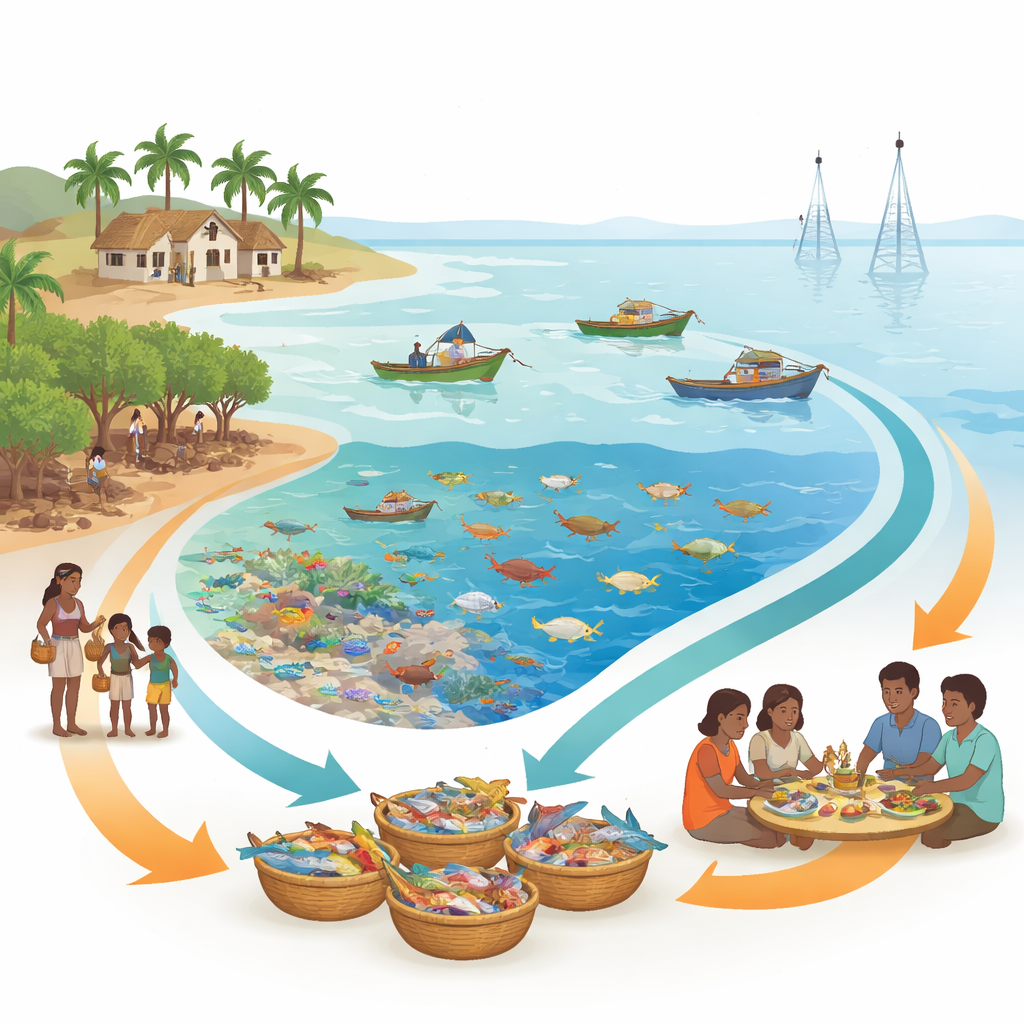
In many coastal communities, fishing is not only about making a living; it is about putting vital nutrients on the family table. This study from Timor-Leste, a small island nation in Southeast Asia, asks a deceptively simple question with big consequences: if we changed how and where people fish, could we greatly improve nutrition—especially for women and children—without catching more fish? The researchers show that by treating fish not just as tons of protein but as packages of vitamins and minerals, fisheries can be managed to boost public health as well as protect the sea.
From fish counts to nutrient counts
Conventional fisheries management tends to focus on how many fish can be taken without crashing a stock. Yet different species deliver very different mixes of nutrients. Using six years of detailed data from over 77,000 small-scale fishing trips around Timor-Leste, the authors linked each catch to information on its content of protein, iron, zinc, calcium, vitamin A and omega-3 fats. They found that small, fast-growing species such as sardines, mackerels and flying fish, along with many shellfish, are nutritional powerhouses. These species deliver high amounts of multiple nutrients at relatively low prices—making them especially valuable for poor households at risk of anemia, stunting and other diet-related problems.
Which boats and nets feed people best
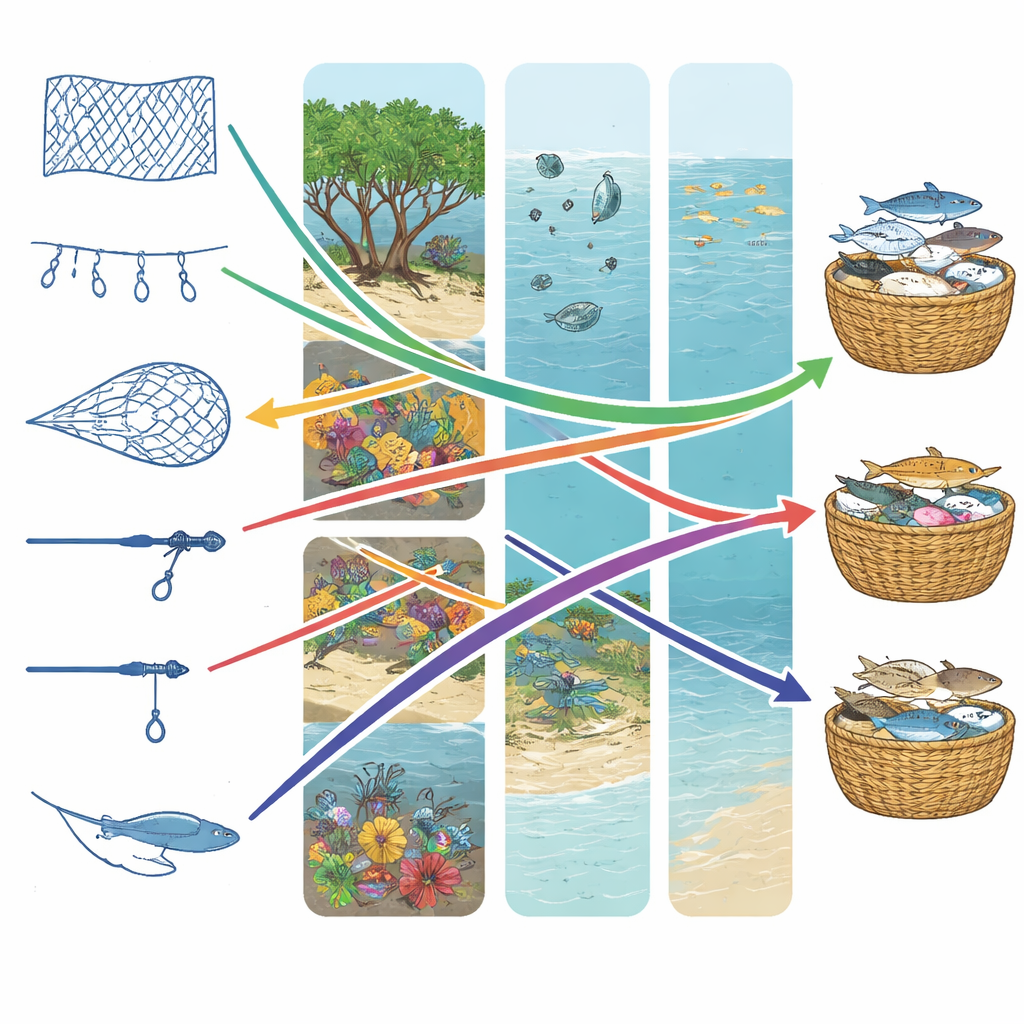
The team then asked how fishing decisions shape this “nutrient yield.” They examined factors that fishers can and do change every day: the type of gear they use, the size of net mesh, the habitats they visit—coral reefs, mangroves, open water or nearshore areas—and the season. Some strategies consistently brought home more nutrient-dense catches than others. Nearshore fish aggregating devices (simple floating structures that attract fish) helped fishers catch more small pelagic species rich in calcium, iron and omega-3s. Reef and mangrove areas also contributed strongly to nutrient-dense catches, in part through women’s gleaning of crabs, cockles and octopus, which turned out to be remarkably rich in key micronutrients.
Turning complex catches into clear patterns
Because small-scale fishers catch many species at once, the researchers grouped trips into three recurring “fishery nutrient profiles.” Each profile represents a characteristic mix of the six nutrients per kilogram of catch, rather than focusing on a single vitamin or mineral. One profile excelled in calcium, iron and omega-3s; another was especially strong in protein and iron; a third stood out for vitamin A and zinc. Using a machine-learning method, they showed that these profiles could be predicted quite accurately from a few simple pieces of information: the gear type, habitat fished, and, for gill nets, the mesh size. For example, smaller-mesh gill nets used in pelagic or mangrove waters were strongly linked to the most nutrient-rich profile, while certain long lines in offshore waters produced high-protein, high-iron catches.
What this means for people’s plates
To see what was at stake for human diets, the study estimated how much of women’s recommended daily intakes these catches could theoretically cover if shared fairly. Current small-scale marine catches could provide enough protein for about two-thirds of Timor-Leste’s women of reproductive age, and substantial shares of their needs for zinc, calcium and omega-3s. In some municipalities, local catches already exceed what local women would need to meet national fish-consumption guidelines, while neighboring areas fall short—pointing to opportunities for smarter trade and distribution. Even so, the overall supply is not enough for the entire population, highlighting the need to both improve how fisheries are managed and invest in complementary food sources such as aquaculture.
Fishing for health as well as for harvest
The authors conclude that small-scale fisheries can be guided toward better nutrition outcomes without adding pressure to the ocean, simply by steering effort toward gear–habitat combinations that reliably yield more nutritious mixes of species. Rather than asking only “how much fish can we take?”, their framework invites managers and communities to ask “how should we fish to nourish people and protect ecosystems?” In Timor-Leste and similar low- and middle-income countries, adopting this nutrition-sensitive approach—supported by digital catch monitoring tools—could help turn everyday fishing trips into a more powerful defense against hidden hunger.
Citation: Longobardi, L., Bonis-Profumo, G., Altarturi, H. et al. Fishery nutrient profiles provide practical guidance for nutrition-sensitive small-scale fisheries management in Timor-Leste. Nat Food 7, 334–344 (2026). https://doi.org/10.1038/s43016-026-01313-4
Keywords: nutrition-sensitive fisheries, small-scale fisheries, Timor-Leste, micronutrient-rich fish, food and nutrition security