Clear Sky Science · en
Valuing climate information in context
Why this matters for everyday city life
Many cities now have access to detailed data about how climate change could bring more floods, heatwaves, or storms. Yet those numbers often sit on shelves instead of shaping the streets we walk, the parks we enjoy, or the homes we live in. This article explores why some climate information is used while other data is ignored, and shows that the answer lies less in better science and more in how cities see themselves, make decisions, and build trust among the people who plan and run them.
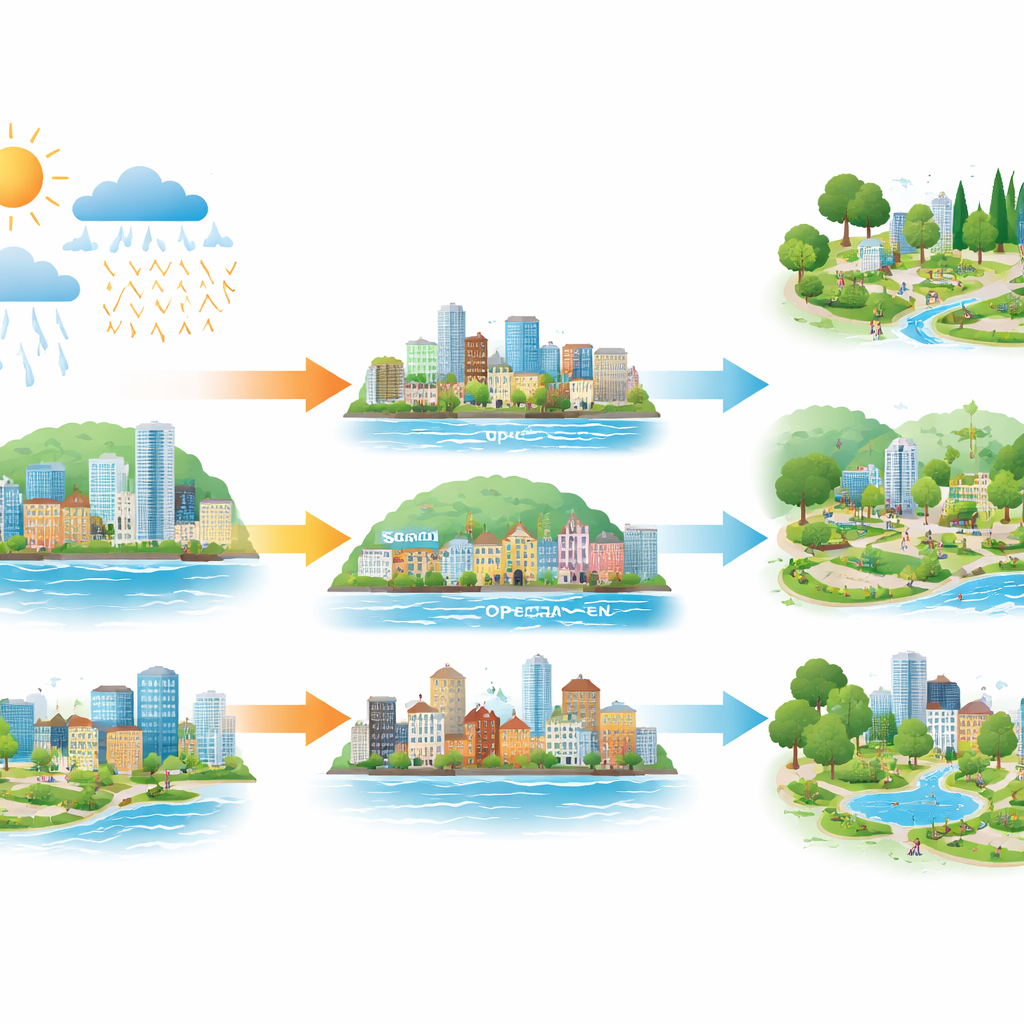
From climate charts to city streets
The authors start from a simple puzzle: despite decades of investment in climate monitoring and forecasting, local governments still struggle to weave this knowledge into everyday planning and policy. They argue that access to forecasts is not enough; what really matters is how city staff and leaders judge whether climate information is valuable, credible, and workable. These judgments are shaped by formal rules, such as laws and technical standards, and by informal norms, such as “how we usually do things here” or what is seen as politically safe. Climate information only becomes useful when it fits these expectations and helps people do their jobs without derailing existing routines or priorities.
Three cities, three stories
To see how this plays out in practice, the researchers studied three European cities—Bilbao, San Sebastián, and Copenhagen—that have all worked with climate data for years. Through 34 in-depth interviews with city officials, scientists, consultants, and other actors, they traced how climate information moved from reports into plans and projects. In Bilbao, a powerful memory of a devastating flood and a strong story of successful urban renewal led officials to focus almost entirely on river flooding, while quieter threats like heat received less attention. In San Sebastián, a broad sustainability agenda and a formal citywide climate strategy pushed departments to coordinate across sectors, but also triggered turf tensions over who should lead and how much extra work was acceptable. In Copenhagen, a costly cloudburst and national rules helped anchor a long-term, citywide program of blue–green infrastructure, but only because projects could be framed as adding visible value to daily life.
Unwritten rules that guide decisions
Across all three cases, the authors found that unspoken norms were just as important as official mandates. In Bilbao, change was more likely to be accepted if it came in small, incremental steps that did not disrupt established procedures; climate maps for urban heat were used first in just a few pilot areas, easing them into the planning system. In San Sebastián, cooperation around the city’s climate plan relied heavily on mutual trust, past collaboration, and a sense that departments retained ownership of their work; climate data was folded into familiar methods, like social and health indicators, rather than introduced as a stand-alone layer. In Copenhagen, a shared culture of collaboration and problem-solving made it easier to juggle strict environmental regulations, limited budgets, and ambitious climate goals, with officials learning by doing and refining solutions through repeated projects.
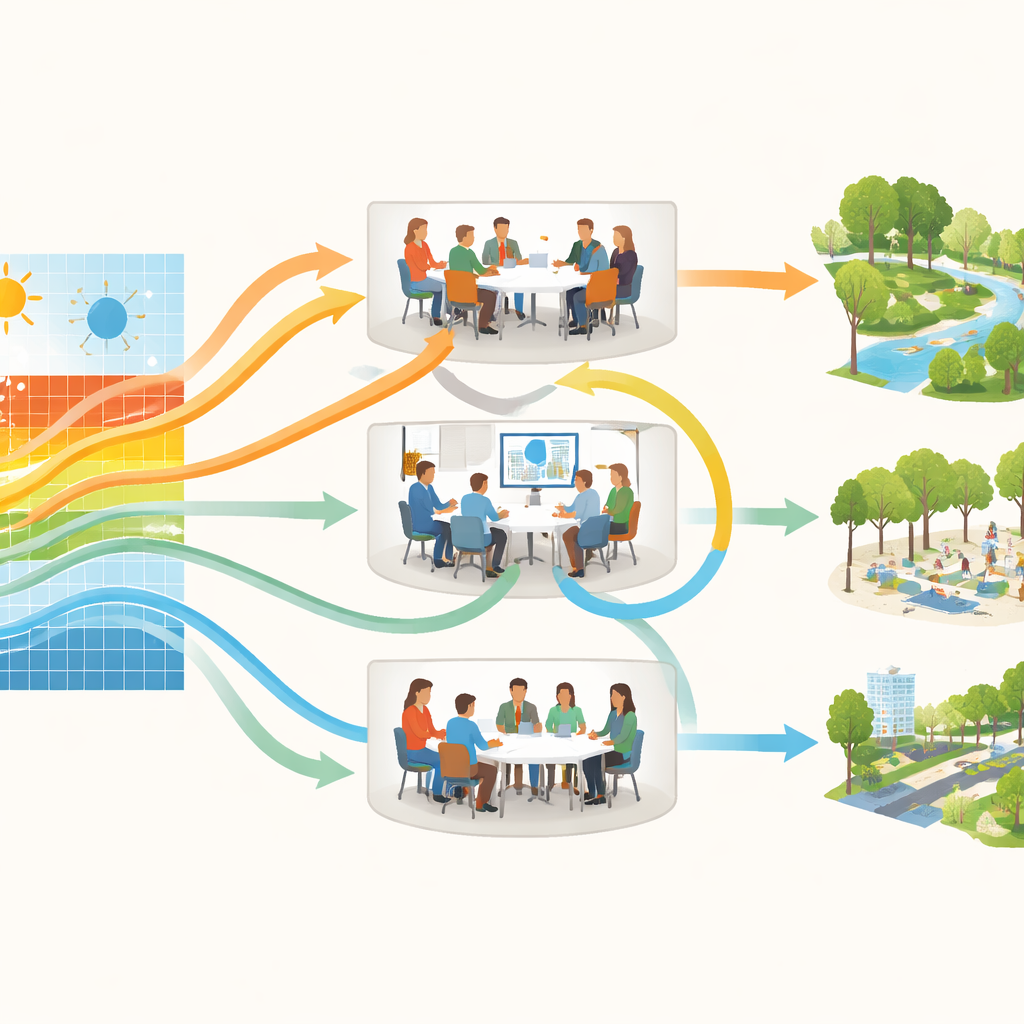
How power, place, and timing shape climate choices
The study also shows that who holds influence, and how city identities are framed, strongly steer which climate information matters. Political leaders needed risks and options presented in ways that aligned with their agendas—public safety, international reputation, legal compliance, or economic opportunity. Specialized departments gained new authority when they were tasked with adaptation, allowing them to reshape how other units planned and coordinated. Meanwhile, residents’ expectations and acceptance could accelerate or halt projects, pushing officials to design measures that were not only protective but also attractive and fair. In each city, climate information travelled through a web of cause-and-effect relationships, spatial coordination, and existing rules that either opened doors or closed them.
What this means for better climate services
In conclusion, the article argues that making climate information “usable” is not mainly about refining models or adding more detail. It is about understanding the stories cities tell about themselves, the norms that define good practice, and the everyday pressures faced by planners, engineers, and politicians. Climate data is most likely to be used when it can be woven into trusted methods, linked to long-term visions, and shown to deliver visible benefits—safer neighborhoods, greener streets, or more livable public spaces—without clashing with legal or political limits. For those who produce and share climate information, this means working closely with local actors to learn how they evaluate new ideas, where they see room for change, and how climate risks can be framed so they resonate with existing goals and identities.
Citation: Reveco Umaña, C., Máñez Costa, M. Valuing climate information in context. npj Urban Sustain 6, 72 (2026). https://doi.org/10.1038/s42949-026-00395-0
Keywords: urban climate adaptation, climate information use, city governance, climate services, blue-green infrastructure