Clear Sky Science · en
Urban agrivoltaics enhance crop resilience and food-energy synergies in a changing climate
Growing Food and Power in the Same City Space
Cities everywhere are struggling with two big problems at once: keeping people fed with fresh, affordable food and keeping the lights on without overheating the planet. This study explores a way to tackle both challenges using the same patch of urban land by combining solar panels with community-style vegetable gardens. The work shows how a thoughtfully designed system can turn rooftops and vacant lots into places that provide shade, electricity, and resilient crops, even as heat waves become more common. 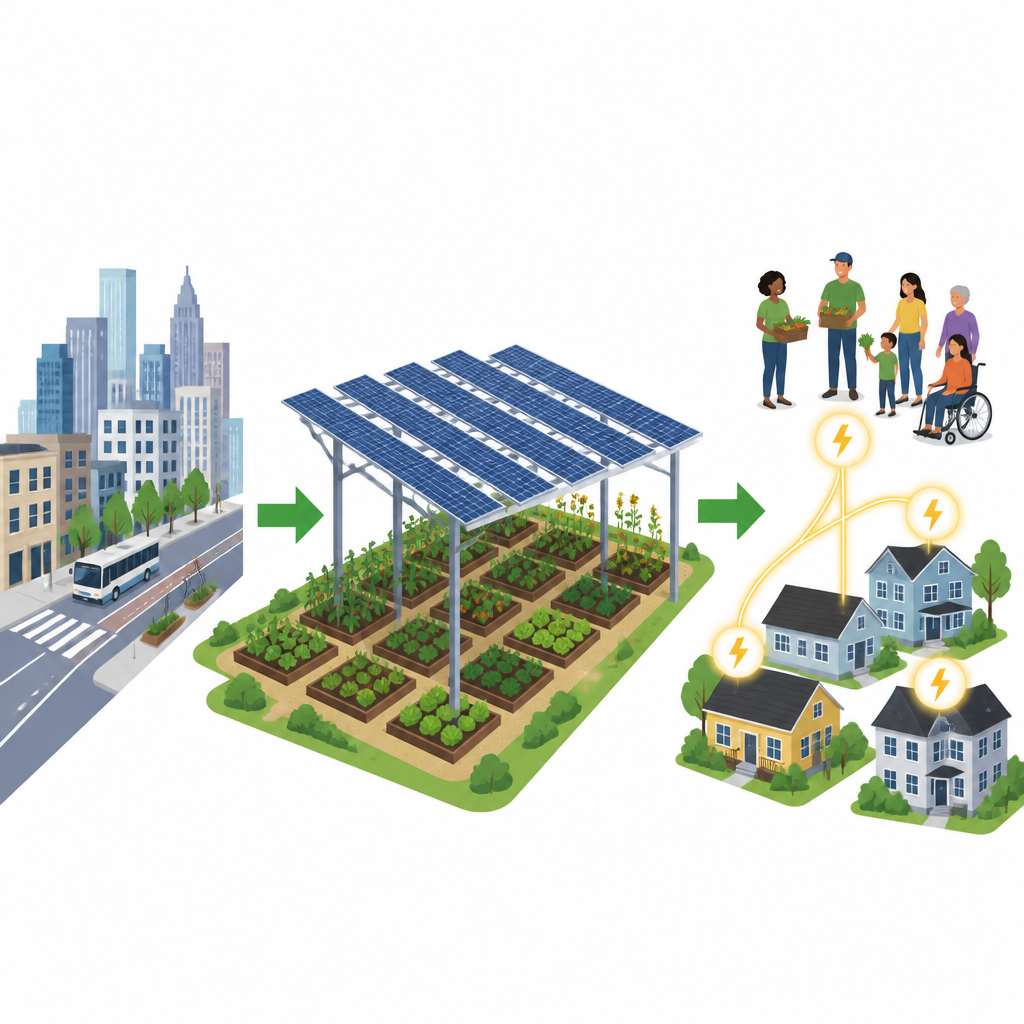
How Solar Panels and Gardens Share Space
The researchers tested an "urban agrivoltaics" setup at a field station near Philadelphia. They raised rows of solar panels several meters above a series of raised garden beds planted with lettuces, beans, radishes, basil, and cherry tomatoes. Nearby, a matching set of beds was left in full sun as a comparison. Sensors continuously tracked light, temperature, humidity, soil moisture, and rainfall, while the team carefully recorded plant height, leaf size, yield, and even vitamin and mineral content in harvested crops. This allowed them to see not just how much food was produced, but how the plants were coping with the new, shaded microclimate created by the panels.
Early Setbacks, Later Advantages for Crops
At first glance, the solar-equipped garden did not look like a clear win for food production. During the cooler early part of the growing season, most crops under the panels produced less than those growing in full sun. Lower light and slightly cooler conditions slowed germination and early growth, leading to smaller plants and delayed flowering in several varieties. Some plants, like basil and certain lettuces, sprouted later in the shaded plots and remained behind their full-sun counterparts for weeks. These early-season losses might worry farmers who rely on quick harvests.
Shade as a Shield Against Heat and Drought
The picture changed dramatically once hot, dry weather set in. When heat waves arrived, many full-sun plants became stressed, stopped producing, or failed to reach harvest size. Under the panels, however, crops benefited from cooler air, higher humidity, and soils that held water longer. In this period, shaded plots were often the only ones still yielding lettuce, radishes, beans, and basil. Some varieties performed especially well near the edges of the structure, where they received a balance of shade and direct light. Overall, yields under agrivoltaics rebounded enough during the hottest months to extend the harvest season and partially offset earlier losses, a key form of resilience as summers grow more extreme. 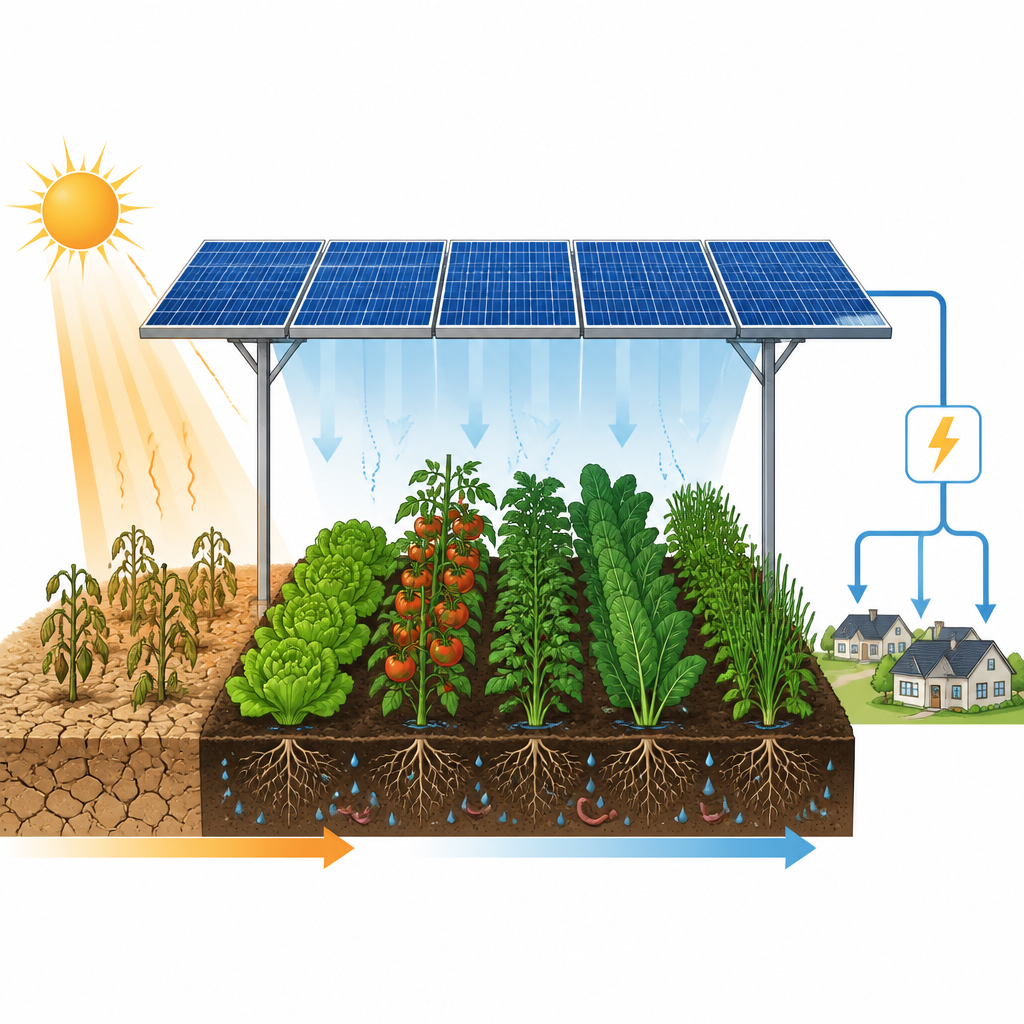
Nutrition, Plant Health, and Citywide Potential
Beyond simple weight of produce, the team examined how the new environment affected plant chemistry and nutrition. Despite some changes in nutrient levels, most vitamins and minerals in shaded crops stayed within healthy ranges, and in many cases slight deficiencies were actually less severe than in full-sun plants. The researchers also found that leaves under the panels adjusted their structure to capture available light more efficiently without becoming nutrient-poor. Looking beyond this single test site, they mapped vacant land and rooftops across Philadelphia and estimated how many such systems could fit. Their analysis suggests that converting a modest share of these spaces to agrivoltaic gardens could power tens of thousands of homes while supplying fresh produce to many neighborhoods that currently lack easy access to healthy food.
What This Means for Future Cities
For a layperson, the main takeaway is straightforward: raising solar panels over city gardens can turn underused urban land into double-duty spaces that grow both food and clean power. While shade from panels can slow crops early in the season, it gives plants a crucial edge when heat and drought would otherwise shut them down. The study shows that carefully planned urban agrivoltaics can make harvests more reliable, stretch the growing season, and improve access to fresh produce and electricity in low-income areas, all without needing extra land. As cities heat up and space becomes scarcer, this kind of shared roof and ground design could become a practical part of healthier, more sustainable neighborhoods.
Citation: Merheb, C., Caplan, J.S., Phuyal, P. et al. Urban agrivoltaics enhance crop resilience and food-energy synergies in a changing climate. npj Urban Sustain 6, 78 (2026). https://doi.org/10.1038/s42949-026-00381-6
Keywords: urban agrivoltaics, solar panels, urban agriculture, food security, climate resilience