Clear Sky Science · en
Efficiently evaluating Holevo, RLD and SLD Cramér-Rao bounds for multiparameter quantum estimation with Gaussian states
Sharper measurements from fuzzy quantum light
Many of tomorrow’s most sensitive sensors, from ultra-precise clocks to gravitational-wave detectors, rely on strange quantum states of light and matter. But when several physical quantities must be measured at once, quantum rules limit how well we can do. This paper develops a practical recipe for finding the ultimate precision limits in a very important class of quantum systems—Gaussian states—making it much easier for experimentalists to know how close their setups can come to the true quantum frontier.
Why multiple measurements are hard
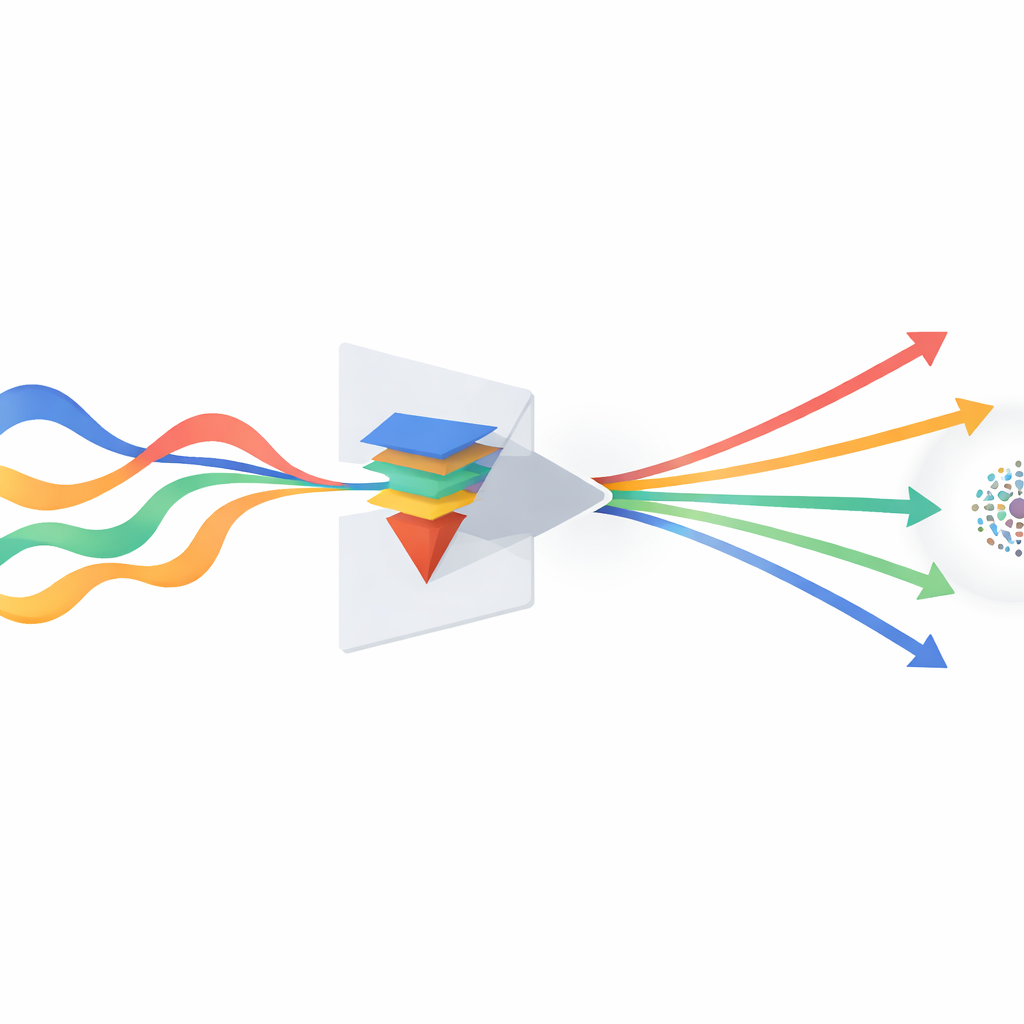
In everyday statistics, there is a well-known formula, the Cramér–Rao bound, that tells us how precisely a parameter can be estimated from noisy data. In quantum physics, the situation is more subtle, because measurements can disturb the system and different observables may be fundamentally incompatible. Over the years, physicists have defined several quantum versions of this bound. Two popular ones, based on so‑called symmetric and right logarithmic derivatives, are relatively easy to compute but often too optimistic when several parameters are estimated simultaneously. A more faithful but mathematically demanding limit, known as the Holevo Cramér–Rao bound, captures the full cost of measurement incompatibility and can in principle be reached if we are allowed to perform clever joint measurements on many identical copies of the quantum state.
Gaussian states as a testing ground
The work focuses on continuous-variable systems—those described not by discrete levels, but by quantities like the position and momentum of light fields or mechanical oscillators. A large and experimentally accessible family of such states, called Gaussian states, can be fully described just by their average values and their spread (the first and second moments) in phase space. These states are central to quantum optics, optomechanics, and atomic ensembles, and underpin many sensing and communication protocols. Because their description is compact, they provide an ideal playground for developing general tools to understand the best possible performance of quantum sensors.
Turning a hard problem into a solvable program
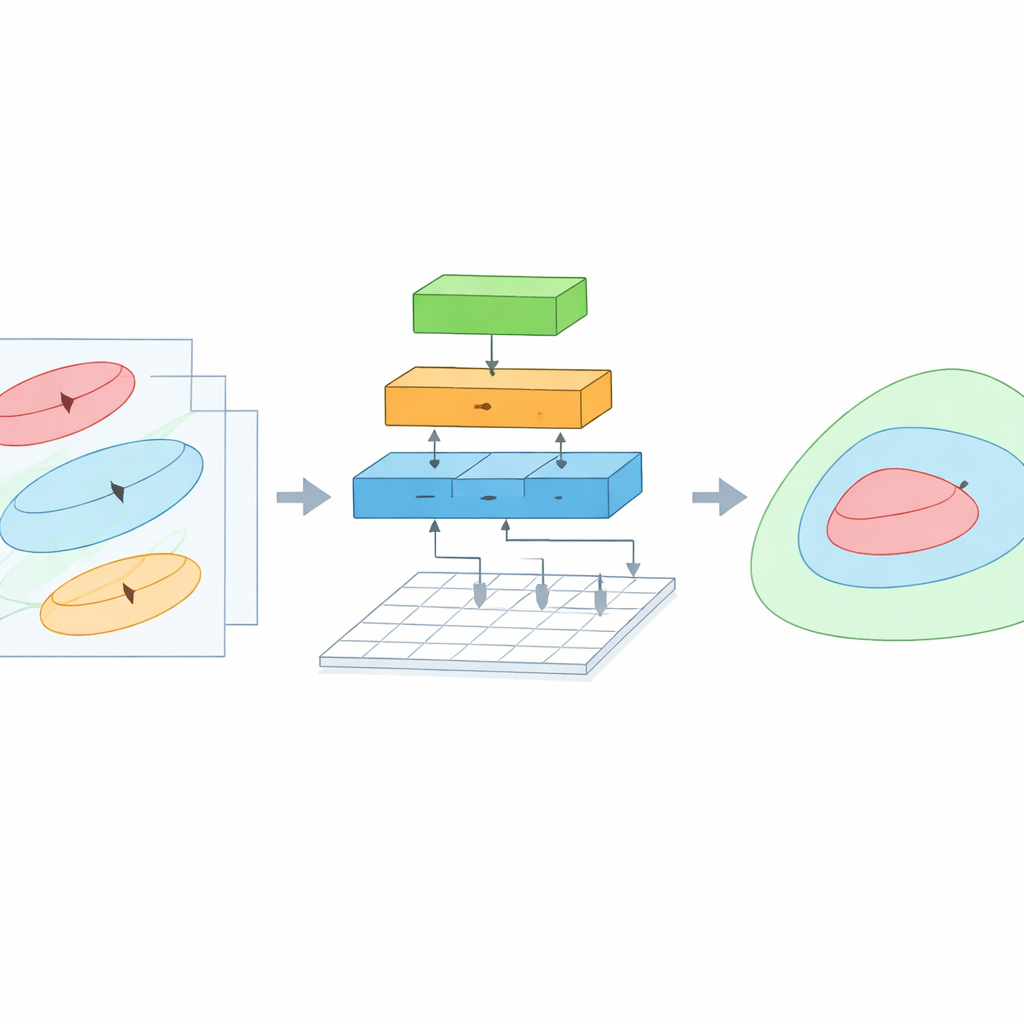
Directly computing the Holevo bound usually involves optimizing over a vast space of abstract operators, which is practically impossible for systems with infinitely many energy levels. The authors show that for Gaussian states this daunting task can be reduced to a finite, structured optimization problem called a semidefinite program. Crucially, they prove that it is enough to consider observables that are at most quadratic in the basic variables (the quadratures of the field). All the necessary information is encoded in a single matrix built from the covariance of the state and its commutation relations. With this reformulation, the Holevo bound, as well as the easier logarithmic-derivative bounds, can be evaluated numerically using standard optimization software, with guaranteed global optimality.
What the new method reveals in practice
To illustrate the power of their framework, the authors analyze two concrete sensing tasks. The first is the simultaneous estimation of phase and loss in a single optical mode—an important problem because any real optical sample both shifts the phase of a beam and attenuates it. They show how the true Holevo limit can significantly differ from the simpler bounds, and how this difference depends on whether the probe is a bright coherent beam or a squeezed state that redistributes quantum noise. The second task is the joint estimation of displacement and squeezing, both for single-mode and two‑mode states, which connects directly to the characterization of nonclassical light. Here, the method clarifies when squeezing helps or hurts overall precision and when the simpler bounds accidentally coincide with the exact Holevo limit.
Implications for future quantum sensors
From a layperson’s perspective, this work provides a reliable "yardstick" for multi-parameter quantum sensing with Gaussian resources. By giving a practical way to compute the ultimate precision limits that quantum mechanics allows, it helps researchers design and benchmark optical and other continuous-variable sensors without being misled by overly optimistic formulas. In the longer term, these tools could guide the development of measurement schemes that actually reach the Holevo bound in realistic devices, squeezing the maximum possible information out of every quantum of light.
Citation: Shoukang, C., Genoni, M.G. & Albarelli, F. Efficiently evaluating Holevo, RLD and SLD Cramér-Rao bounds for multiparameter quantum estimation with Gaussian states. Commun Phys 9, 126 (2026). https://doi.org/10.1038/s42005-026-02550-6
Keywords: quantum metrology, Gaussian states, quantum sensing, precision limits, semidefinite programming