Clear Sky Science · en
Comprehensive annotation and analysis of human microproteins by human microprotein atlas platform
Hidden Proteins with Big Potential
Our DNA encodes many more tiny proteins than scientists once thought, and these overlooked molecules may quietly shape how our cells grow, communicate, and become sick. This study introduces the Human Microprotein Atlas, a large map of hundreds of thousands of these miniature proteins, giving researchers a way to explore their structures, locations in the cell, and possible roles in health and disease.
What Are Microproteins and Why They Matter
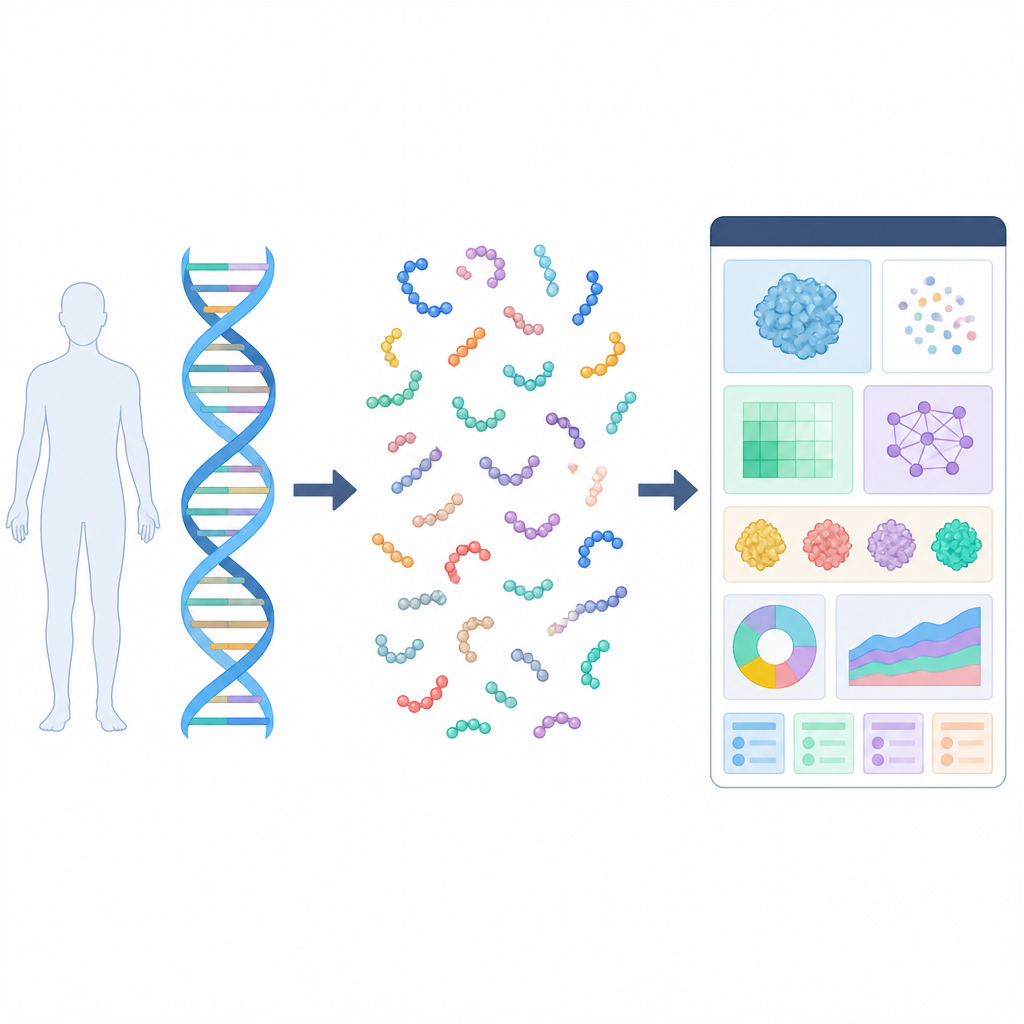
For years, researchers focused mainly on traditional genes that produce full sized proteins. Short stretches of DNA were often dismissed as background noise. New experimental tools, however, have revealed that many of these small segments are actively read by the cell to make microproteins made of only a few dozen building blocks. Some known examples help control fat metabolism, fine tune the immune system, or act as brakes on cancer, hinting that a vast hidden layer of biology has been missed.
Building a Global Map of Tiny Proteins
The authors gathered 617,462 small DNA segments from several public resources and converted them into their corresponding microprotein sequences. They then used advanced software and deep learning models to predict a wide range of features for each one, from basic chemical properties to detailed three dimensional shapes. All of this information was woven into a single platform called the Human Microprotein Atlas, which can be explored through an interactive website that lets users search by sequence, nearby gene, or structural similarity.
Shapes, Flexibility, and Where They Live in the Cell
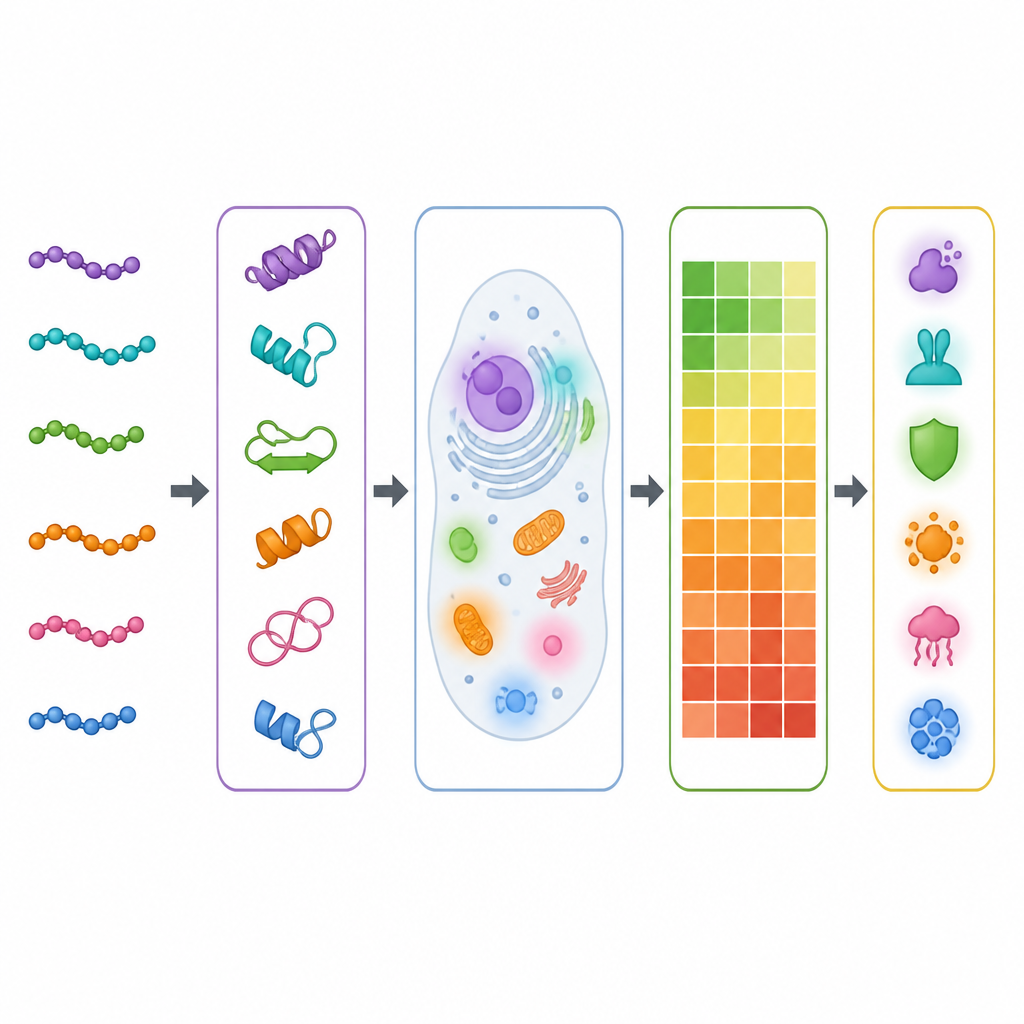
Using the AlphaFold2 system, the team predicted the structures of hundreds of thousands of microproteins and found striking variety. Many form simple helical shapes, while others lack stable frameworks and behave more like flexible strings. This flexibility suggests that microproteins may act as dynamic regulators rather than rigid machines. By feeding the predicted structures into another tool, they inferred likely functions and found that many microproteins seem involved in cell signaling and control. A separate model predicted where in the cell they reside, placing large fractions in the cytoplasm, nucleus, and mitochondria, with others secreted outside the cell, consistent with roles in communication between cells and tissues.
Predicting Importance, Mutation Risks, and Activities
The atlas also estimates how crucial each microprotein might be and how sensitive it is to genetic changes. A dedicated model scored their “essentiality” across tissues, revealing that some microproteins appear vital in specific organs such as kidney or blood forming tissues, while many others seem less critical. Another deep learning approach evaluated how harmful single letter mutations might be, showing that longer and more structured microproteins are often more vulnerable to change. Finally, by training dozens of activity predictors on known medical and natural peptides, the authors estimated which microproteins might behave like antimicrobial agents, signaling molecules, or potential drug delivery vehicles, highlighting focused sets for further lab testing.
How This Resource Could Guide Future Medicine
To illustrate the atlas in action, the researchers searched for microproteins that may influence pancreatic cancer. They identified small proteins whose levels drop in patients but are predicted to have strong anticancer activity and important interactions with known DNA repair and energy metabolism proteins. While these predictions still need experimental confirmation, they show how the Human Microprotein Atlas can quickly suggest promising targets. Overall, the resource turns a once invisible layer of the human proteome into a searchable landscape, helping scientists home in on tiny proteins that could become future diagnostic clues or building blocks for new therapies.
Citation: Kang, B., Fan, R., Ji, X. et al. Comprehensive annotation and analysis of human microproteins by human microprotein atlas platform. Commun Chem 9, 188 (2026). https://doi.org/10.1038/s42004-026-02054-y
Keywords: microproteins, small open reading frames, protein atlas, deep learning, pancreatic cancer