Clear Sky Science · en
Solvent- and metal-free upcycling of low-density polyethylene using a practical ZSM-5/Al2O3 bead catalyst
Turning Plastic Trash into Useful Fuel
Plastic bags, wraps, and packaging keep our food fresh and our goods clean, but they also pile up in landfills and the environment. Much of this plastic is made from polyethylene, a tough material that is hard to break down without using lots of energy, added chemicals, or expensive metals. This study presents a practical way to "upcycle" common polyethylene waste into gasoline-like fuel using a simple, reusable catalyst and relatively low temperatures, offering a more sustainable route for dealing with plastic trash.
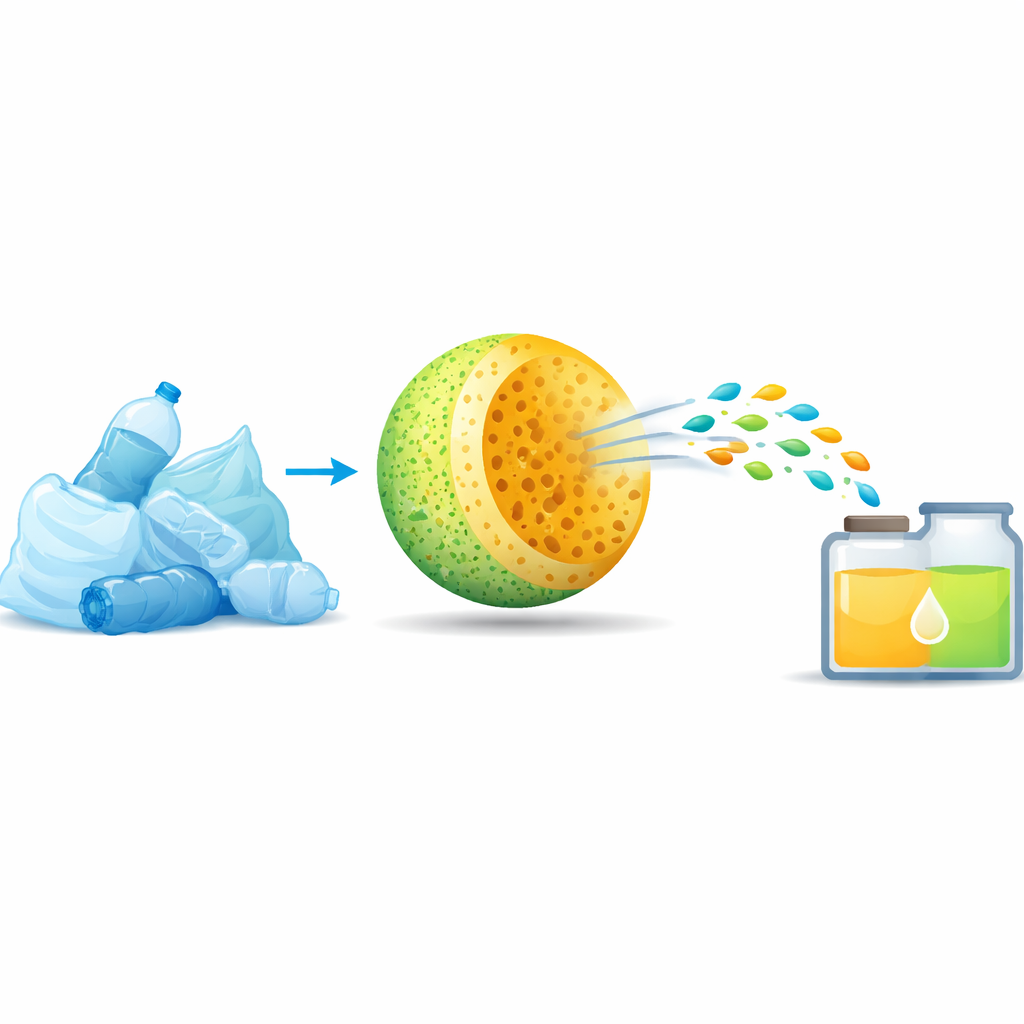
A New Bead That Helps Plastics Fall Apart
The researchers built a special solid catalyst shaped like millimeter-sized beads. Each bead has a core of aluminum oxide and a thin outer layer covered with tiny crystals of a common industrial material called ZSM-5 zeolite. By carefully growing these crystals on the bead surface in two hydrothermal (hot water) steps, they created a material with two key features: medium-sized pores that let bulky plastic fragments move in and out, and carefully tuned acidic sites that help break the long plastic chains into smaller pieces. Microscopy and X-ray techniques showed that the zeolite crystals are well-formed, firmly attached to the beads, and distributed evenly, while gas-adsorption tests confirmed the presence of mesopores that aid diffusion.
Gentle Conditions, Powerful Results
Using this bead catalyst, the team converted low-density polyethylene (LDPE) at just 260 °C—well below the temperatures usually needed for plastic "pyrolysis"—and without adding any solvent, hydrogen gas, or precious metals. In only 1.5 hours, more than 70% of the plastic was turned into liquid products, and an impressive 98% of that liquid fell into the gasoline-range C4–C12 hydrocarbons. Compared with a simple physical mixture of zeolite powder and alumina, the engineered beads produced about 19% more of the desired gasoline-range molecules, with fewer light gases and less heavy, waxy residue. Importantly, the catalyst worked not only on pure LDPE powder but also on real-world plastic items like bags, bottles, and film, consistently giving around 60–70% liquid yields.
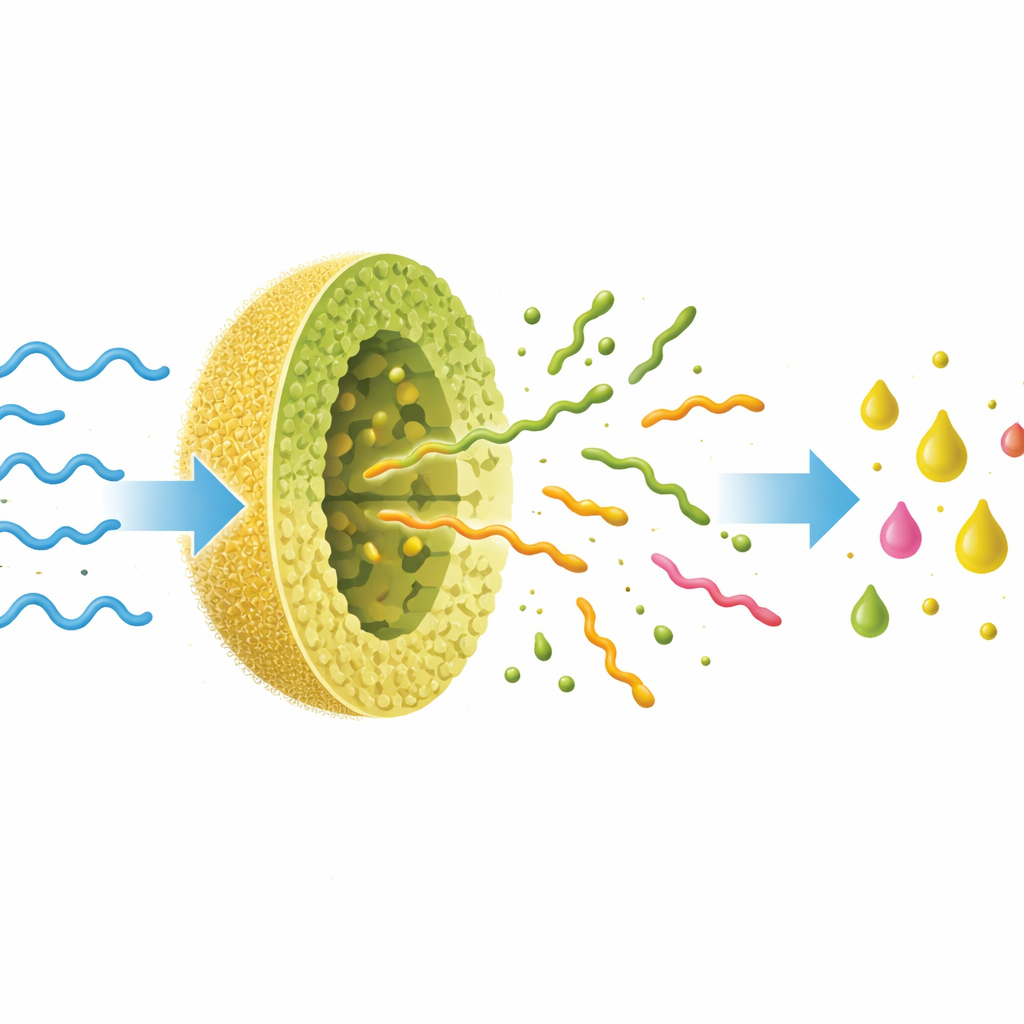
Why the Catalyst Design Matters
The performance gains come from the subtle balance of structure and chemistry within each bead. The contact between the zeolite and alumina surfaces creates extra "Brønsted" acid sites—chemically active spots that temporarily hold and rearrange fragments of the plastic chains. At the same time, that interface slightly weakens the strongest of these sites. This shift is crucial: very strong sites over-crack the fragments into useless gases, while a mix of weak and moderate sites favors the formation of mid-sized, branched hydrocarbons ideal for gasoline. The mesopores in the bead shorten the path that molecules must travel, making it easier for intermediates to diffuse and be released before they are over-processed. Tests of how small probe molecules move through the materials confirmed that the bead catalyst strikes a better balance between activity and diffusion than pure zeolite.
From Lab Tests to Practical Use
The researchers repeatedly used and regenerated the same batch of beads through ten cycles, finding that LDPE conversion stayed above 88% and liquid yields above 70%, while coke deposits (carbon build-up that can block catalysts) remained relatively low. The catalyst’s bead form means it is easy to handle, separate from products, and reuse without additional shaping steps. The team even demonstrated the process in a one-liter stirred reactor, a setup much closer to real industrial equipment than tiny lab vials. Across a family of related catalysts prepared with different synthesis times, the version described here delivered the best combination of high gasoline-range yield, relatively low aromatic content, and high predicted octane rating.
What This Means for Plastic Waste
For non-specialists, the main message is that careful design of solid materials can turn stubborn plastic waste into useful liquid fuels under milder, more practical conditions. By adjusting the size of pores and the strength of acid sites on a simple alumina bead coated with zeolite, this work avoids the need for expensive metals, added hydrogen, or harsh temperatures. While it is not a complete solution to plastic pollution, this strategy shows how chemistry can help convert discarded polyethylene into valuable gasoline-like components, making better use of resources that would otherwise be burned or buried.
Citation: Wang, F., Dong, Q., Liu, Y. et al. Solvent- and metal-free upcycling of low-density polyethylene using a practical ZSM-5/Al2O3 bead catalyst. Commun Chem 9, 166 (2026). https://doi.org/10.1038/s42004-026-02039-x
Keywords: plastic upcycling, polyethylene recycling, zeolite catalysts, low-temperature cracking, gasoline-range hydrocarbons