Clear Sky Science · en
Disulfide tethering reveals cryptic pockets in oncogenic KRAS
Why hidden drug targets matter
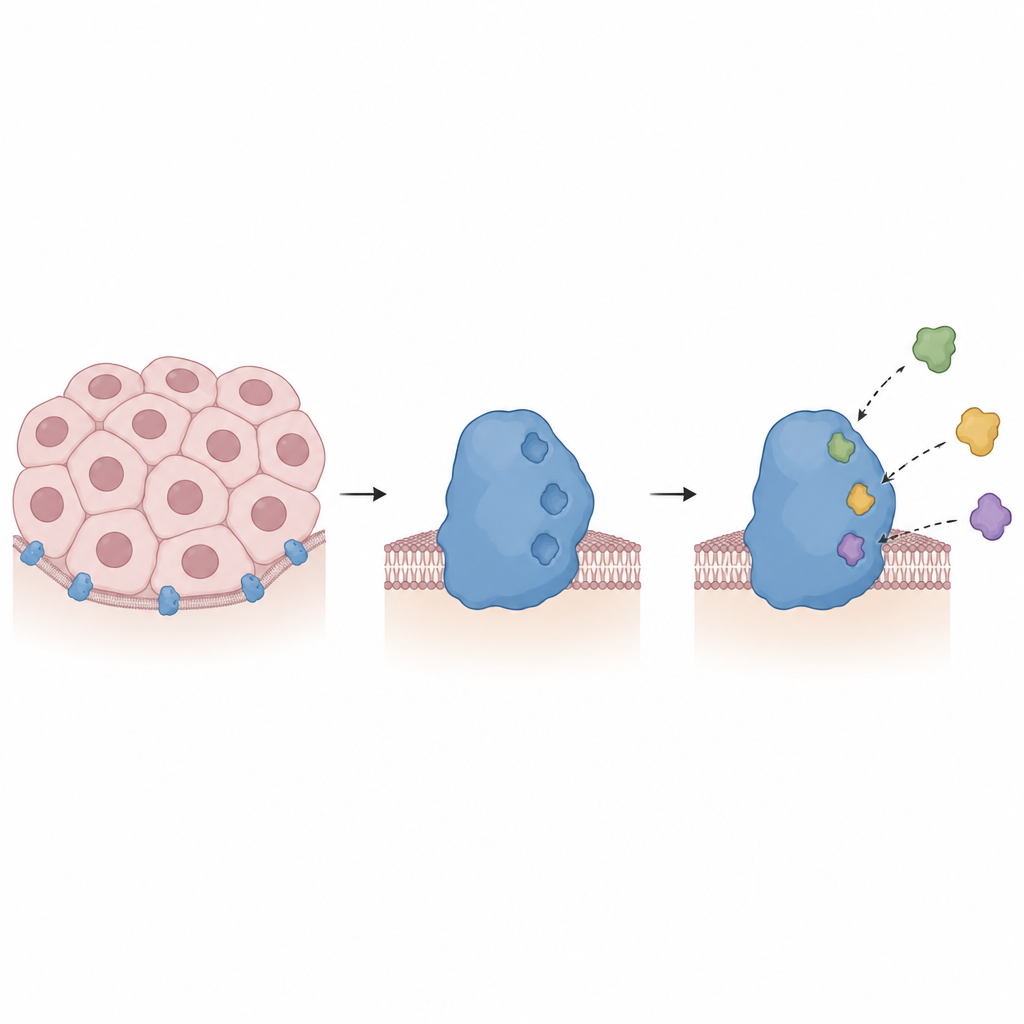
Cancer doctors and drug designers have long struggled to block KRAS, a key molecular switch that drives many common tumors. For years, this protein was labeled undruggable because it appeared smooth and featureless, with nowhere for a medicine to latch on. This study shows that KRAS actually hides several small pockets on its surface, and that a clever chemical technique can reveal and probe these sites, opening new paths for future cancer treatments.
Turning a smooth surface into a target map
KRAS helps control cell growth by flipping between an on and off state. Mutations that lock it in the on state fuel uncontrolled growth in cancers such as lung and pancreatic tumors. Existing KRAS-blocking drugs only work for a narrow slice of patients who carry a specific mutation, and even then cancer cells often find ways around them. The authors set out to map where tiny chemical fragments could stick to a very common mutant form called KRAS G12D, hoping to uncover new footholds for future medicines that could work in more patients.
A chemical Velcro approach to hunting pockets
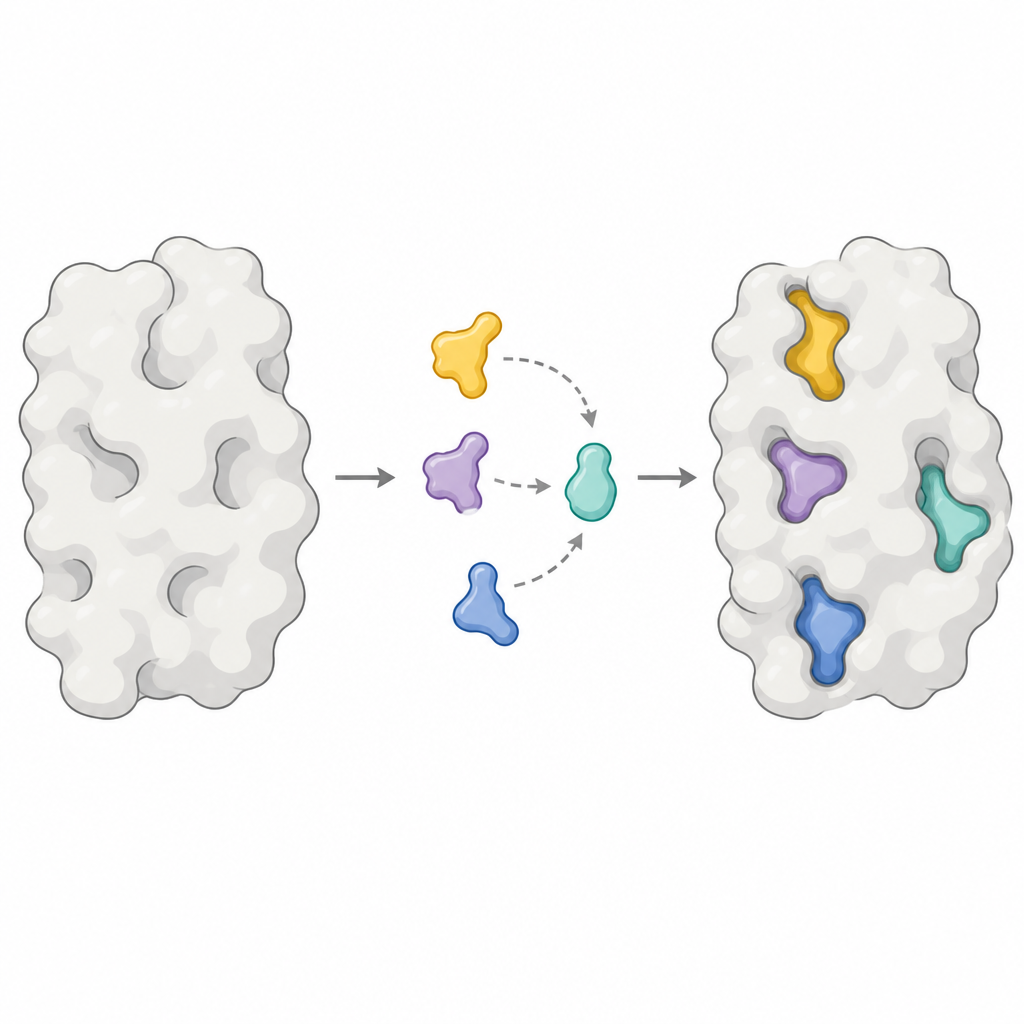
Instead of screening huge drug molecules, the team used fragment-based discovery, testing very small chemical pieces that can later be built into larger drugs. They equipped each fragment with a special sulfur-based hook that can reversibly connect to a chosen point on the protein, much like a bit of chemical Velcro. They then engineered 83 slightly different versions of KRAS, each with a single exposed cysteine site that could serve as the Velcro patch, and measured by mass spectrometry how strongly more than 2,000 fragments attached at each location. Because the bond could be undone in the presence of a competing small molecule, fragments that stayed attached were likely held in place by real, shape-fitting contact rather than by raw chemical stickiness.
From raw signals to a landscape of hot spots
By comparing labeling levels across all these mutants, the researchers built a heatmap of the KRAS surface, highlighting regions where fragments frequently found a comfortable fit. They translated these hit rates into a ligandability score, which acts as a rough measure of how amenable each region is to future drug design. Known sites where earlier KRAS drugs and tool compounds bind, including the so-called Switch-II and Switch-I areas involved in turning the protein on and off, lit up with high scores. This convergence between old structural data and new fragment data gave confidence that the method was correctly flagging real binding pockets.
Revealing new cryptic pockets on KRAS
Crucially, the survey also pointed to less familiar regions. One newly highlighted zone sits between two helices that help recruit an important partner protein called RAF, which relays growth signals inside the cell. Computer simulations and nuclear magnetic resonance experiments showed that a representative fragment could nestle into a previously unseen cavity in this area, supported by subtle shifts in the protein’s atomic signals. Other pockets near flexible loops and surface grooves showed moderate but meaningful fragment binding, suggesting they may serve as anchor points for more elaborate molecules, including potential degraders that bring KRAS to the cell’s disposal machinery.
What this means for future cancer drugs
For non-specialists, the main message is that KRAS is no longer a featureless stone. Using disulfide tethering as a sensitive probe, this work converts the protein’s surface into a detailed map of druggable hot spots, confirming valued sites and adding new ones that had gone unnoticed. While the fragments themselves are far from finished drugs, they mark promising starting positions for chemists aiming to design next-generation KRAS inhibitors that could reach more mutation types and possibly work in combination with existing therapies.
Citation: Balius, T.E., Dyba, M., Kumari, V. et al. Disulfide tethering reveals cryptic pockets in oncogenic KRAS. Commun Chem 9, 187 (2026). https://doi.org/10.1038/s42004-026-01992-x
Keywords: KRAS, cryptic pockets, fragment-based drug discovery, covalent tethering, oncogenic signaling