Clear Sky Science · en
Simulation-guided chemical direct reprogramming informed by temporal cellular conversion processes at the single-cell level
Turning One Cell Type into Another
Imagine being able to turn a skin cell into a nerve cell just by adding the right mix of chemicals. That kind of direct transformation could let doctors grow replacement tissues more safely and quickly. This study introduces a computer-guided way to pick small molecules that nudge cells along this change, step by step, making the process more efficient and potentially safer for future regenerative therapies.
Why Direct Cell Switching Matters
Many regenerative medicine approaches rely on induced pluripotent stem cells, which can become almost any tissue but carry risks such as genetic damage and possible tumor formation. Direct reprogramming skips the stem cell stage by converting one adult cell type straight into another, such as turning mouse embryonic fibroblasts into neurons. Using genes delivered by viruses can trigger this switch, but adding genes brings its own safety concerns. Small molecules, which act more like drugs, can avoid permanent changes to DNA, yet finding the right combinations from thousands of possibilities is too costly and slow to do by trial and error alone.
Following Cell Change in Real Time
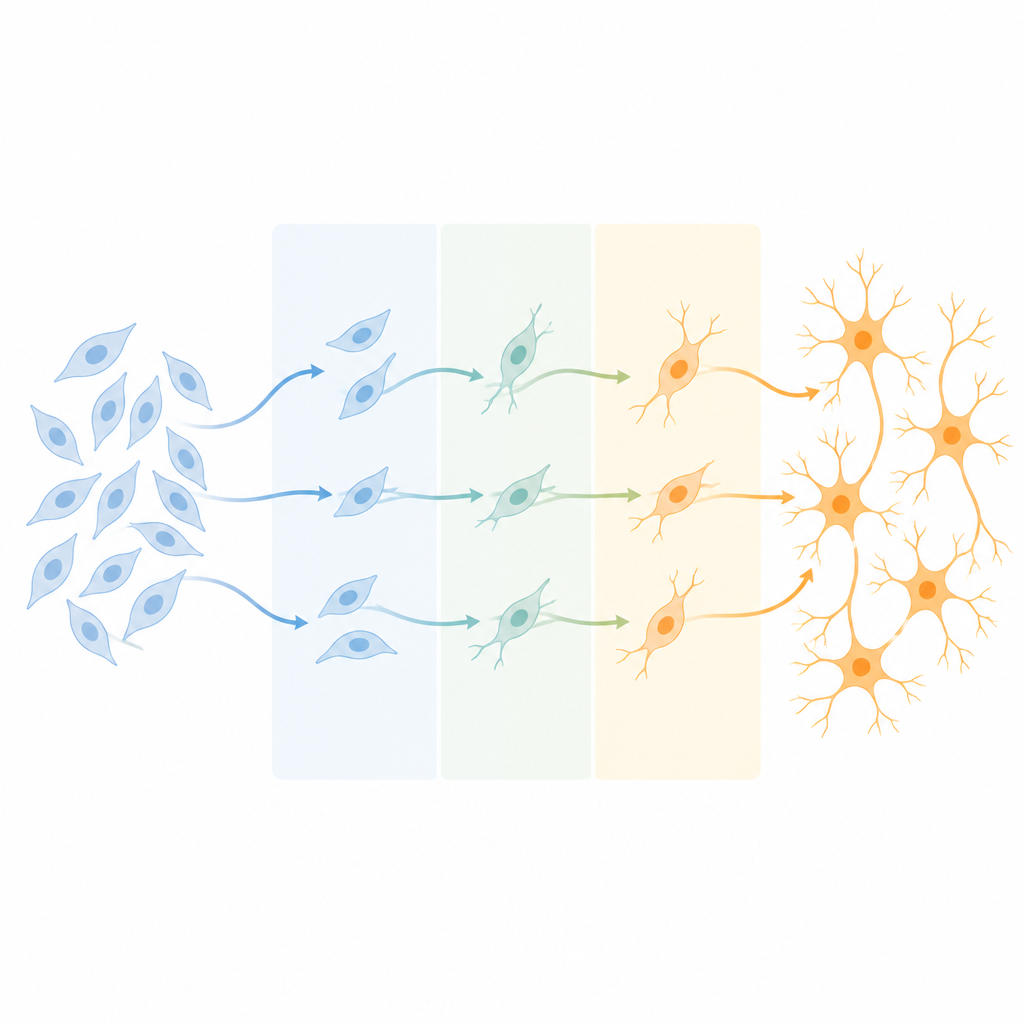
The researchers developed a method called SuperDIRECTEUR that watches how individual cells change over time during direct reprogramming and uses that information to suggest helpful chemicals. They worked with single-cell RNA sequencing data, which measures which genes are active in each cell. By analyzing RNA "velocity," they could estimate where each cell seemed to be headed next along the path from fibroblast to neuron. A computer simulation then traced likely conversion routes and grouped the cells into three broad stages of change: an early primal stage, a middle immature stage, and a late mature stage. For each transition between stages, the team identified genes whose activity rose or fell, creating a kind of signature of what the cell needs to do to move forward.
Letting the Computer Pick Helpful Molecules
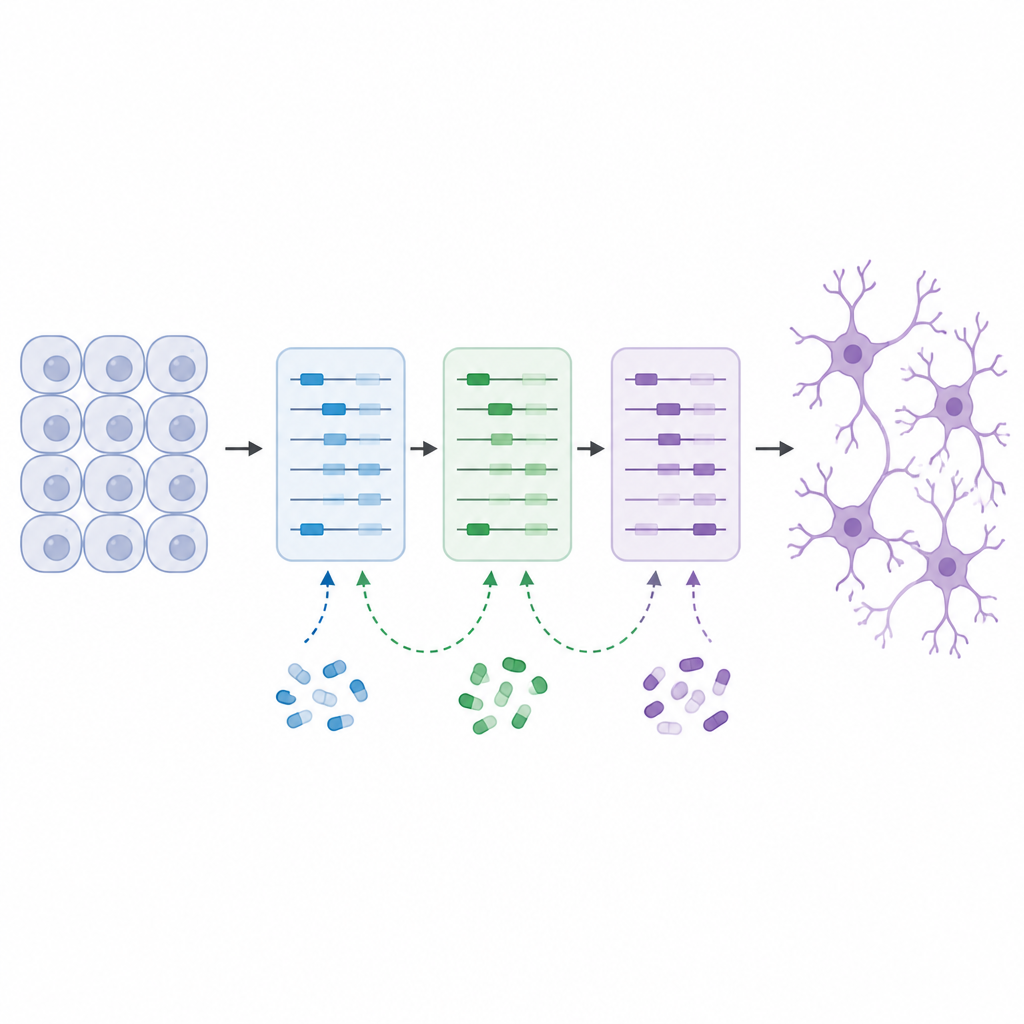
Next, the team compared these stage-specific gene signatures with large collections of gene activity patterns caused by thousands of small molecules in human cells. Instead of matching exact numbers, they focused on how genes were ranked from more active to less active, which allowed them to fairly compare data from different experiments and species. When a molecule tended to push genes up or down in a way that mirrored a desired transition, it earned a high score for direct reprogramming potential. The method first ranked single molecules and then, using a search strategy inspired by simulated annealing, looked for small sets of molecules that together best matched the needed gene changes while keeping the total number of components low.
What the Method Found
When applied to the conversion of mouse fibroblasts into induced neurons, SuperDIRECTEUR rediscovered several chemicals already known to help this process, as well as new candidates with similar biological effects. Some predicted molecules were linked to early events like shifting cell metabolism and controlling cell division, which are important when cells first start to leave their original identity. Others affected pathways involved in neuron growth, signal transmission, and maturation, such as calcium channels and nerve guidance systems. By examining how the target proteins of these molecules interact, the authors showed that the suggested combinations influence networks related to cell survival, metabolic switches, and the stepwise development of neuronal traits.
Looking Ahead to Future Therapies
In simple terms, this work provides a detailed recipe finder for chemical cocktails that guide cells from one identity to another in clearly defined steps. Instead of testing countless molecules in the lab, scientists can now start from a shorter, rationally chosen list tailored to each stage of the cell conversion journey. While the method currently relies on gene activity data and has been tested mainly on fibroblast to neuron and early heart cell conversions, it could be expanded to include other kinds of molecular information and many more target cell types. Ultimately, tools like SuperDIRECTEUR may help design safer, more precise chemical strategies for building replacement tissues without permanent genetic changes.
Citation: Ito, R., Hamano, M., Kawasaki, R. et al. Simulation-guided chemical direct reprogramming informed by temporal cellular conversion processes at the single-cell level. Commun Chem 9, 178 (2026). https://doi.org/10.1038/s42004-026-01991-y
Keywords: direct reprogramming, small molecules, single cell RNA, neuronal differentiation, regenerative medicine