Clear Sky Science · en
Singlet oxygen-mediated photocatalytic generation of abasic sites in DNA
Why light and DNA damage matter
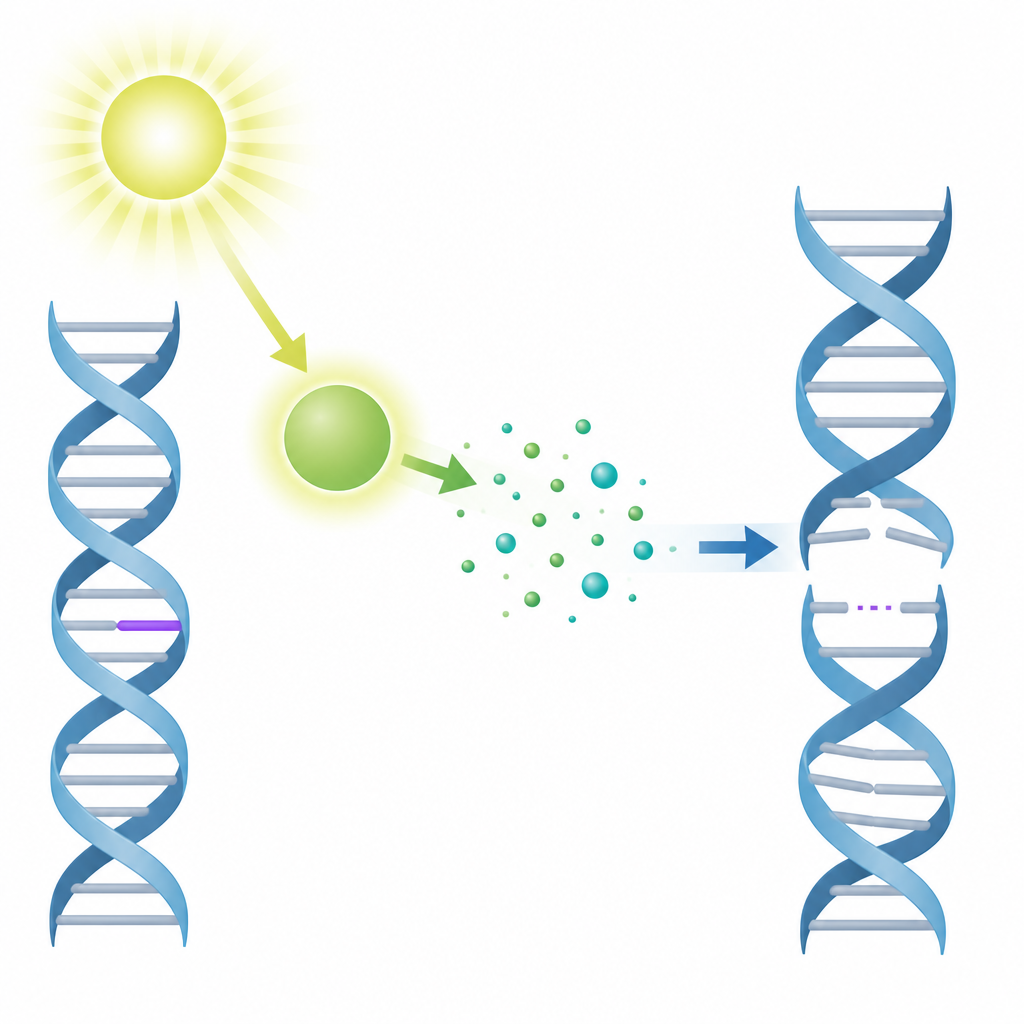
Our cells constantly face damage from sunlight and other sources of reactive chemicals. DNA, the molecule that stores genetic information, is surprisingly fragile under these conditions. This study explores a hidden kind of light-induced DNA damage that standard tests largely miss, revealing how certain spots in DNA can lose their bases entirely when exposed to light and specific dye-like molecules.
A closer look at missing pieces in DNA
Most research on light-driven DNA damage has focused on changes to the bases themselves, especially guanine, which is the easiest of the four DNA letters to oxidize. But there is another, very harmful type of damage called an abasic site, where the base is lost and only the sugar backbone remains. These sites can stall or mislead the cellular machinery that copies and repairs DNA, and they can also form unwanted crosslinks to other DNA strands or proteins. Because abasic sites no longer absorb ultraviolet light like normal bases, they are almost invisible to the usual analytical methods, which means they have probably been underestimated.
Using a model DNA and colorful helpers
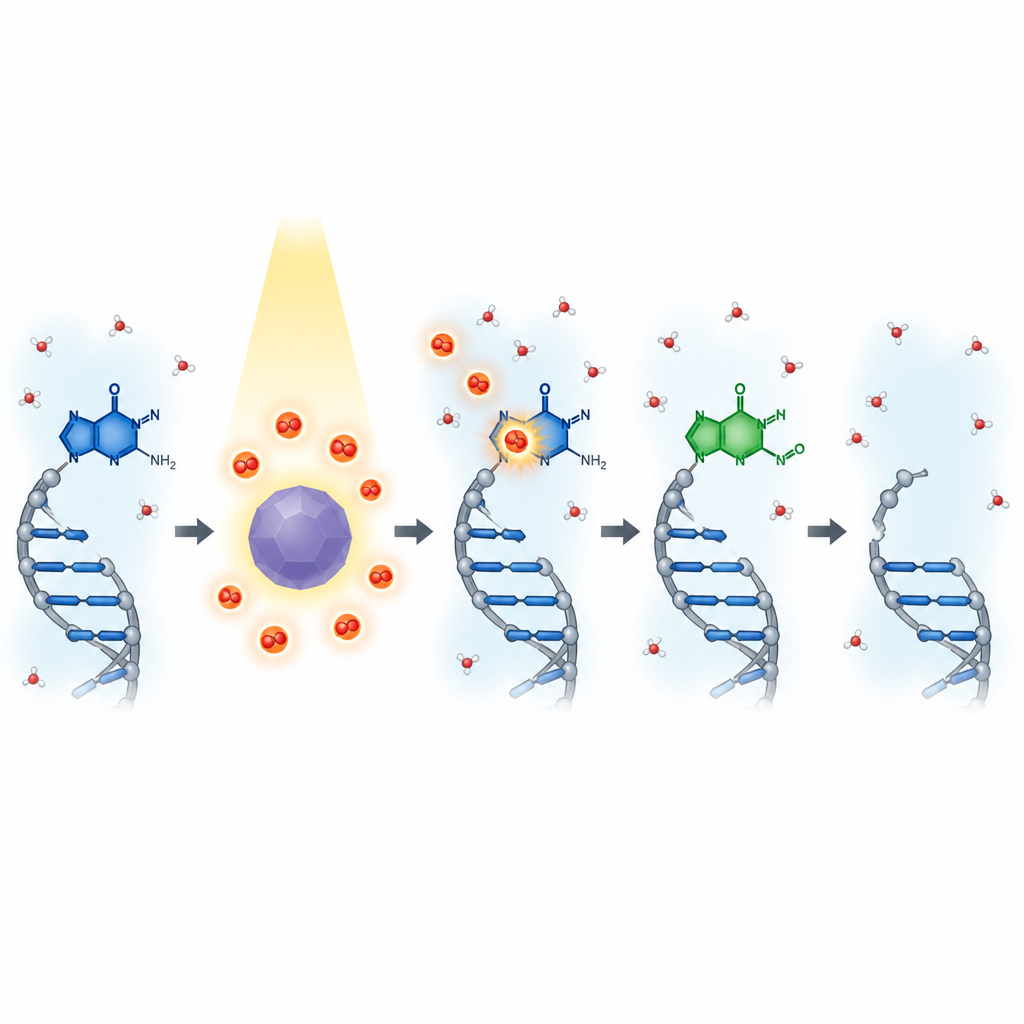
To uncover this hidden damage, the researchers used a short, well-known piece of double-stranded DNA whose 3D structure has been carefully mapped. They combined it with common photocatalysts, including a dye called Rose Bengal, and shone colored light that these dyes absorb efficiently. The excited dyes transferred energy to oxygen, creating a reactive form known as singlet oxygen that can attack DNA. Instead of chopping the DNA into small pieces first, the team analyzed whole strands using sensitive mass spectrometry techniques and special gels, allowing them to spot even non-absorbing damage such as abasic sites.
Finding the vulnerable spots
The experiments showed that guanine bases were not just being chemically altered but were also being removed, creating abasic sites at levels similar to other well-known lesions. These missing bases appeared most often at the ends of the DNA, where guanine is more exposed to the surrounding solution. By briefly heating the damaged DNA with a chemical that selectively cleaves at abasic sites, the researchers could pinpoint these locations more precisely. They also changed the DNA sequence, moved guanines away from the ends, and tested single strands and special four-stranded structures that form at human chromosome tips. In every case, guanines that were more open to solvent and space were more likely to turn into abasic sites, with some four-stranded forms showing particularly high levels.
How reactive oxygen drives the loss of bases
To understand the trigger for this damage, the team removed oxygen from the solution and found that abasic sites almost disappeared, proving that oxygen was essential. They then added chemicals that selectively soak up different reactive species. Quenchers of singlet oxygen nearly eliminated abasic site formation, while scavengers for other reactive forms of oxygen had little effect, identifying singlet oxygen as the main culprit. Further tests using DNA that already contained an oxidized guanine variant suggested that the bases are not lost through the most familiar oxidation pathway. Instead, the loss seems to come from very early, highly reactive intermediates in the singlet oxygen reaction that push the bond between guanine and the DNA backbone to break.
What this means for light-based tools
Many modern biochemical tools intentionally use light and photocatalysts to label or crosslink DNA and RNA with high precision. This study shows that under such conditions, DNA and even RNA can quietly accumulate abasic sites wherever guanine bases are most exposed. For designers of light-activated probes and therapies, it highlights the need to account for this subtle but serious form of damage. For general readers, the key message is that light-driven reactions in our genetic material are more varied than once thought, and understanding these hidden pathways can help scientists build safer and more reliable molecular tools.
Citation: Yamano, Y., Onizuka, K., Altan, O. et al. Singlet oxygen-mediated photocatalytic generation of abasic sites in DNA. Commun Chem 9, 175 (2026). https://doi.org/10.1038/s42004-026-01979-8
Keywords: DNA damage, singlet oxygen, abasic sites, photocatalysis, oxidative stress