Clear Sky Science · en
Spatial distribution of glucose and amino acids within all-aqueous emulsions directs the Maillard reaction and oxidation pathways
Why tiny water worlds matter for your food
When we bake bread or roast coffee, a quiet storm of chemical reactions shapes the color, taste and even safety of what we eat. Many of these changes come from the Maillard reaction, the same browning process that gives toast its flavor. This study shows that not only heat and time but also where sugar and amino acids physically sit inside tiny water droplets can steer these reactions toward tasty colors and aromas or toward unwanted oxidized products.
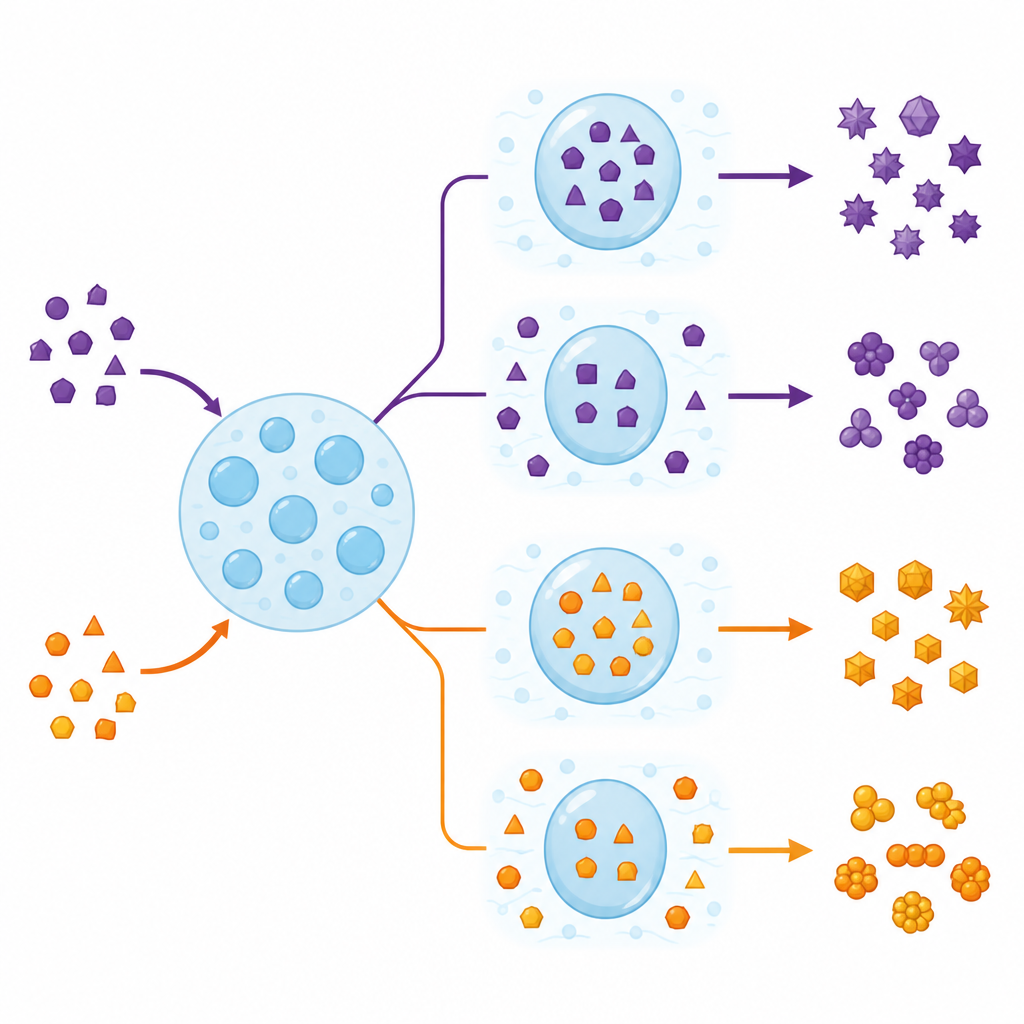
Mini kitchens made only of water
The researchers worked with special “all aqueous emulsions,” mixtures where both the droplets and the surrounding liquid are water based but differ in composition. One phase was rich in polyethylene glycol, a large polymer that creates a crowded environment, while the other was rich in sodium sulfate, a salty solution that attracts more hydrophilic molecules. By placing glucose, a common sugar, together with different amino acids into these two phases, the team created microscopic compartments that mimic the complex, uneven environments found in real foods.
Following browning chemistry in space
To see what happened inside these tiny water worlds, the scientists used untargeted metabolomics and high resolution mass spectrometry. These tools allowed them to detect and annotate hundreds of reaction products without deciding in advance what to look for. They then applied statistical analyses and molecular networking to group the products by how their structures were related. This approach revealed how the location of starting materials within or between the two phases shaped the full web of Maillard and oxidation pathways over several hours of heating.
When partners stay apart
In one set of experiments, glucose and the amino acid tryptophan were segregated between the phases but could still meet at their shared interface. Under these conditions, many oxidation products and complex ring shaped compounds accumulated mainly in the polyethylene glycol phase. This crowded, more hydrophobic environment concentrated tryptophan and promoted its reaction with reactive oxygen and carbonyl species. The result was a rich collection of oxidized derivatives and polymer like building blocks, showing that separating reactants across phases can favor deeper oxidation and condensation chemistry.
When partners share the same room
In a second set of experiments, glucose and the highly water loving amino acid asparagine were co encapsulated inside sodium sulfate rich droplets. Here, the early steps of the Maillard reaction were strongly enhanced. Glycosylamine intermediates and their rearranged “Amadori” products formed readily inside the droplets, then broke down into smaller reactive molecules such as dicarbonyls. Unexpectedly, dipeptides made from asparagine and aspartic acid also appeared, suggesting that the salty, lower water activity microenvironment inside the droplets could support peptide bond formation even without enzymes.
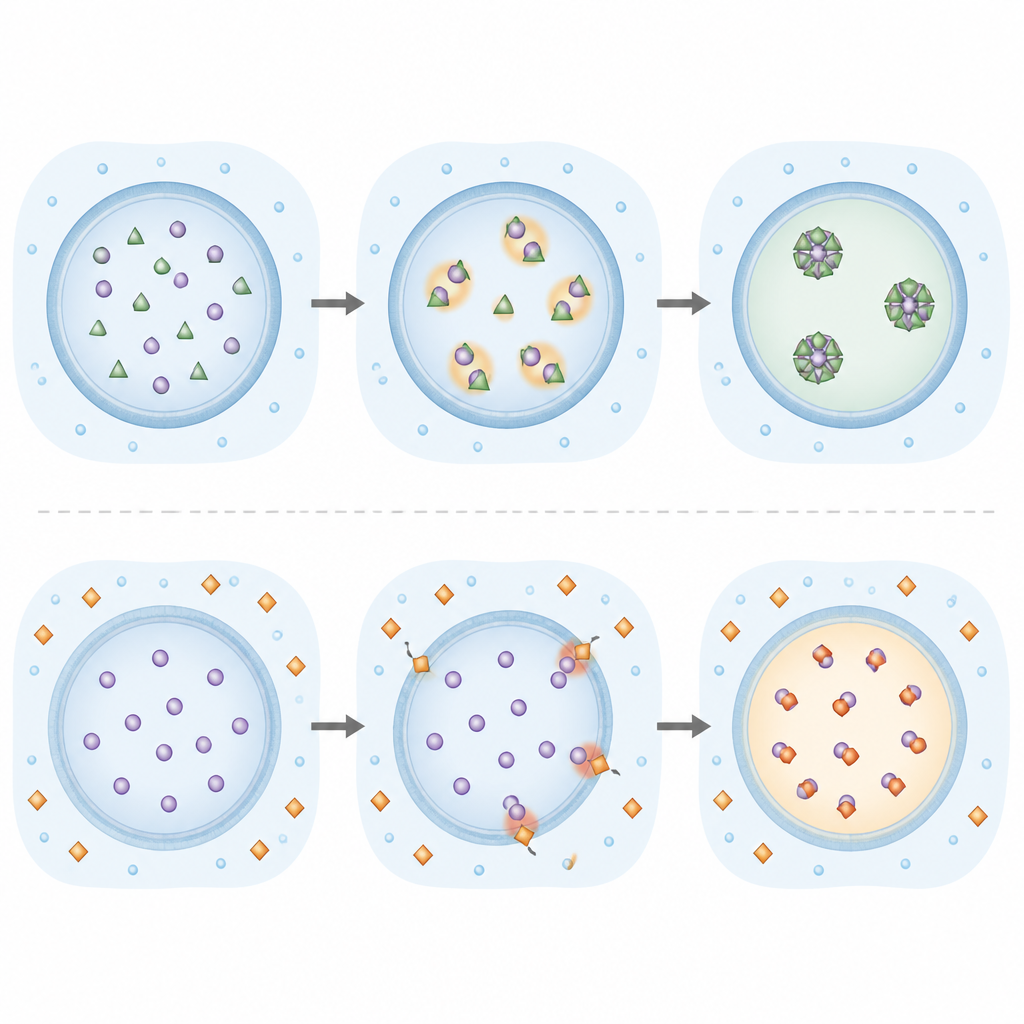
Space as a new kitchen control knob
Taken together, the results show that where ingredients reside within an all aqueous emulsion can be as important as how long or how hot they are cooked. Segregating tryptophan and glucose across phases drove extensive oxidation and complex ring formation in the polymer rich phase, while co encapsulating asparagine and glucose inside salt rich droplets favored classic Maillard steps and small peptide formation. For food scientists, this means that droplet based “microreactors” offer a new way to tune browning reactions: by designing the spatial layout of sugars and amino acids, it may be possible to boost desirable flavors and colors while limiting unwanted oxidized or potentially harmful products.
Citation: Chen, K., Madadlou, A., De Pascale, S. et al. Spatial distribution of glucose and amino acids within all-aqueous emulsions directs the Maillard reaction and oxidation pathways. Commun Chem 9, 176 (2026). https://doi.org/10.1038/s42004-026-01951-6
Keywords: Maillard reaction, food chemistry, all-aqueous emulsions, glucose amino acids, oxidation pathways