Clear Sky Science · en
The MYB-related transcription factor MYPOP acts as a selective regulator of cancer cell growth
Why a hidden cell brake matters for cancer
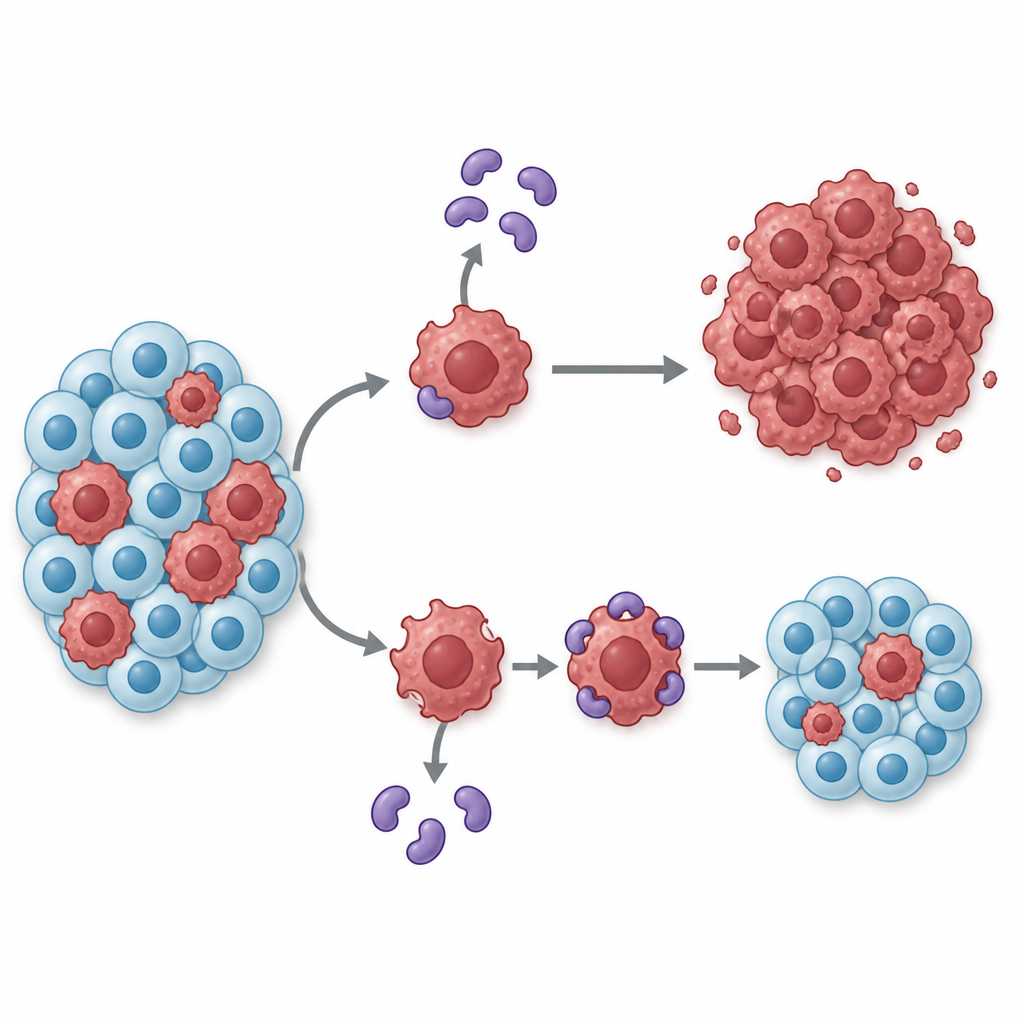
Cancer often arises when the normal brakes on cell growth fail. This study explores a little-known protein called MYPOP that behaves like such a brake. Researchers found that many cancer cells have dialed down MYPOP, while healthy skin cells still carry it. When the team switched MYPOP back on in tumor cells, those cells stopped multiplying and often died, but healthy cells were left largely unharmed. This selective effect makes MYPOP an intriguing candidate for future cancer therapies that aim to slow tumors without damaging normal tissue.
A quiet protein with a big role
MYPOP belongs to a family of proteins that control which genes are turned on or off inside a cell. Earlier work suggested that it can block the activity of cancer-driving genes and of human papillomaviruses, which cause cervical cancer. In this study, scientists focused on cervical cancer cells that carry HPV, as well as a range of other human and mouse cancer cell types. They compared these tumor cells to normal skin and lung cells and saw a clear pattern: MYPOP levels were high in healthy cells but strongly reduced or almost absent in most cancer cells. This pattern hinted that losing MYPOP might give cancer cells a growth advantage.
What happens when MYPOP is turned back on
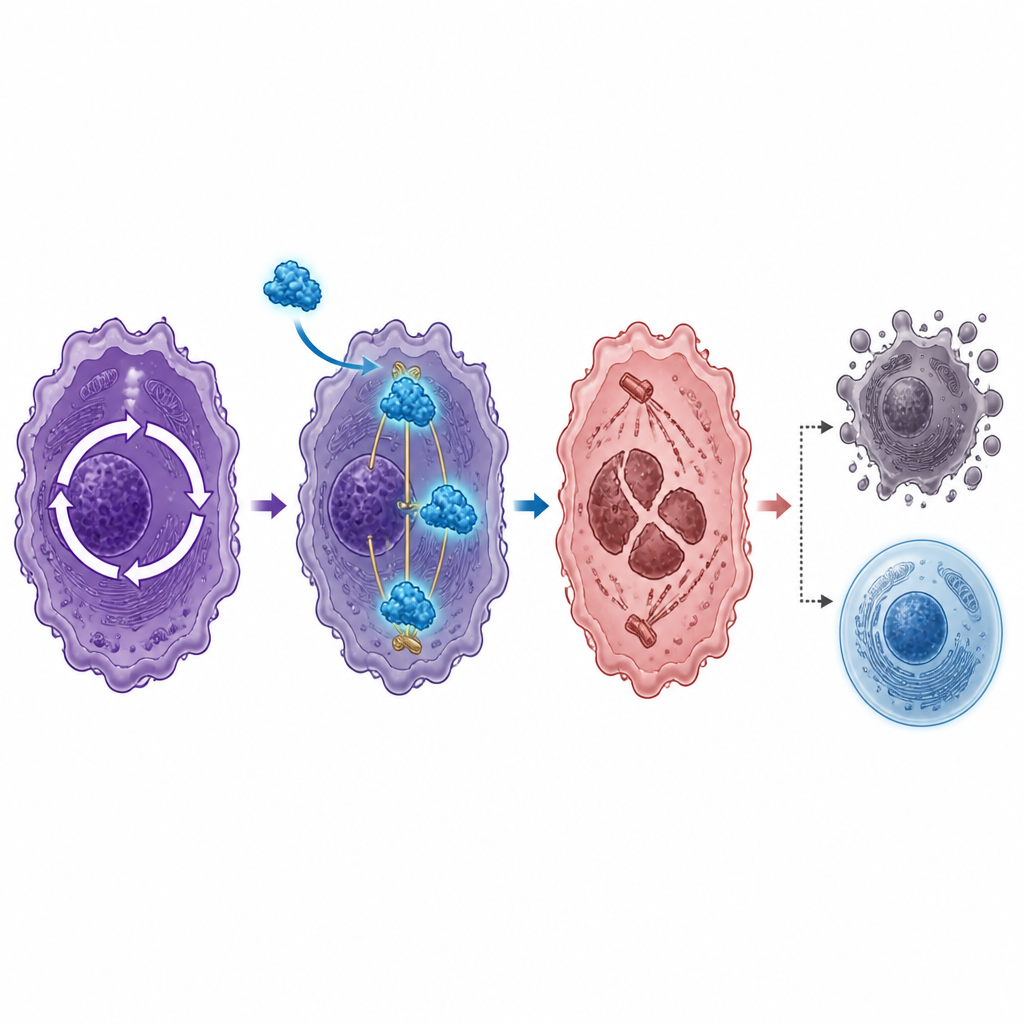
To test MYPOP’s impact directly, the team used two gene delivery methods, one based on DNA and one on messenger RNA, to force cancer cells to produce MYPOP again. Under the microscope, cervical cancer cells rapidly changed shape: their nuclei shrank and fragmented, and the cells became smaller and more granular, all classic signs of stress and cell death. Using live-cell imaging tools that color-code different stages of the cell cycle, the researchers watched the cells get stuck just before they copied their DNA, a checkpoint known as the G1/S transition. After this stall, the number of living cancer cells plummeted, while markers of programmed cell death rose and stayed high.
Rewiring cancer genes and immune signals
To understand how MYPOP exerts these effects, the researchers measured activity levels of thousands of genes. In cervical cancer cells, MYPOP shut down many genes that push cells into division, including well-known growth drivers like MYC and several components of the DNA copying machinery. At the same time, it boosted genes that help hold the cell cycle in check and those that can trigger death in damaged cells. Strikingly, MYPOP also switched on several immune signaling molecules, especially a protein called interleukin-24, which has its own track record for killing tumor cells. These changes appeared within hours, suggesting that MYPOP acts high up in the chain of command that shapes a cell’s behavior.
A brake that spares healthy cells
One of the most important findings is how differently MYPOP affects normal versus cancerous cells. When the same messenger RNA approach was used to raise MYPOP in healthy skin cells, their growth pattern and gene activity changed only slightly, and they continued to divide. In contrast, many tumor cell lines from liver, kidney, breast, colon, lung, and cervix slowed or stopped growing, and some mouse cancer cells did as well. Removing the already low MYPOP levels from certain cancer cells did not make them grow faster, implying that tumors may already have pushed this brake below a useful threshold. Reintroducing MYPOP seems to expose a weakness that cancer cells have acquired during their evolution.
What this could mean for future treatment
Overall, the study suggests that MYPOP acts as a selective brake on cancer cell growth. When restored, it blocks a key checkpoint before DNA copying, disturbs the internal scaffolding needed for cell division, silences cancer-driving genes, and boosts a tumor-killing immune signal, all while having modest effects on normal skin cells. The authors caution that these results come from cell cultures and that MYPOP’s direct targets and long-term safety still need to be mapped in animals and, eventually, humans. Still, the work points to MYPOP-based gene delivery, possibly using messenger RNA, as a potential future strategy to restrain tumor growth in a more targeted way than many existing treatments.
Citation: Strunk, J., Hüppner, A., Sial, M. et al. The MYB-related transcription factor MYPOP acts as a selective regulator of cancer cell growth. Commun Biol 9, 678 (2026). https://doi.org/10.1038/s42003-026-10272-2
Keywords: MYPOP, tumor suppressor, cell cycle arrest, cancer cell death, interleukin-24