Clear Sky Science · en
SlSAM3 interacts with SlACS4 to facilitate brassinosteroid signaling-mediated tomato (Solanum lycopersicum) fruit coloring
Why tomato color matters
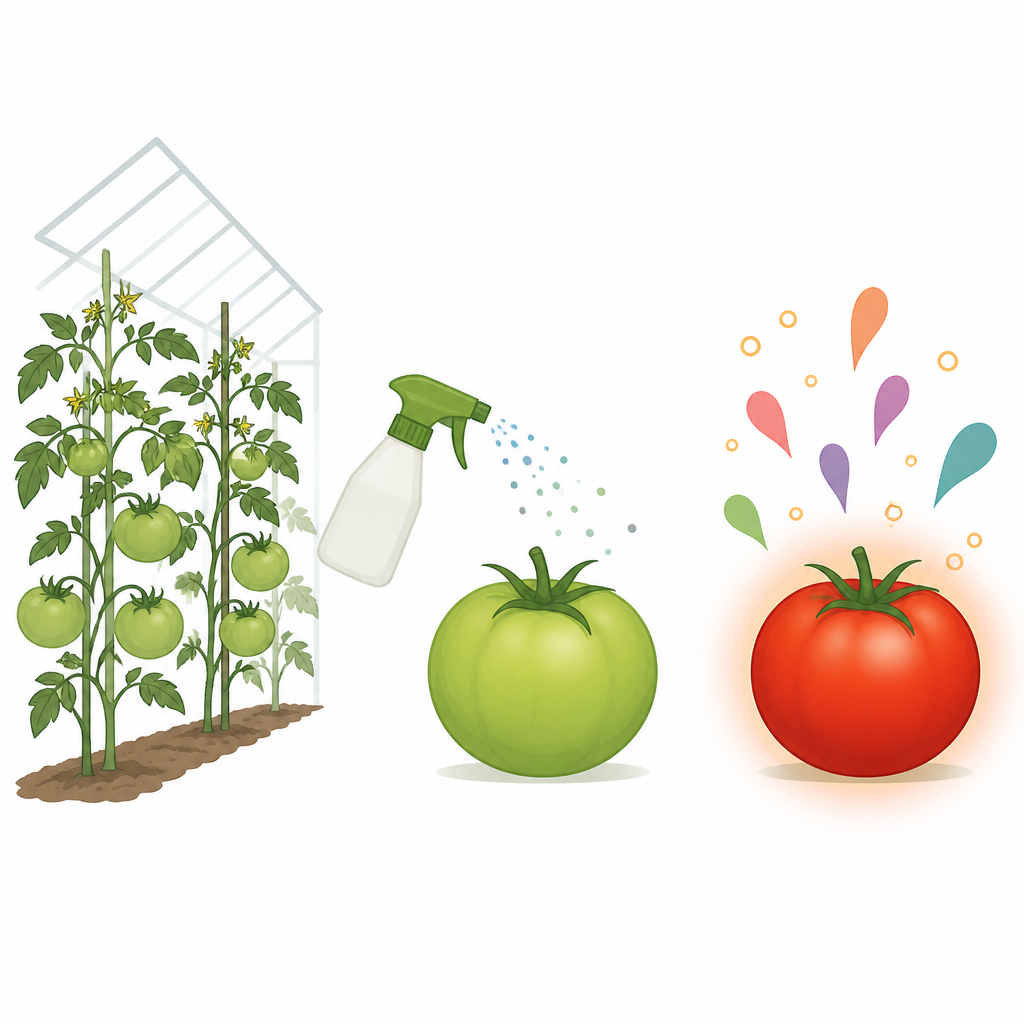
Tomatoes do more than brighten a salad; their shift from hard green to soft red marks deep changes in flavor, texture, and nutrition. Growers and breeders want that color change to happen at the right time and with the right intensity. This study explores how a plant hormone called brassinosteroid, working together with the ripening gas ethylene, helps tomatoes turn red by switching on key proteins inside the fruit.
A hormone that nudges fruit to ripen
Tomato is a classic “climacteric” fruit, meaning it releases a pulse of ethylene as it ripens. Ethylene drives many ripening traits, including the breakdown of green chlorophyll and the buildup of red and orange carotenoid pigments such as lycopene. The authors treated developing tomato fruits with a form of brassinosteroid called 24-epibrassinolide. At the right dose, this treatment sped up color change, reduced chlorophyll, increased carotenoids and lycopene, and raised ethylene levels. Blocking brassinosteroid production had the opposite effect, slowing color development and lowering ethylene. These responses suggested that brassinosteroids act as ripening helpers by boosting ethylene in the fruit.
Finding a key switch inside the fruit
To understand how brassinosteroid links to ethylene, the team looked at the enzymes that make S-adenosylmethionine, a small molecule that serves as a starting point for ethylene. Among three related genes in tomato, one called SlSAM3 reacted strongly to brassinosteroid: its activity rose when fruits were treated with the hormone and dropped when brassinosteroid was blocked. SlSAM3 also became more active as fruits moved from green to red, more so than its sister genes. Using gene-editing tools, the researchers created tomato plants lacking SlSAM3 and others that produced extra amounts. Fruits with extra SlSAM3 ripened and colored earlier, with more carotenoids and ethylene, while fruits missing SlSAM3 stayed green longer, held onto chlorophyll, and produced less ethylene. This showed that SlSAM3 is a powerful driver of tomato coloring.
When the hormone’s push depends on one gene
The scientists then asked whether brassinosteroid still worked if SlSAM3 was missing. Spraying the hormone on normal plants and on plants with extra SlSAM3 made fruits color even faster and further boosted pigment and ethylene levels. But in fruits lacking SlSAM3, the hormone treatment no longer helped: they remained slow to color and low in lycopene, carotenoids, and ethylene. Brassinosteroid also failed to raise the activity of several ethylene-making genes in these mutants. These results place SlSAM3 at the center of the hormone’s effect: without this gene, brassinosteroid loses much of its power to promote ripening.
Proteins that work side by side
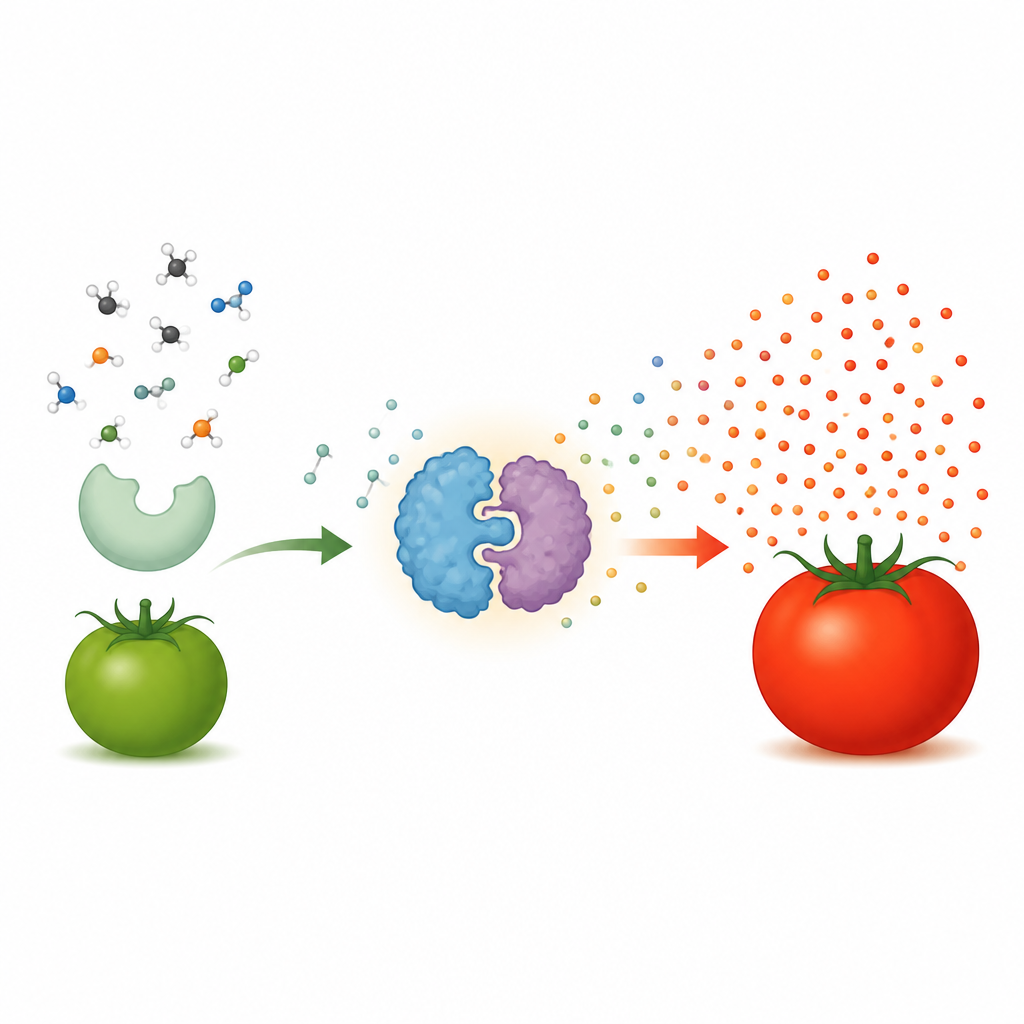
Ethylene is made in two main steps, and one of the key enzymes involved is encoded by a gene called SlACS4. Because SlACS4 becomes more active when SlSAM3 levels are high, the team tested whether the two proteins might physically touch. Using several protein-interaction methods in yeast and tobacco leaves, they found that SlSAM3 and the SlACS4 enzyme do indeed bind to each other, and that brassinosteroid clearly strengthens this contact. In tomato fruits, dialing down SlACS4 slowed color change and pigment buildup, while raising SlACS4 sped ripening. However, this boost from extra SlACS4 was much weaker in fruits that lacked SlSAM3, indicating that SlSAM3 is needed for SlACS4 to fully support ethylene production and rapid coloring.
What this means for better tomatoes
Taken together, the study outlines a simple story for non-specialists: a plant hormone, brassinosteroid, tells tomato fruits to ripen by turning up a gene called SlSAM3. The SlSAM3 protein partners with another protein, SlACS4, to feed the ethylene pathway, raising the levels of the gas that drives the shift from green to red. When this partnership is strong, tomatoes lose their green pigment faster and accumulate more red and orange pigments. By pinpointing this interaction, the work helps explain how different plant signals talk to each other during ripening and may guide future efforts to breed or manage tomatoes with more reliable color and quality.
Citation: Xuetong, W., Ailing, L., Huan, C. et al. SlSAM3 interacts with SlACS4 to facilitate brassinosteroid signaling-mediated tomato (Solanum lycopersicum) fruit coloring. Commun Biol 9, 700 (2026). https://doi.org/10.1038/s42003-026-10266-0
Keywords: tomato ripening, fruit coloring, plant hormones, ethylene signaling, brassinosteroids