Clear Sky Science · en
The Janus face of host LncRNA in viral infections: Defender or collaborator?
Why tiny RNA switches matter in viral battles
When a virus invades the body, the usual stars of the story are antibodies and immune cells. Yet hidden in our cells is another cast of characters: long non‑coding RNAs, or lncRNAs, stretches of RNA that do not make proteins but quietly steer how genes behave. This review explains how these molecules can act like double agents—sometimes shielding us from viruses, other times helping viruses thrive. Understanding how and when they switch sides could open new paths to treatments that work even when classic antiviral drugs fail.

Invisible conductors of the early immune alarm
Our first line of defense against viruses is the innate immune system, which detects foreign genetic material and quickly sounds the alarm. LncRNAs act as conductors in this early response, fine‑tuning which signals are amplified and which are dialed down. Some lncRNAs help immune sensors talk to each other, acting as scaffolds that bring key proteins into the right place so they can switch on antiviral genes. Others adjust how strongly immune messengers like interferons are produced and how long they remain active. These RNAs also help prevent friendly fire: certain lncRNAs step in to calm overactive responses that could damage healthy tissues, as shown in mouse studies where their loss leads to runaway interferon activity.
Direct hits on viruses and support from the sidelines
LncRNAs do more than steer immune signals—they can interact with viruses themselves. Some bind directly to viral genetic material or associated protein complexes, blocking the virus’s ability to copy its genome or turn on its own genes. Others act indirectly by reshaping the behavior of host enzymes and switches that viruses depend on. In several infections, lncRNAs recruit protein complexes that tighten or loosen the chemical marks on viral DNA, either silencing or activating viral genes. Still others act as “sponges” that soak up small regulatory RNAs, thereby freeing or restraining key host factors that make viral replication easier or harder. Through these layered tactics, lncRNAs help construct a multidimensional defense network that can target different stages of the viral life cycle—from entry to release.
How viruses turn defenders into helpers
Viruses have evolved counter‑moves that exploit the very lncRNAs meant to stop them. Some infections trigger the production of lncRNAs that weaken early detection systems, by dampening alarm sensors or breaking down crucial signaling proteins. Others boost lncRNAs that change how cells handle stress, death, or self‑cleaning processes like autophagy, in ways that favor viral survival and the exhaustion of T cells. Viruses can also co‑opt lncRNAs to assist with practical tasks such as attaching to cell receptors, importing viral proteins into the cell nucleus, or reprogramming cellular metabolism to provide raw materials for viral assembly. Intriguingly, the same drop in a given lncRNA’s level can reflect either a host‑driven defensive move or a virus‑driven sabotage strategy, underscoring how difficult it is to interpret simple “up” or “down” expression patterns without deeper context.
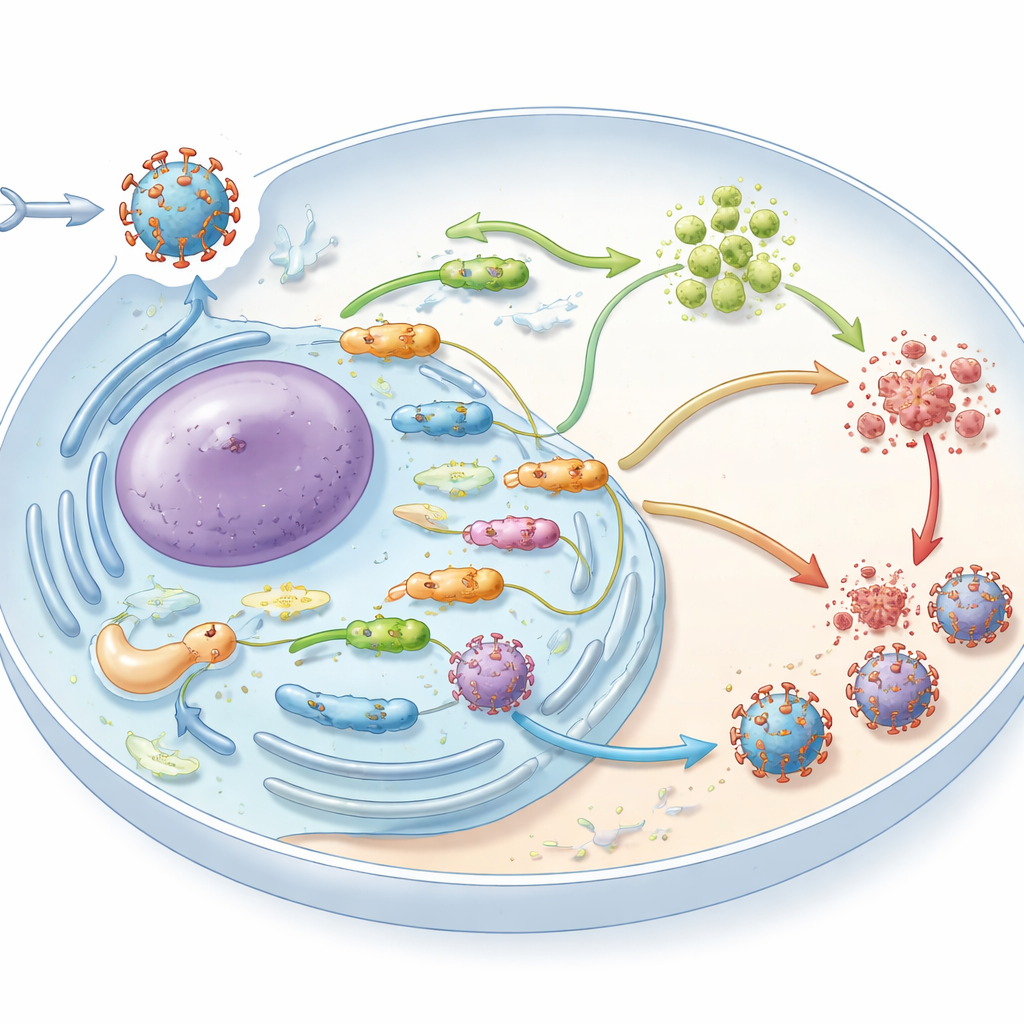
Double‑edged molecules that switch sides
Some of the most striking players are lncRNAs that can be either protective or harmful depending on the setting. The review highlights molecules like NEAT1, MALAT1, and HEAL, which can block one virus while helping another, or even change roles over the course of a single infection. Their behavior depends on which version of the RNA is produced, which partners they bind, where in the cell they accumulate, and what type of cell is infected. For example, a lncRNA may help assemble nuclear “hubs” that trap viral messages in resting immune cells, but the same structure can be hijacked by other viruses to boost their own gene activity. These RNAs respond to changing signals from both host and virus, acting as molecular switches whose tipping points are not yet fully understood.
From lab insights to future antiviral tools
Because lncRNAs are so tightly linked to how infections progress, they are emerging as promising markers and drug targets. In COVID‑19, certain blood lncRNAs correlate with disease severity and death risk, suggesting they could aid in prognosis and patient triage. At the same time, turning these molecules into therapies is challenging. Their actions are highly context‑dependent, they differ greatly between species, and delivering RNA‑based drugs safely to the right tissues remains difficult. The authors argue that progress will require combining single‑cell and spatial gene‑expression maps, precise RNA‑editing tools, advanced delivery vehicles like lipid nanoparticles and engineered exosomes, and sophisticated computational models. They also point to viral lncRNAs—made by the virus itself—as especially attractive targets because they often have narrower, more specific roles in helping the virus dodge immunity.
What this means for future antivirals
The article concludes that lncRNAs sit at the heart of the tug‑of‑war between viruses and their hosts. They act as double‑edged swords, able to either reinforce defenses or open back doors for infection, depending on the viral strain, cell type, and stage of disease. Rather than viewing this complexity as an obstacle, the authors suggest embracing it: by learning how these RNA switches are wired and what flips them, researchers may design smarter antiviral strategies that target shared host pathways instead of constantly chasing rapidly mutating viruses. In time, carefully tuned interventions on lncRNAs could complement conventional drugs and vaccines, offering new options against chronic, emerging, and drug‑resistant infections.
Citation: Ding, L., Pei, G. & Cheng, Z. The Janus face of host LncRNA in viral infections: Defender or collaborator?. Commun Biol 9, 622 (2026). https://doi.org/10.1038/s42003-026-10206-y
Keywords: long non-coding RNA, viral infection, innate immunity, antiviral therapy, RNA biomarkers