Clear Sky Science · en
L-serine at the crossroads of microbiota, intestinal health, and disorders
Why this tiny nutrient matters
L-serine is a small building-block of protein that quietly helps keep our gut lining healthy, our microbes in balance, and our defenses against disease in working order. This review article explores how this single amino acid sits at the center of a busy crossroads connecting diet, intestinal cells, friendly and harmful bacteria, and conditions such as inflammatory bowel disease and colorectal cancer. Understanding this hidden traffic hub in the gut could point the way to new food-based and microbial approaches to protect intestinal health.
Where L-serine comes from
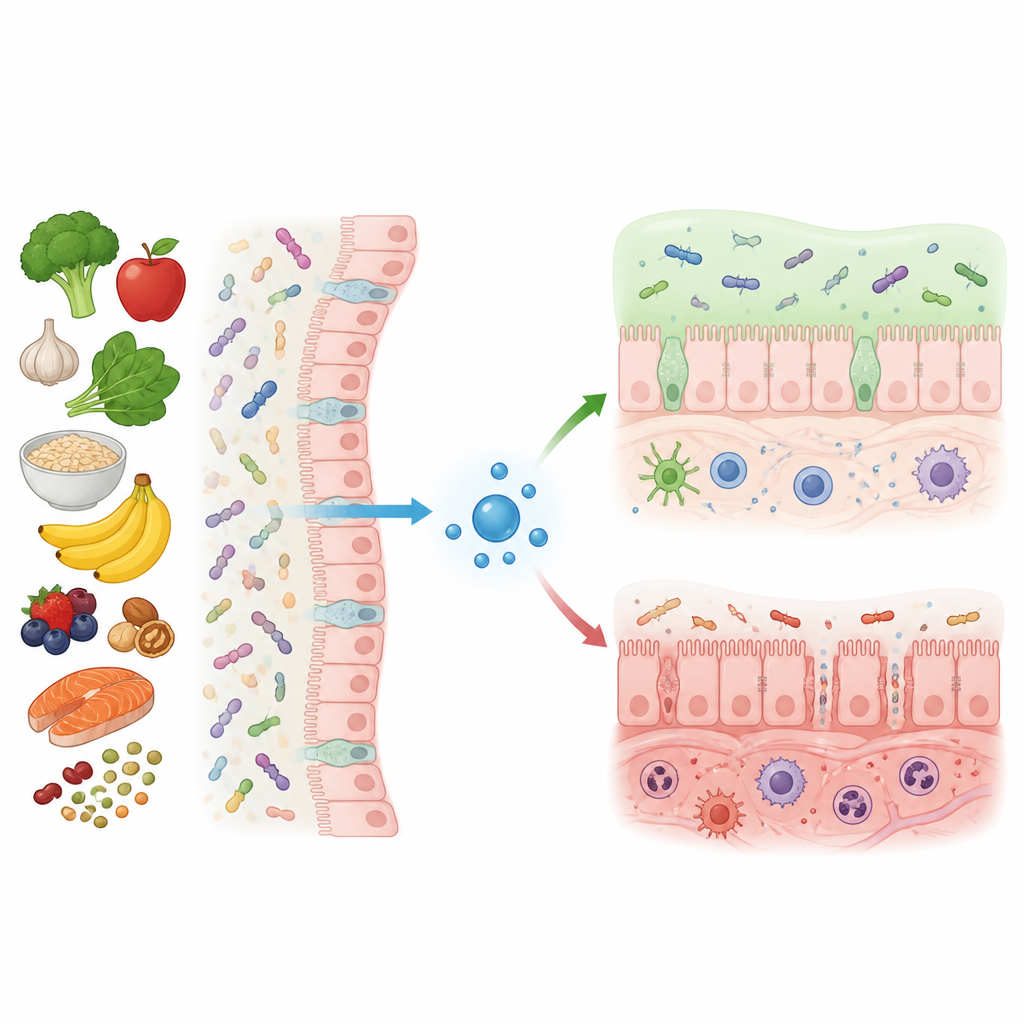
L-serine reaches the intestine from several sources. We eat it every day in protein rich foods such as meat, eggs, soy, nuts, seeds, and legumes, and gut bacteria can also make it from simple sugars. At the same time, intestinal cells manufacture their own supply from glucose and other amino acids or recover it when old proteins are broken down. This constant recycling reflects how strongly gut cells depend on L-serine to meet their needs, especially when they are stressed or rapidly dividing. In healthy conditions, these different streams are balanced so that most L-serine is used locally in the gut rather than released into the bloodstream.
How L-serine fuels the gut wall
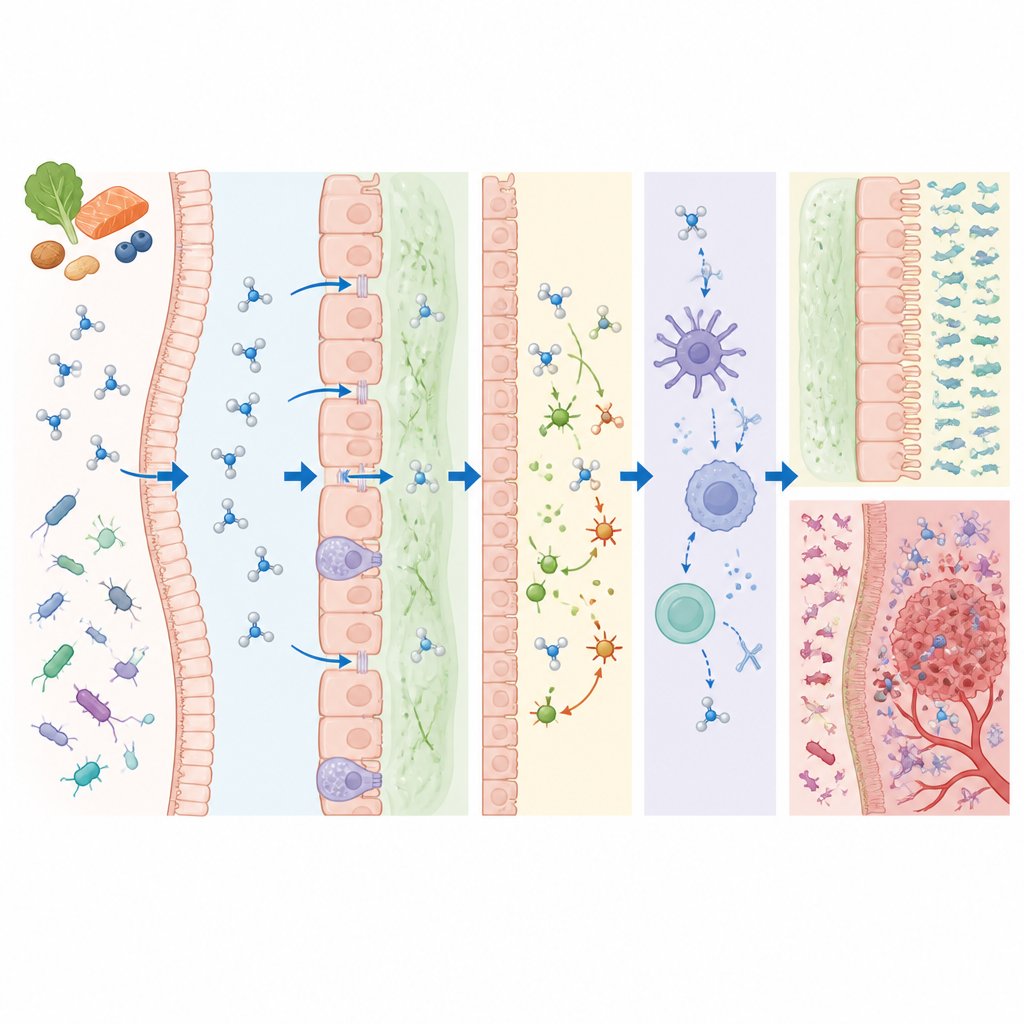
Once inside intestinal cells, L-serine feeds into many core processes that keep the gut lining intact. It helps build proteins and fats that form sturdy cell membranes, and it donates tiny chemical units that are needed to make DNA and support cell growth. L-serine is also converted into antioxidants such as glutathione and fuels the production of protective molecules that control the balance between damaging and helpful forms of oxygen. Through these routes, it supports the constant renewal of the intestinal surface and helps cells recover after injury. When L-serine is in short supply, oxidative damage rises and the capacity for repair falls, making the tissue more vulnerable.
Guarding the mucus shield and barrier
A key job of L-serine in the gut is to sustain the slippery mucus layer that coats the intestinal wall. The main mucus proteins are packed with serine rich segments that carry long sugar chains, giving mucus its gel-like character and its ability to stop bacteria from reaching the cells underneath. Animal studies show that extra dietary L-serine can boost mucus production, increase mucus producing goblet cells, and improve the shape and tightness of the intestinal surface, which together limit leakiness and support healing after chemical injury. Because some microbes are able to nibble away at serine in mucus, the availability of this amino acid helps shape which bacteria can live near the gut wall.
Links to microbes, inflammation, and cancer
The review highlights that L-serine does not act alone; it is tightly intertwined with the gut microbiota and the immune system. Many bacteria use L-serine as fuel or for building complex fats called sphingolipids that can signal to host immune cells. In inflamed intestines, certain strains of Escherichia coli and other pathogens gain an advantage by consuming host or dietary L-serine to grow, colonize the mucosa, and enhance their harmful traits, including DNA damaging toxins. At the same time, L-serine availability helps steer immune cells such as macrophages and T cells, influencing whether they adopt inflammatory, tissue repairing, or tumor supporting roles. In colorectal cancer, tumor cells often overexpress the enzymes and transporters that bring in or make L-serine, using it to drive growth, resist chemotherapy, and shape a more suppressive immune environment.
Can we safely target L-serine?
Because L-serine supports both healthy repair and disease processes, researchers are testing strategies that either add or restrict it, depending on the condition. Supplementation in animal models of colitis strengthens the mucus barrier, improves gut structure, and shifts microbes toward more beneficial profiles, while early human work in other diseases suggests that L-serine is generally well tolerated. In contrast, lowering dietary serine, blocking its transport into cells, or inhibiting its synthesis can slow tumor growth and improve responses to chemotherapy, radiotherapy, and immunotherapy in preclinical cancer models. However, results are mixed, and cancer cells and microbes may adapt by drawing on other sources of serine.
What this means for patients and future care
The authors conclude that although L-serine is officially labeled a non-essential amino acid, it is functionally essential for keeping the gut lining, microbes, and immune responses in balance. Disturbances in how L-serine is supplied or used may tip the system toward chronic inflammation, infection, or cancer. The review argues that carefully designed dietary plans, drugs that fine tune serine pathways, and strategies that modify the microbiota could eventually complement existing treatments for inflammatory bowel disease and colorectal cancer. For now, L-serine stands out as a promising target that must be approached with caution, since the same molecule that helps repair the gut can also be hijacked by harmful cells and microbes.
Citation: Devaux, A., Boucher, D., Villéger, R. et al. L-serine at the crossroads of microbiota, intestinal health, and disorders. Commun Biol 9, 632 (2026). https://doi.org/10.1038/s42003-026-10133-y
Keywords: L-serine, gut microbiota, intestinal barrier, inflammatory bowel disease, colorectal cancer