Clear Sky Science · en
Standardized lung function reference values in rats for translational respiratory research
Why Rat Lung Measurements Matter
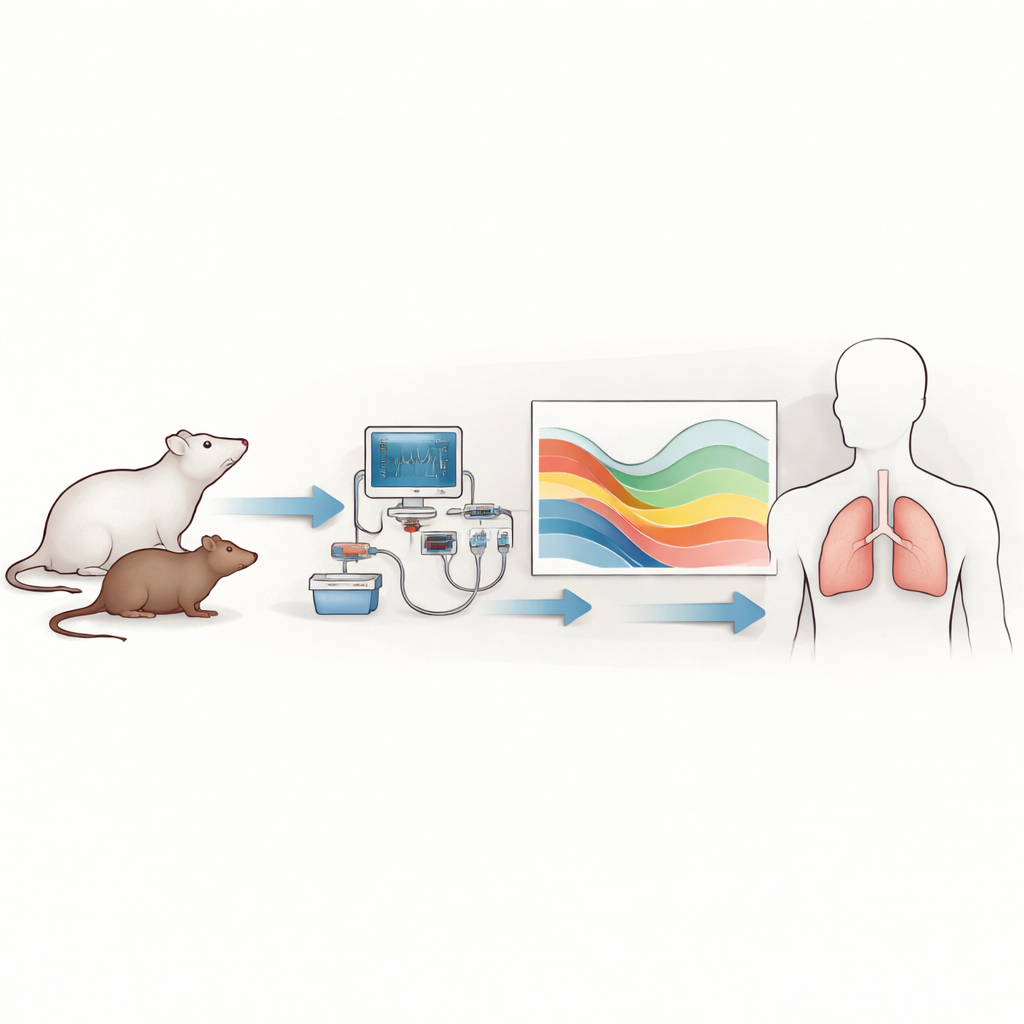
When scientists test new treatments for lung diseases, they often turn to rats because their breathing systems share key features with ours. Yet until now, researchers measuring rat lung function have mostly reported raw numbers without a clear sense of what counts as “normal.” That makes it hard to tell whether a change is truly caused by a disease or drug, or is just natural variation between animals. This study fills that gap by building the first standardized reference values for rat lung function, borrowing ideas from how lung tests are interpreted in human medicine.
From Raw Numbers to Meaningful Scores
In human clinics, lung tests are judged against large reference datasets. A person’s result is compared with what would be expected for someone of the same age, size, sex, and background, and then turned into a standardized value called a z-score. This tells doctors how far a patient’s lungs deviate from healthy norms. In contrast, preclinical rat studies usually report only absolute measurements, such as how stiff the lungs are or how much air remains at the end of a breath. Without a reference framework, it is difficult to compare results between labs, strains, or even between male and female animals.
Building a Map of Normal Rat Breathing
The researchers set out to define what “normal” lung function looks like in the two most widely used laboratory rat strains, Sprague Dawley and Wistar. They studied 182 healthy rats of both sexes under carefully controlled anesthesia and mechanical ventilation. For each animal, they measured four key features: resistance in the airways (how hard it is for air to flow), how easily the lung tissue moves and dissipates energy, how stiff the tissue is, and the resting amount of air left in the lungs after exhalation. They repeated these measurements at several preset pressure levels used during ventilation, mimicking how lungs behave under different breathing supports.
Turning Measurements into a Standard Scale
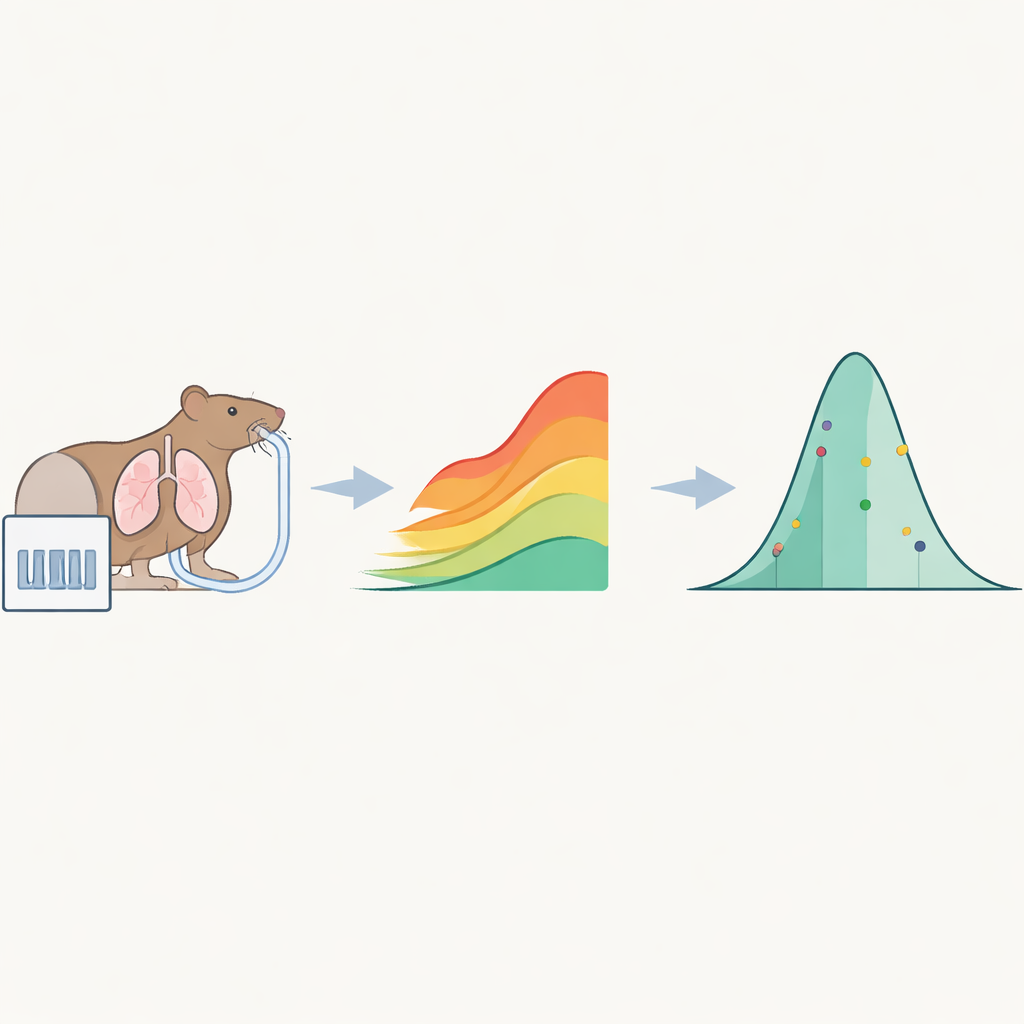
To turn this large collection of data into a practical tool, the team used a flexible statistical framework that models both the typical value and the natural spread around it. For each lung feature, they described how the expected value changes with body mass, rat strain, sex, and the applied pressure level, and at the same time how variable the measurements are across animals. This allowed them to compute z-scores for any single rat: a way of saying whether that animal’s lung function sits near the average, or far into unusually high or low territory. They checked their equations thoroughly, using repeated model validation and cross-checks to confirm that the predicted ranges matched the observed data.
What the Models Reveal About Biology
Beyond the statistics, the reference maps offered biological insights. Both strain and sex clearly influenced how rat lungs behave, even after accounting for body size. Male and female rats showed consistently different patterns in airway and tissue mechanics, and strains differed more modestly. Importantly, adjusting results using z-scores helped separate true disease effects from these background differences. In an independent test group where rats developed scarring in the lungs, raw stiffness values overlapped between healthy and diseased animals, especially because males and females had different body masses. Once those same values were converted to z-scores, most diseased rats stood out clearly as falling outside the normal range, while nearly all healthy rats stayed within it.
Bringing Animal and Human Studies Closer Together
The authors conclude that their new reference equations and open-source calculators bring preclinical rat studies closer to the standards used in human lung testing. Instead of asking only whether one group of animals differs from another, researchers can now ask whether an individual rat’s lungs look normal for its size, sex, strain, and breathing conditions. That makes it easier to detect meaningful treatment effects, compare results across laboratories, and link animal findings to human disease patterns. The same strategy can be extended to other species and organ systems, helping to narrow the long-standing gap between experimental models and real-world patients.
Citation: Fodor, G.H., Rárosi, F., Boda, K. et al. Standardized lung function reference values in rats for translational respiratory research. Commun Biol 9, 626 (2026). https://doi.org/10.1038/s42003-026-10123-0
Keywords: rat lung function, respiratory mechanics, preclinical models, z-score reference, translational research