Clear Sky Science · en
GCNPath: introspecting drug response prediction with pathway-guided graph convolution networks
Why this research matters
Cancer drugs do not work the same way for everyone. Two patients with similar tumors can have very different responses to the same treatment. This study introduces a new computer model called GCNPath that aims to predict how cancer cells will respond to drugs more reliably, even when the data come from different labs, machines, or types of experiments. Better predictions could help researchers screen drugs faster and design treatments that are more closely matched to each patient’s tumor biology.
Connecting cell activity to treatment response
Every cancer cell carries a unique pattern of active and inactive genes, which shapes how it reacts to medicines. Instead of looking at thousands of individual genes one by one, GCNPath groups genes into biological “pathways” that represent key cellular processes, such as growth signals or DNA repair. It first converts raw RNA measurements from cancer cell lines into pathway activity scores, using a method designed to reduce technical noise between experiments. These pathway scores are then linked together into networks that show how pathways influence each other, capturing the rich crosstalk inside cells that simpler models often ignore. 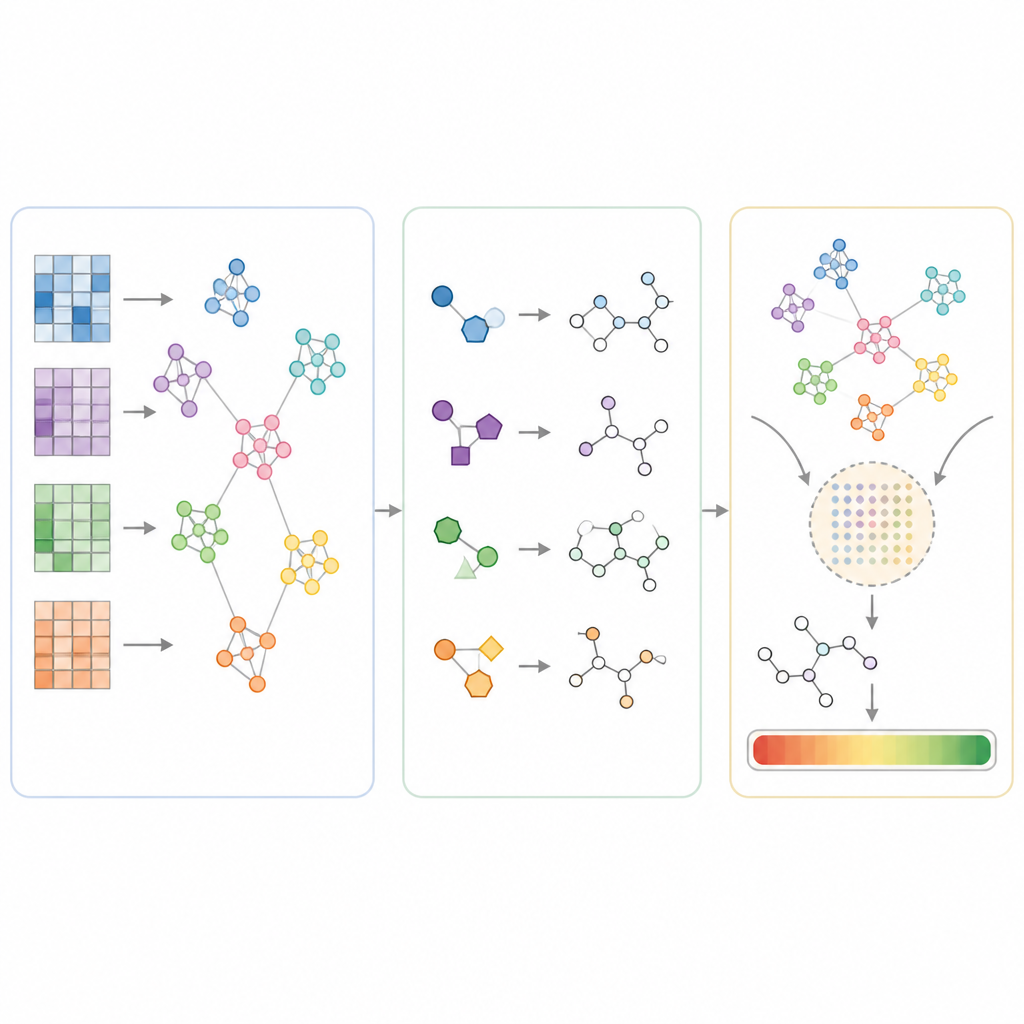
From molecules and pathways to a combined network view
GCNPath treats both the cancer cell and the drug as networks. For the cell, each node in the network is a pathway, and links indicate functional connections or similar activity patterns. For the drug, nodes represent atoms and links represent chemical bonds. The model uses specialized neural network layers that are built to work on graphs, allowing it to learn how changes in pathway networks relate to changes in drug structures. These learned summaries of the cell and the drug are then combined to predict how strong a dose is needed to slow cell growth, a common measure of drug sensitivity used in pharmacology studies.
Testing the model in demanding situations
The researchers put GCNPath through a series of difficult tests using large public drug screening datasets. In “unblinded” tests, the model predicted responses for cell–drug pairs similar to those it had seen during training. In stricter tests, it had to handle new cell lines, new drugs, or both at once. Across these scenarios, GCNPath matched or exceeded the performance of several leading deep learning tools, particularly when asked to predict the effects of drugs it had never seen before. Importantly, its pathway-based approach helped it stay stable across different RNA measurement platforms, including sequencing, microarrays, and even protein data, where many other models struggled.
Bringing real-world and clinical data into the picture
To gauge how well the model might generalize beyond carefully controlled screens, the team turned to a broad drug database that collects results from many independent laboratories. Even in this more chaotic setting, GCNPath showed competitive accuracy and robust correlations between predictions and observed responses. The model was then applied to patient data from The Cancer Genome Atlas to ask whether it could distinguish people who benefited from certain chemotherapy drugs from those who did not. While overall performance remained modest, GCNPath identified meaningful response differences for several widely used drugs and captured known links between cancer subtypes, pathway activity, and drug sensitivity in colorectal, breast, and small cell lung cancers. 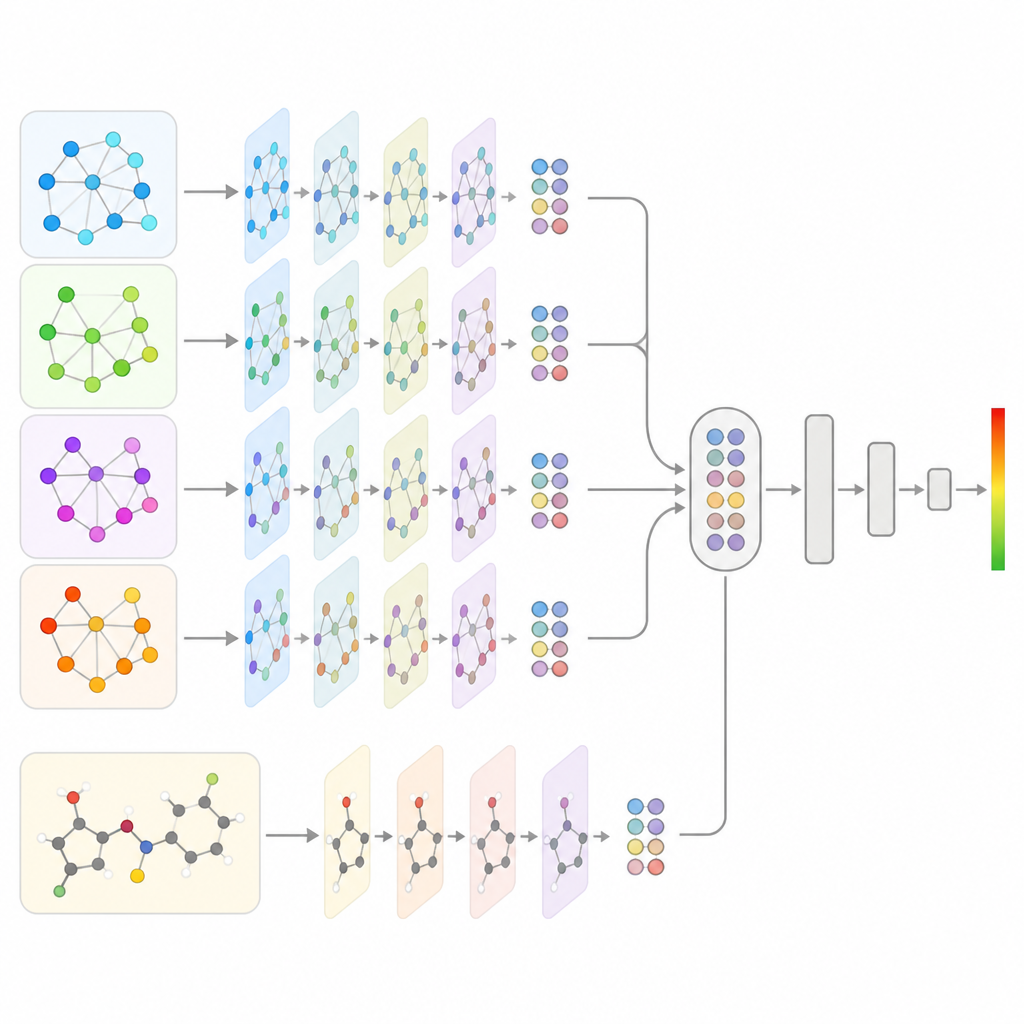
What this means for future cancer treatment tools
This work suggests that focusing on pathway networks and graph-based learning can make drug response predictions more adaptable to new drugs, new samples, and mixed data sources. GCNPath does not solve all challenges in forecasting how patients will respond to therapy, especially for drugs far outside current chemical space or complex multi-drug treatments. However, it offers a practical framework that can help researchers sift through vast numbers of drug–cancer combinations, highlight important biological signals, and guide follow-up experiments. In the long term, such models could support more precise and data-informed choices about which therapies are most likely to work for a given tumor.
Citation: Yoon, H.J., Lee, M. GCNPath: introspecting drug response prediction with pathway-guided graph convolution networks. Commun Biol 9, 720 (2026). https://doi.org/10.1038/s42003-026-09957-5
Keywords: drug response prediction, cancer pathways, graph neural network, precision oncology, bioinformatics