Clear Sky Science · en
Questiomycin A demonstrates antibacterial activity against Mycobacterium tuberculosis by directly targeting FabD
Why this new TB study matters
Tuberculosis remains one of the world’s deadliest infectious diseases, and drug resistance is making it harder to treat. This study explores a natural compound called Questiomycin A and uncovers how it attacks the protective outer shell of the tuberculosis bacterium. By revealing a new weak spot in the microbe, the work could guide smarter drug design against stubborn and drug resistant TB.
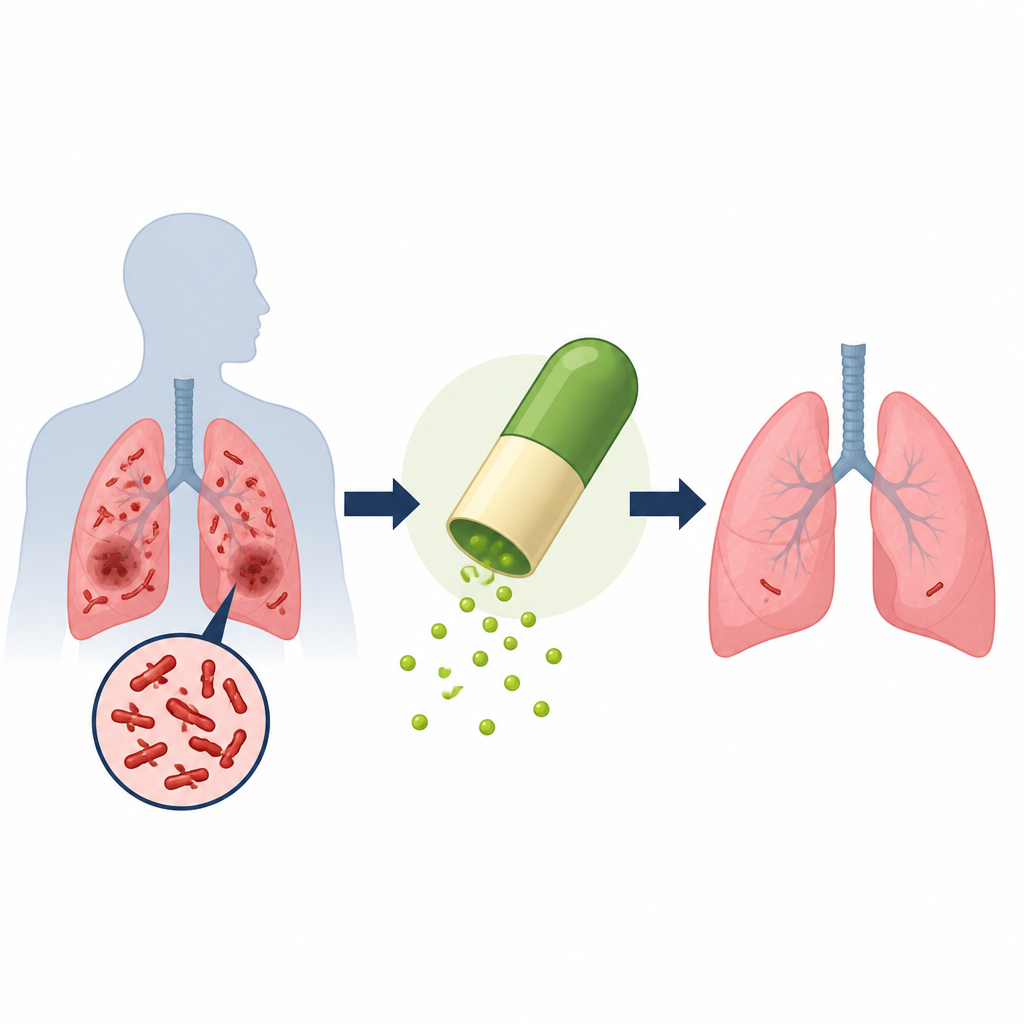
A natural compound with a sharp bite
The researchers began by screening a library of microbial natural products to see which could stop Mycobacterium tuberculosis, the bacterium that causes TB. Questiomycin A, a small molecule from a chemical family called phenoxazines, stood out. It killed not only standard laboratory TB strains but also many clinical isolates that were resistant to multiple existing drugs. In test tubes, it reduced bacterial counts by several thousand-fold in a time and dose dependent manner and showed very little tendency to allow resistant mutants to emerge, which is important for long term treatment.
Working in harsh conditions inside and outside cells
TB bacteria do not always grow quickly; they can hide inside immune cells or slip into a slow, non growing state that many drugs cannot touch. The team tested Questiomycin A under several such challenging conditions. It reduced bacterial numbers inside infected mouse macrophage cells almost as effectively as rifampicin, a key TB drug. It also retained killing activity against nutrient starved, non replicating bacteria, a state linked to persistent infection and treatment failure. Even across different acidity levels, mimicking the varied environments TB encounters in the body, the compound continued to show bactericidal effects.
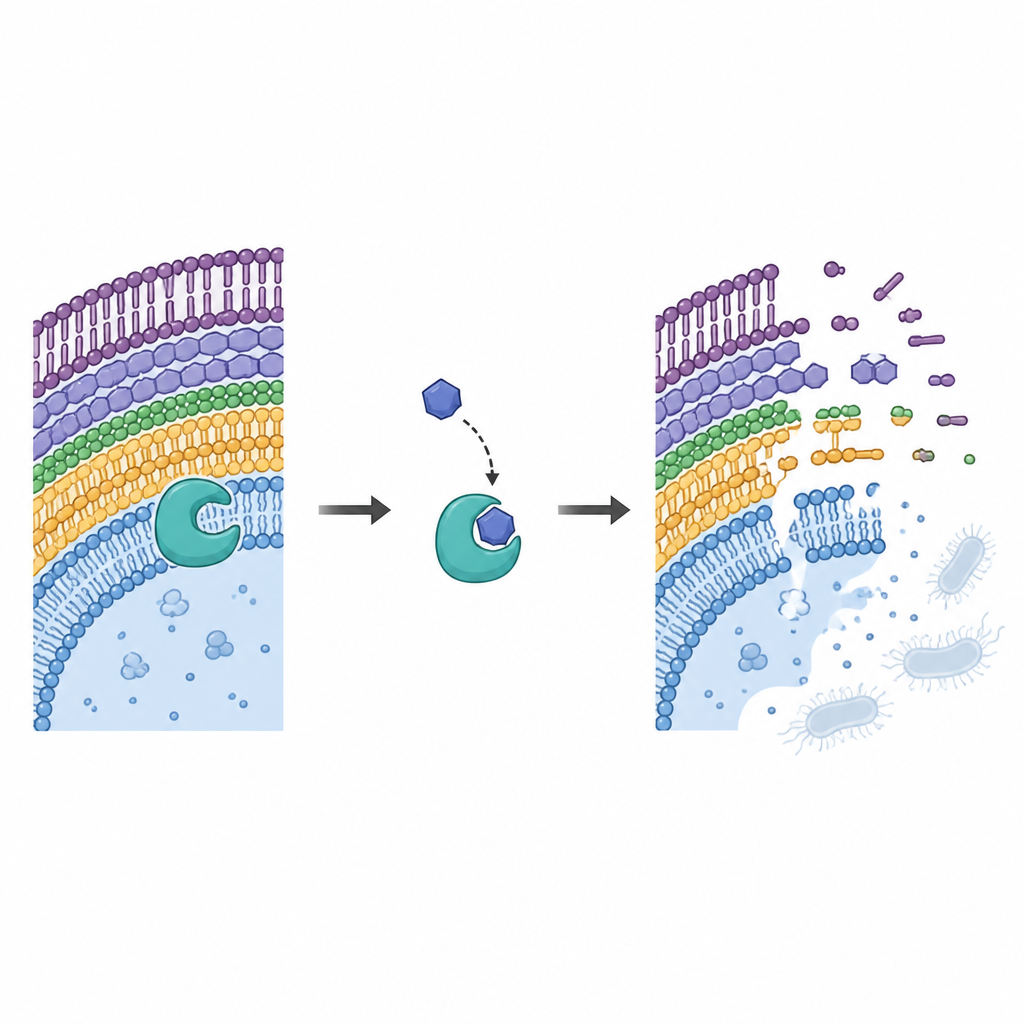
Cracking the bacterium’s waxy armor
To find out what Questiomycin A was doing inside the microbe, the scientists looked at which genes were turned up or down after treatment. Many of the affected genes were tied to fats and lipids that make up the bacterium’s unusually thick, waxy cell wall. Follow up experiments showed that treated TB cells soaked up fluorescent dyes more readily, a sign that their cell walls and membranes had become leaky. Electron microscopy images confirmed that parts of the envelope were physically disrupted, with contents spilling out. Measurements of internal conditions revealed that the compound also disturbed the balance of protons across the membrane and lowered the internal pH, changes that undermine the energy gradient bacteria rely on for survival.
Zeroing in on a key enzyme
The team then used a technique called thermal proteome profiling to see which bacterial proteins became more stable when Questiomycin A was present, a hallmark of direct binding. Among more than two thousand proteins, one enzyme, called FabD, showed a particularly strong increase in stability. FabD helps start the synthesis of long fatty acids that are later built into mycolic acids, crucial components of the TB cell wall. Further tests confirmed that overproducing FabD made bacteria less sensitive to the compound, that the molecule physically interacted with purified FabD protein, and that FabD’s activity dropped in the presence of Questiomycin A. Chemical analysis of cell wall lipids showed that all major mycolic acid types were reduced after treatment.
Promise and limits for future TB therapy
While Questiomycin A proved powerful in laboratory tests, its behavior in mice revealed current limitations. After a single oral dose, it was absorbed quickly but cleared from the bloodstream within a few hours, resulting in low overall exposure. This means that in its present form it is unlikely to work well as a standalone medicine. However, because the study firmly identifies FabD as its main target and shows that blocking this enzyme weakens the TB cell wall under both growing and non growing conditions, Questiomycin A offers a useful starting scaffold. Chemists can now use this knowledge to design improved molecules that bind FabD more tightly and stay longer in the body, potentially leading to new treatments for drug resistant and persistent tuberculosis.
Citation: Xu, L., Xu, M., Wang, B. et al. Questiomycin A demonstrates antibacterial activity against Mycobacterium tuberculosis by directly targeting FabD. Commun Biol 9, 709 (2026). https://doi.org/10.1038/s42003-026-09947-7
Keywords: tuberculosis, Questiomycin A, FabD enzyme, mycolic acid, drug resistant TB