Clear Sky Science · en
Single-stranded DNA in the bone microenvironment promotes prostate cancer bone metastasis via the ITGA6-FAK pathway
Why bones become a new home for prostate cancer
When prostate cancer spreads, it often settles in the bones, causing pain, fractures, and shortened life. This study asks a simple but unsettling question: what is it about the bone environment that makes it so welcoming to prostate cancer cells? The researchers uncover an unexpected player in this process: tiny pieces of single-stranded DNA floating in bone marrow fluid that help capture cancer cells and spur their growth.
Tiny DNA fragments in bone marrow
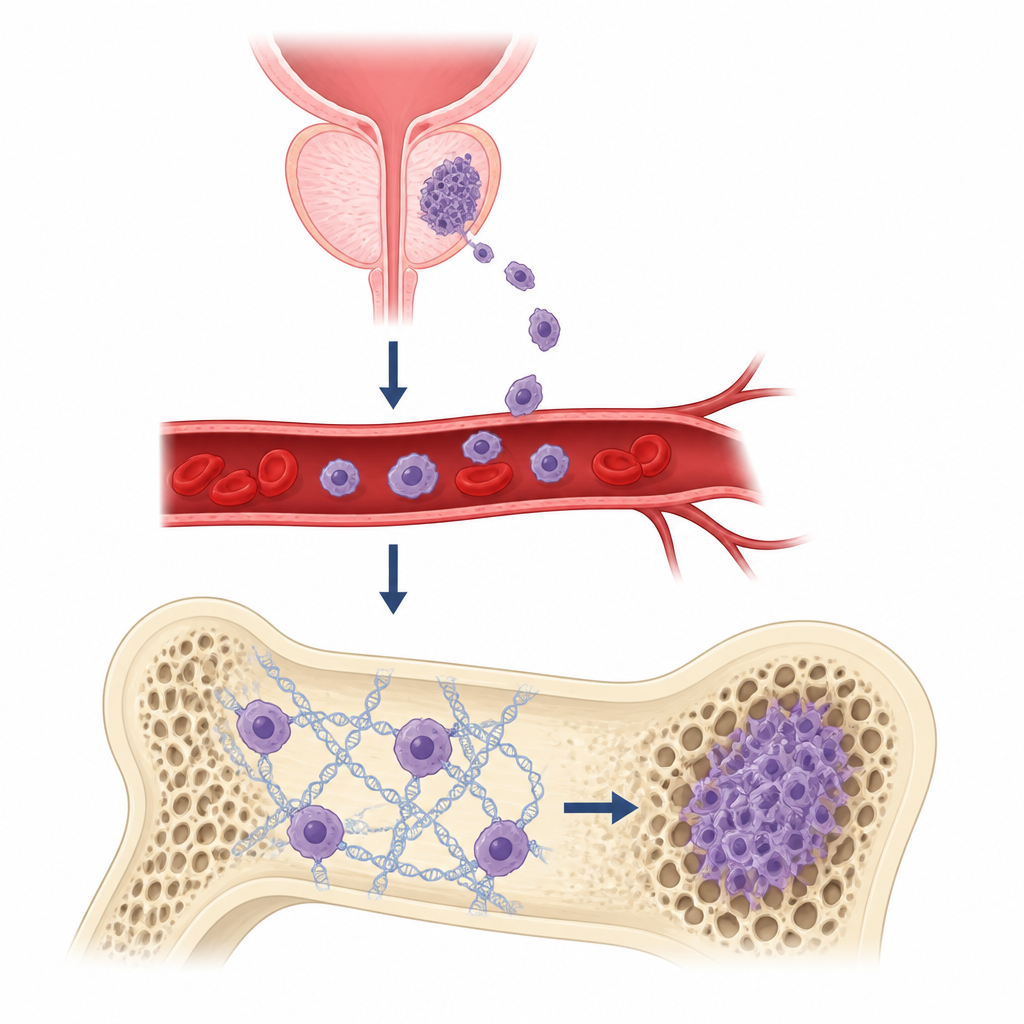
Bone is not a static material; it is constantly being broken down and rebuilt. As cells die and renew, bits of genetic material are released into the surrounding fluid. The team examined bone marrow fluid from men with prostate cancer that had spread to bone and from people with simple fractures. They found higher levels of short pieces of single-stranded DNA in patients with bone metastases, both in the bone marrow and in the blood. This suggested that these DNA fragments might be more than just harmless debris and could be linked to the way cancer cells take root in bone.
How cancer cells get hooked
To test whether these DNA fragments actually interact with cancer cells, the scientists used a selection method that sifts through many DNA sequences and keeps only those that strongly bind to prostate cancer cells. After multiple rounds, they identified a standout single-stranded DNA, which they named EHBP1-ssDNA. This short strand clung tightly to prostate cancer cells derived from bone metastases, but much less so to normal prostate cells or less aggressive cancer cells, hinting at a specific match between the DNA fragment and aggressive tumor cells.
A molecular handshake at the cell surface
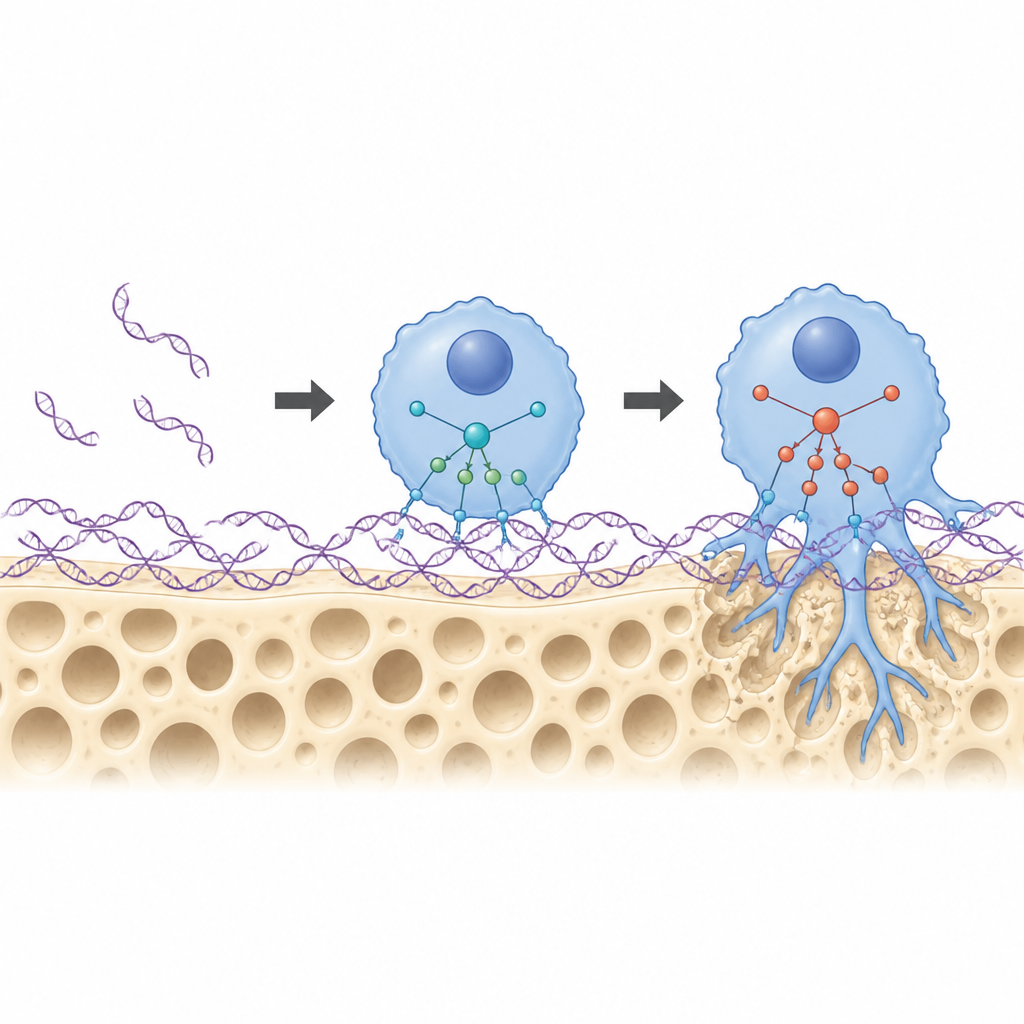
Digging deeper, the researchers searched for the cell-surface partner that EHBP1-ssDNA grabs onto. They found that it binds to a protein called integrin alpha-6, which sits in the cell membrane and normally helps cells latch onto their surroundings. When EHBP1-ssDNA attached to integrin alpha-6, cancer cells stuck more firmly, formed more colonies, and showed stronger abilities to migrate and invade in lab dishes. When the team genetically reduced integrin alpha-6 in these cells, the DNA fragment bound less efficiently and the boost in adhesion and growth was blunted, showing that this protein is a key part of the handshake between bone DNA and cancer cells.
From surface signal to deeper damage
The handshake at the cell surface does not stop there. Integrin alpha-6 is linked to an internal signaling enzyme called focal adhesion kinase, or FAK, which helps control cell movement and survival. The study showed that when EHBP1-ssDNA bound to cancer cells, it switched on FAK and its downstream partners, well-known routes that drive tumor spread. Blocking integrin alpha-6 or using a drug called Defactinib, which directly inhibits FAK, shut down this signaling surge. In mice injected with prostate cancer cells, extra single-stranded DNA or EHBP1-ssDNA led to more bone tumors and weaker, more porous bone, while integrin knockdown or Defactinib treatment reduced tumor burden and preserved bone structure.
What this means for patients
Put simply, this work suggests that loose single strands of DNA in bone marrow act like a sticky web that catches traveling prostate cancer cells, helps them attach via integrin alpha-6, and then flips on internal switches that promote growth and bone destruction. While the findings are mostly from mice and cell lines, they point to new ways of thinking about treatment. Approaches that clear or block these DNA fragments, or that interrupt the integrin–FAK signaling link, may one day help reduce the risk or severity of bone metastases in men with advanced prostate cancer.
Citation: Chen, X., Ye, Ms., Peng, ZL. et al. Single-stranded DNA in the bone microenvironment promotes prostate cancer bone metastasis via the ITGA6-FAK pathway. Commun Biol 9, 708 (2026). https://doi.org/10.1038/s42003-026-09929-9
Keywords: prostate cancer, bone metastasis, single-stranded DNA, integrin FAK signaling, bone marrow microenvironment