Clear Sky Science · en
Widespread atypical response regulator SecR governs bacterial growth on methylamines through the serine cycle
Why tiny nitrogen compounds matter
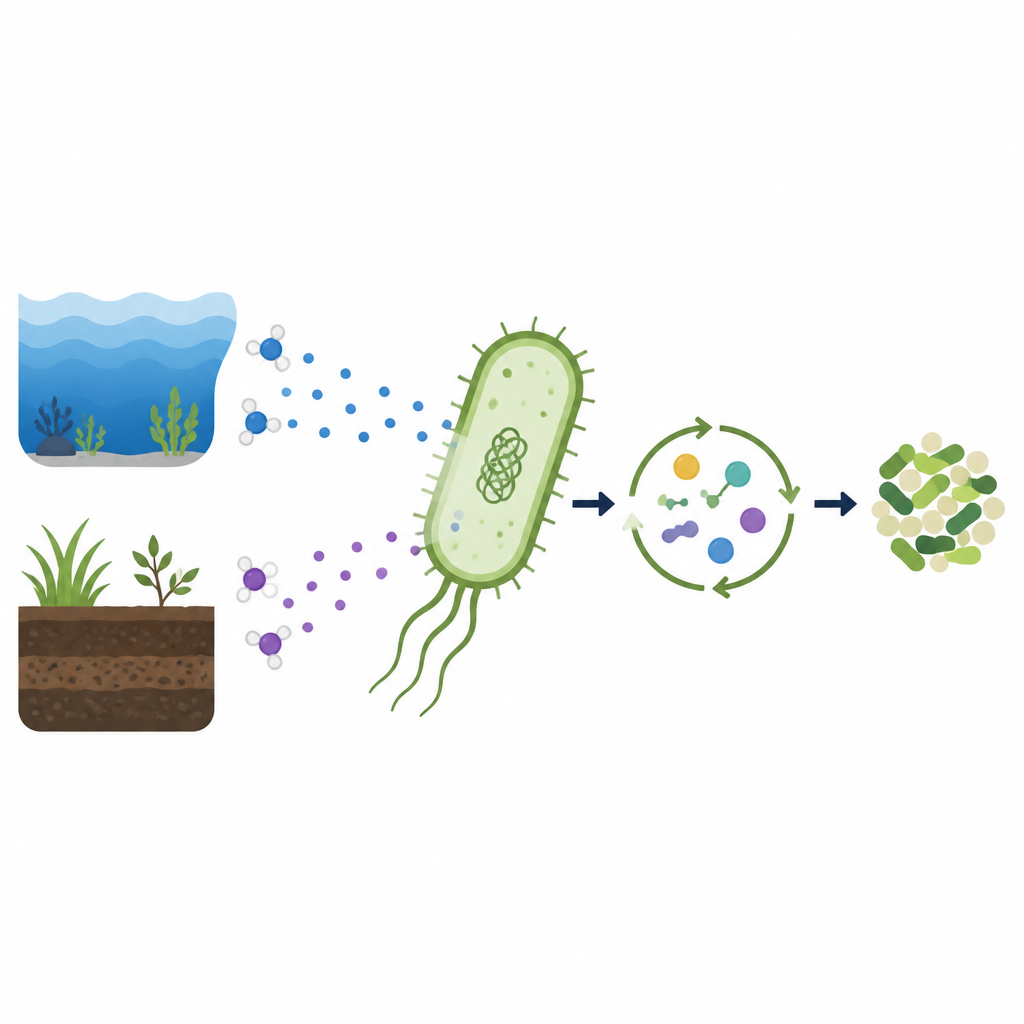
Every day, oceans, soils, and even farms leak wisps of nitrogen rich gases called methylamines into the air and water. Though present at very low levels, these small molecules feed huge numbers of microbes and can influence cloud formation and climate. This study uncovers how certain bacteria sense and use methylamines as food, revealing a hidden control switch that helps shape global cycles of carbon and nitrogen.
Small molecules with big global roles
Methylamines are simple nitrogen containing compounds that arise when microbes break down proteins, plant chemicals, and other rich organic matter. They seep out of marine systems, animal waste, and soils, yet are usually found at only trace concentrations because bacteria snap them up quickly. When methylamines escape into the air above the ocean, they can form tiny particles that help water droplets condense, subtly altering cloud behavior and how sunlight is reflected. Understanding how microbes capture and process these fleeting molecules is key to understanding how carbon and nitrogen move through Earth’s environment.
A bacterial pathway for using single carbon units
Many bacteria turn methylamines into even smaller one carbon fragments that can be built back into cell material. In the species Aminobacter sp. NyZ550, which can also break down the diabetes drug metformin, the authors mapped all the genes needed to oxidize methylamines and then funnel the one carbon fragments into a metabolic loop called the serine cycle. This cycle stitches the fragments into useful building blocks for biomass. By deleting individual genes, the team confirmed that NyZ550 depends entirely on these pathways to grow when methylamines are the only source of carbon and nitrogen.
Discovery of an unusual genetic switch
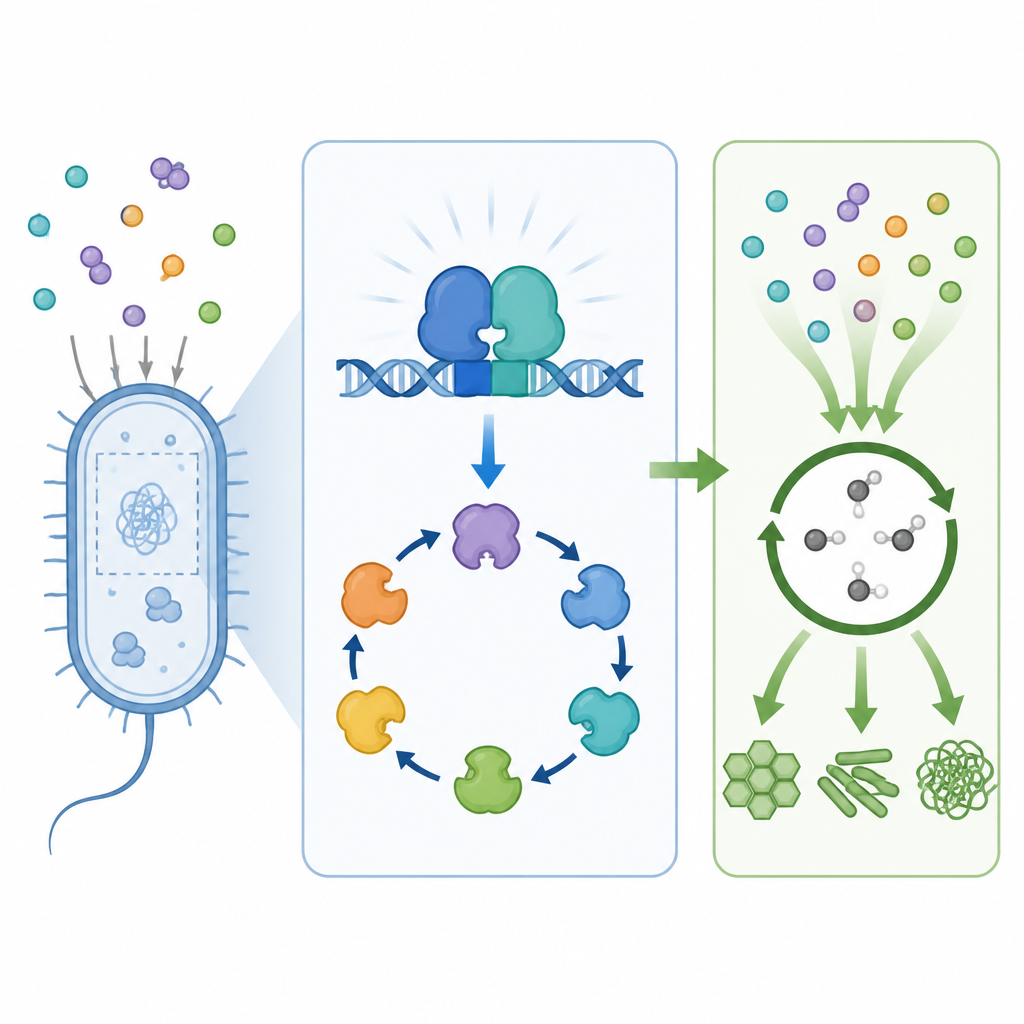
To find out how this metabolism is switched on, the researchers searched near the methylamine related genes for nearby regulatory genes, then deleted each one. Removing a gene they named secR1 caused the bacteria to grow extremely slowly on methylamines, while deleting a second similar gene, secR2, had little effect on its own. Strikingly, deleting both secR1 and secR2 completely blocked growth on methylamines. Detailed measurements of gene activity showed that these two regulators are both required to activate two key clusters of serine cycle genes, acting like twin switches that ensure the pathway runs when needed. Both proteins form dimers and bind directly to specific DNA segments in front of their target genes, boosting transcription without the usual chemical activation step seen in classic bacterial switches.
A widespread control system across land and sea
Further analysis showed that SecR like regulators belong to a broader family of so called atypical response regulators, which lack the normal phosphorylation site and partner sensor found in textbook bacterial two component systems. Instead, SecR proteins appear to be ready made dimers that recognize a short DNA motif shared by their target genes. By scanning thousands of complete bacterial genomes, the authors found SecR relatives in about 17 percent of surveyed strains, including many marine and soil bacteria known to eat methylamines. In over one hundred methylamine using alphaproteobacteria, SecR genes repeatedly sit next to serine cycle genes, although the exact gene order varies across at least four distinct cluster layouts, suggesting that while genome pieces have been shuffled by evolution, the central SecR based control logic has been preserved.
What this means for Earth’s cycles
For non specialists, the key message is that the study identifies a common genetic switch, SecR, that lets diverse bacteria quickly turn on the machinery needed to grow on methylamines. Instead of relying on a slow, multi step signaling scheme, these microbes use a built in dimeric regulator that directly grips DNA to raise the activity of serine cycle genes. Because similar SecR systems are found in both marine and soil bacteria, they likely help microbes respond rapidly to pulses of methylamines from events like algal blooms or plant root activity. In doing so, they quietly steer how one carbon fragments move between air, water, and living cells, with knock on effects for nutrient balance and the formation of atmospheric particles that help shape clouds.
Citation: Xu, J., Li, T. & Zhou, NY. Widespread atypical response regulator SecR governs bacterial growth on methylamines through the serine cycle. Commun Biol 9, 702 (2026). https://doi.org/10.1038/s42003-026-09928-w
Keywords: methylamines, bacterial metabolism, serine cycle, response regulators, biogeochemical cycles