Clear Sky Science · en
Multi-omics evaluation of cell lines as models for metastatic prostate cancer
Why this research matters
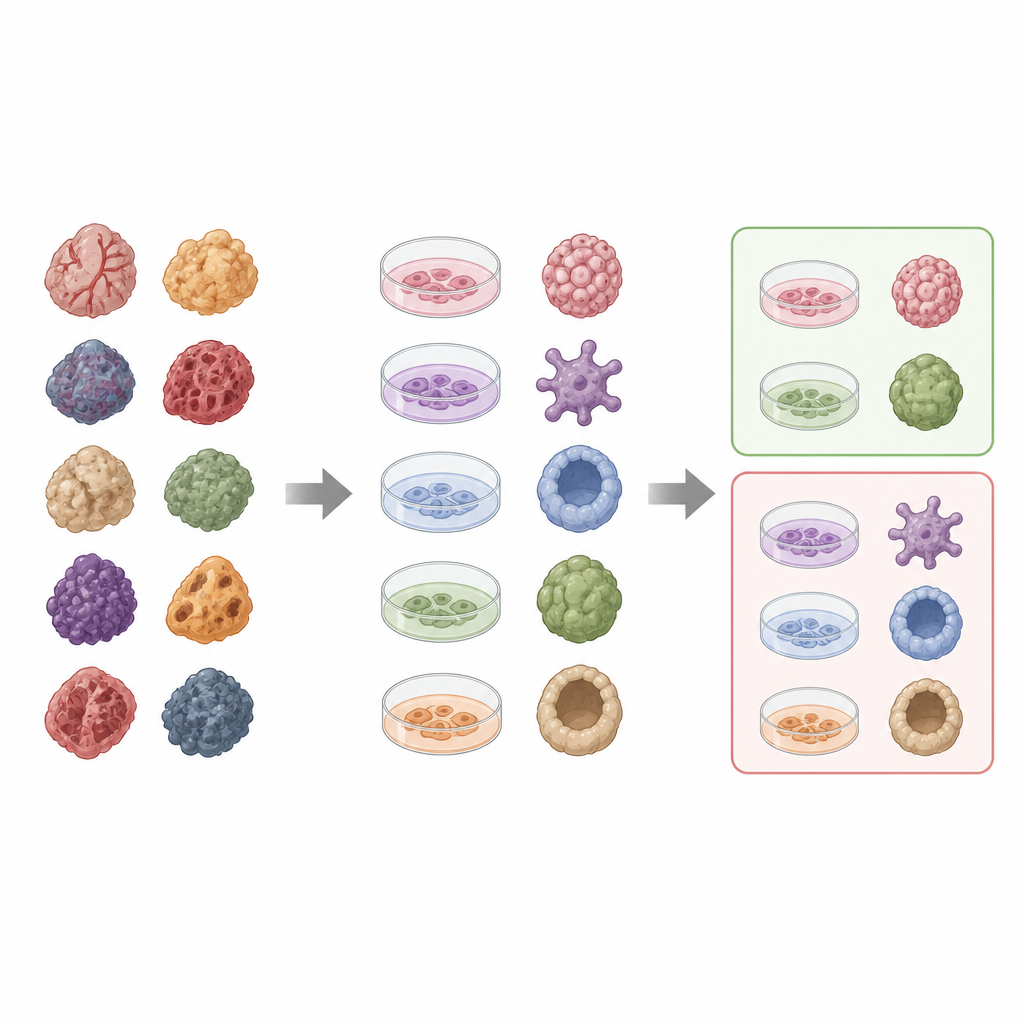
Prostate cancer is one of the most common cancers in men, and many lab studies rely on cancer cells grown in dishes to test ideas and drugs. But these cell lines do not always behave like real tumors that have spread through the body. This study asks a basic but often ignored question: which prostate cancer cell lines actually resemble metastatic disease in patients, and where do our favorite models fall short?
Looking for better stand ins
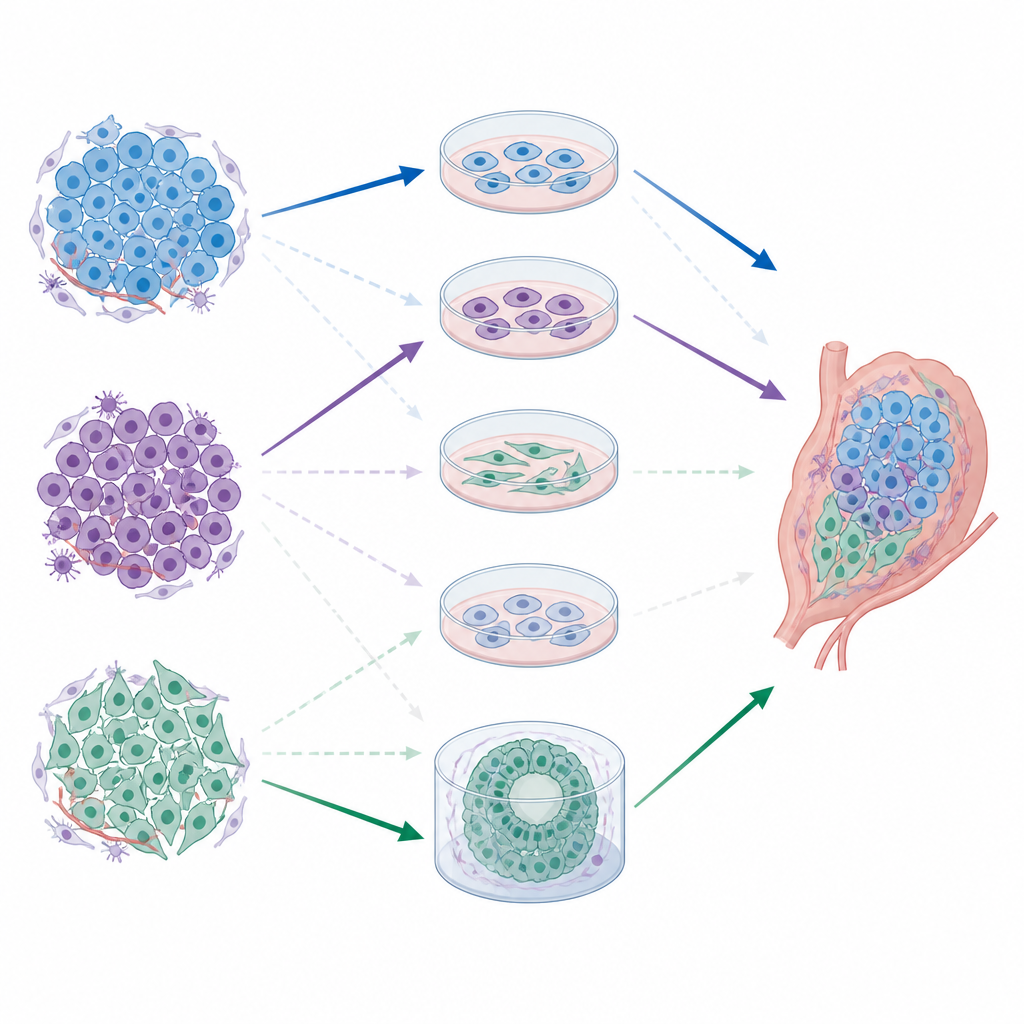
The researchers pulled together large public datasets that describe tumors and cell lines at many levels, including DNA mutations, chromosome gains and losses, gene activity, and DNA packaging. They compared metastatic prostate tumors from patients with commonly used prostate cancer cell lines to see how closely the models mirror real disease. They also looked at newer patient derived organoids, tiny 3D cell clusters grown from patient tumors, to see whether these provide a closer match than classic flat cell lines.
Hidden gaps in the genetic makeup
By scanning mutations in dozens of important genes, the team found clear mismatches between patient tumors and cell lines. Some genes that are often altered in metastatic prostate cancer never carried mutations in any of the tested cell lines, meaning those genes cannot be properly studied with current models. Only a handful of specific "hotspot" mutations, especially in the well known tumor suppressor TP53 and the androgen receptor gene, appeared in both tumors and cell lines. One line, called VCaP, stood out for carrying strong amplification of the androgen receptor gene, echoing a common feature of advanced prostate tumors.
When many mutations change the neighborhood
The study also examined "hypermutated" prostate cancers, which have an unusually high number of DNA changes. These tumors showed signs of heavier infiltration by killer T cells, a type of immune cell that can attack cancer, and activation of immune response pathways. That suggests hypermutated tumors sit in a very different neighborhood inside the body than more typical tumors. The authors argue that highly mutated cell lines, such as LNCaP, are better suited to model this special subset of prostate cancers, although additional systems are needed to capture interactions with immune and support cells.
The surprising weakness of a popular workhorse
One of the most widely used cell lines, PC3, came under particular scrutiny. Despite its popularity in metastasis research, PC3 ranked poorly when the team compared its gene activity and open chromatin patterns to those of metastatic prostate tumors. PC3 did not match the common adenocarcinoma form of the disease and only partially resembled a more aggressive, stem like subtype called mesenchymal and stem like prostate cancer. It lacked key basal cell markers seen in this subtype in patients, placing it in a kind of in between state that does not faithfully copy any major tumor group.
Newer three dimensional models show promise
To see if other models do better, the researchers examined engineered cell lines pushed toward more stem like behavior and patient derived organoids claimed to represent the aggressive subtype. Engineered versions of standard lines gained some stem like traits but largely kept their original identity and still failed to match the patient tumors. In contrast, several organoids, especially one named MSKPCa12, showed stronger resemblance in both gene activity and cell lineage features, including basal markers that are prominent in the aggressive subtype.
What this means for future studies
Overall, the study provides a practical map linking specific prostate cancer models to the kinds of metastatic disease they best represent. It recommends VCaP and related lines for typical androgen driven metastatic tumors, LNCaP for hypermutated cases, and certain organoids for the aggressive stem like subtype, while warning about the limitations of PC3. For non specialists, the message is simple: not all cancer cell lines are equal, and choosing the right model is crucial for turning lab findings into treatments that will matter for patients.
Citation: Liu, X., Yu, W., Jin, X. et al. Multi-omics evaluation of cell lines as models for metastatic prostate cancer. Commun Biol 9, 656 (2026). https://doi.org/10.1038/s42003-026-09914-2
Keywords: prostate cancer, cancer cell lines, metastasis, tumor subtypes, organoids