Clear Sky Science · en
Brown trout (Salmo trutta) originating from warmer streams in Iceland exhibit increased energetic efficiency
Why warming streams matter for trout and people
Rising temperatures are reshaping rivers and lakes worldwide, threatening the fish and freshwater life that many communities depend on. This study looks at brown trout living in an Icelandic valley where some streams are naturally warmed by underground heat while others stay cold. By comparing fish from warm and cold streams, the researchers ask a simple question with big implications: can top predators adjust how they use and gain energy in a warmer world, and what might that mean for the future of freshwater ecosystems?
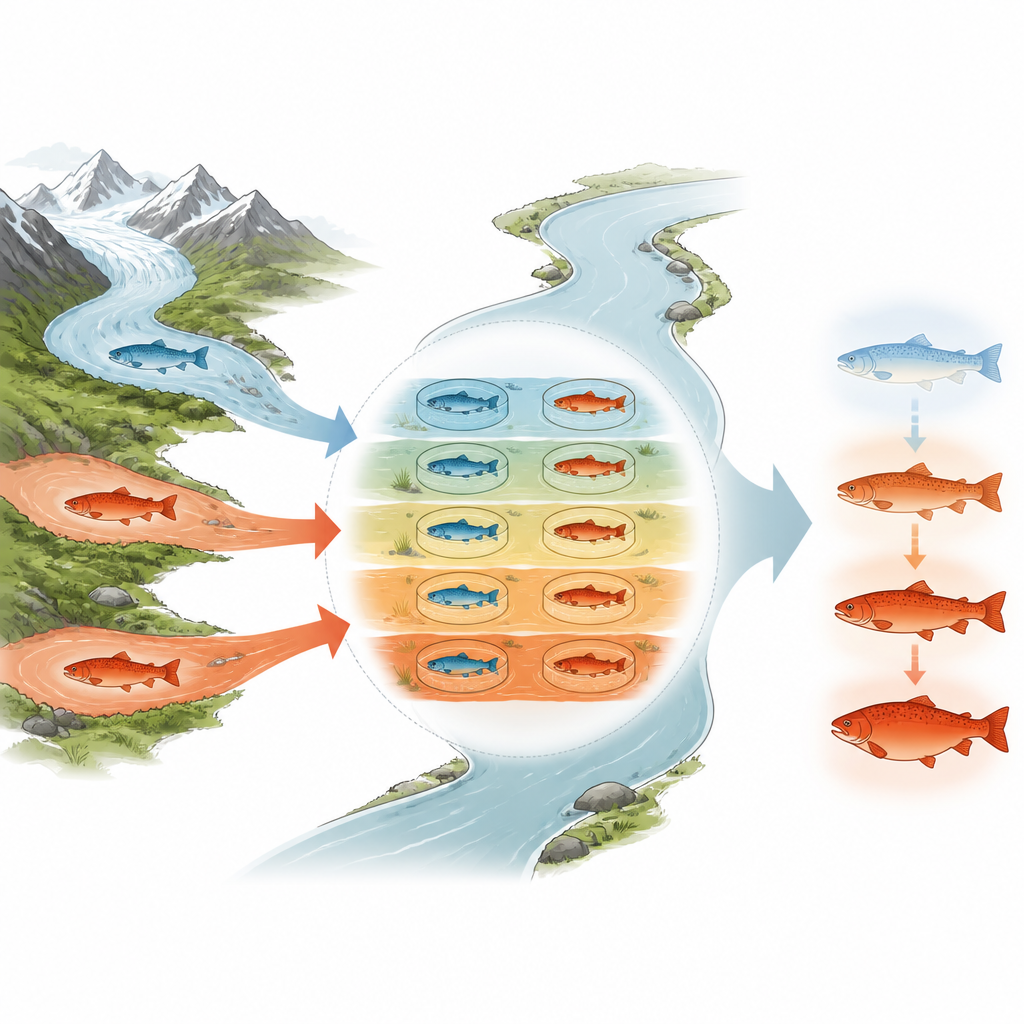
Two kinds of streams, one natural experiment
In the Hengill geothermal valley, nearby streams can differ by several degrees in average temperature, yet share similar chemistry and habitats. Brown trout are the only fish in this system and act as top predators. The team collected trout from one cold stream and two warmer streams and then temporarily moved them into a set of other streams that span a broad temperature range. This clever “space for time” design let them test how fish from different thermal homes respond when suddenly placed in cooler or warmer water, without relying on artificial laboratory tanks.
Measuring what fish burn and what they eat
To understand the trout’s energy budget, the researchers measured two key pieces: how fast the fish used oxygen, a stand in for metabolic rate, and how quickly they ate two common prey species, snails and blackfly larvae. Metabolic rate reflects energy spent on basic life processes and activity, while feeding rate reflects energy gained from food. The ratio of intake to expenditure, called energetic efficiency, shows whether fish are likely to have surplus energy for growth and reproduction. The team tracked these measures across different stream temperatures and compared trout originally from warm versus cold home streams.
Metabolism rises for all, but appetite only for some
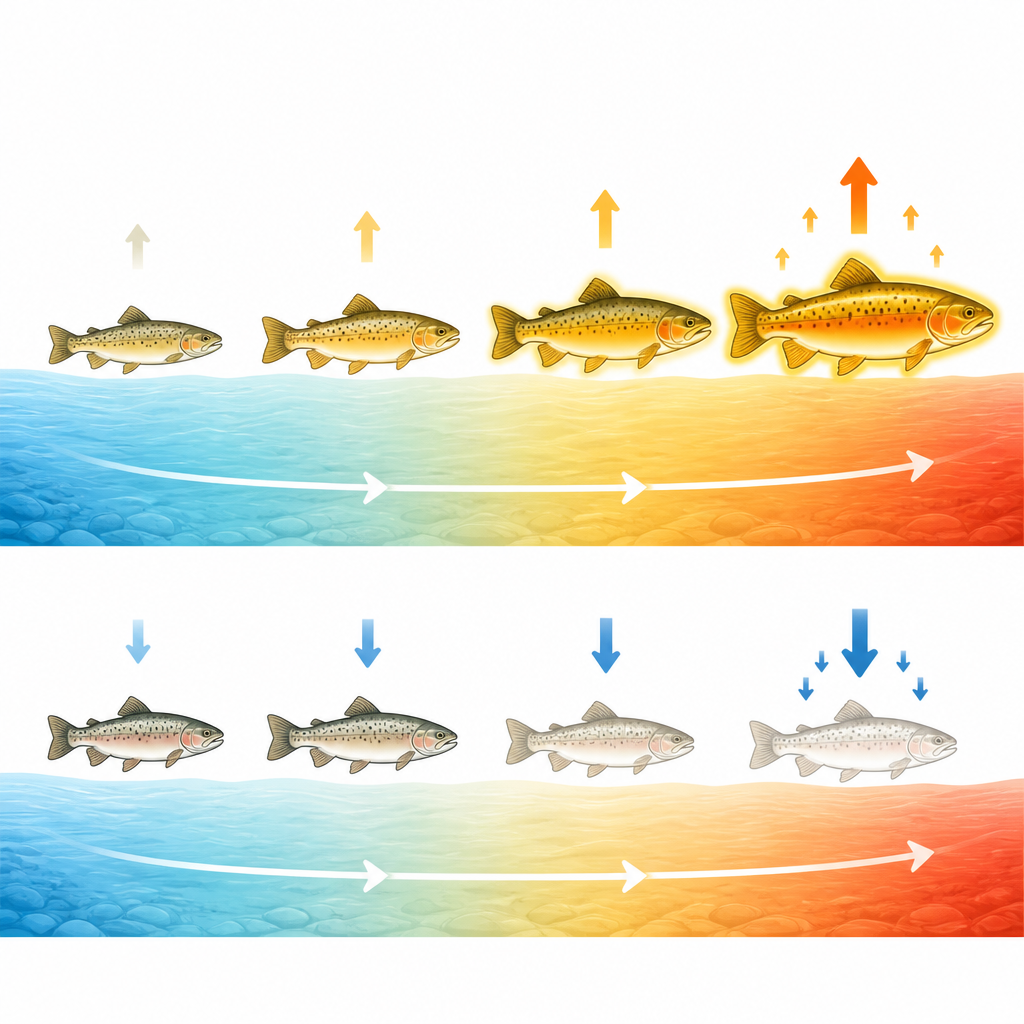
The results showed that metabolic rate increased with both body size and temperature, as expected for cold blooded animals whose body temperatures follow the environment. Importantly, this rise was similar for trout from warm and cold streams. Where the groups differed was in feeding. As streams got warmer, trout from warm home streams increased how quickly they ate both snails and blackfly larvae. In contrast, trout from the cold stream showed little to no increase in feeding rate with temperature. This meant that in warmer water, warm origin fish gained energy faster than they spent it, while cold origin fish saw their energetic efficiency fall.
Clues from DNA about movement and local adjustment
To see whether these differences might reflect long term adjustment, the researchers also examined genetic variation using neutral DNA markers. They found weak but clear genetic separation between trout from the cold stream and those from the two warm streams, while the two warm streams were essentially indistinguishable from one another. This pattern suggests limited mixing between cold and warm areas, creating the opportunity for local adaptation or for persistent differences shaped by early life conditions and inherited effects. The study cannot yet separate genetic adaptation from flexible responses, but it shows that populations within a single river network do not all respond to warming in the same way.
What this means for warming rivers
For a non specialist, the takeaway is that not all trout are equally prepared for higher temperatures. Fish from warmer streams can better boost their feeding to keep pace with rising energy demands, gaining an energetic edge as waters heat up. Fish from colder streams risk falling behind, with less surplus energy for growth and reproduction. Even within one valley, energy intake and expenditure respond differently to warming across populations. This work highlights that forecasts of climate change effects on freshwater life need to consider variation within species, not just between them, and that the balance between what animals eat and what they burn will be crucial for whether top predators, and the ecosystems they shape, can persist in a hotter future.
Citation: O’Gorman, E.J., González-Ferreras, A.M., Blyth, P.S.A. et al. Brown trout (Salmo trutta) originating from warmer streams in Iceland exhibit increased energetic efficiency. Commun Biol 9, 710 (2026). https://doi.org/10.1038/s42003-026-09911-5
Keywords: brown trout, stream warming, energetic efficiency, freshwater ecosystems, climate change