Clear Sky Science · en
Inhibiting glucocorticoid receptors enhances adult spinal cord neural stem cell activity and improves outcomes in spinal cord injury
Why stress hormones matter after spinal cord injury
When the spinal cord is damaged, the body launches a powerful stress response that floods the bloodstream with hormones related to cortisol. These hormones help us cope with sudden danger, but they can also quietly interfere with the nervous system’s ability to repair itself. This study explores how those stress hormones affect the spinal cord’s own reserve of stem-like cells in adult mice, and whether blocking their action can improve movement after injury. 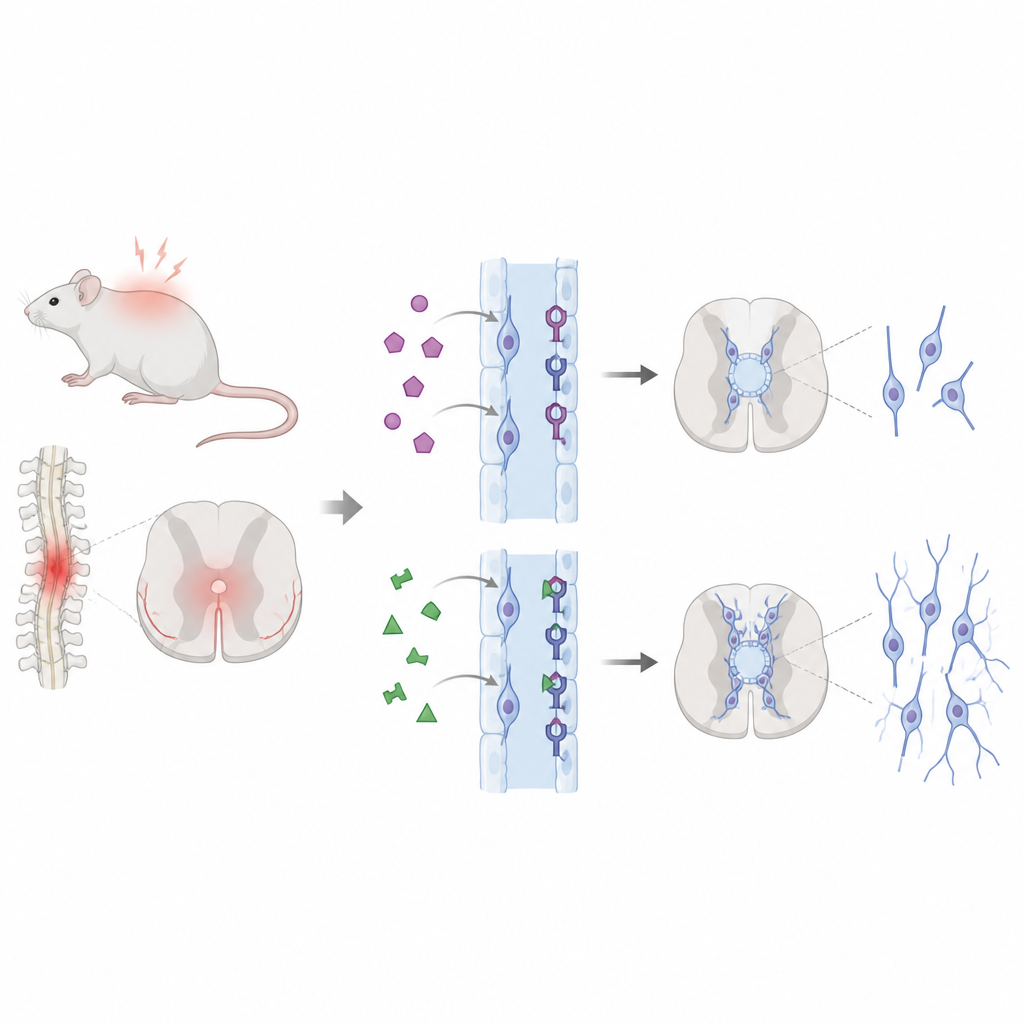
The spinal cord’s hidden repair crew
Deep inside the spinal cord, lining a narrow central canal, live neural stem and progenitor cells. In adult animals, these cells do not replace neurons very quickly under normal conditions, but after a spinal cord injury they can become more active and contribute to repair. The authors focused on how the injury environment, which changes dramatically after trauma, shapes the behavior of these cells. One key feature of that environment is a surge in glucocorticoids, a family of stress hormones that includes cortisol in humans and corticosterone in rodents.
Stress hormones put stem cells on pause
In dishes, the researchers grew neural stem and progenitor cells from adult mouse spinal cords and exposed them to cortisol or corticosterone. Even at levels similar to those seen after injury, both hormones sharply reduced cell growth and the formation of floating cell clusters known as neurospheres. The cells were not dying; rather, they stopped dividing and entered a quiet phase of the cell cycle. Detailed gene activity measurements pointed to activation of a well-known brake system controlled by the protein p53, along with increased levels of cell-cycle blockers called p15, p18, and p27. Together, these changes signaled that stress hormones were telling the cells to stay in a resting state instead of multiplying.
A single receptor sends the stop signal
The team next asked how the hormones were delivering this message. They found that adult spinal cord stem cells carried glucocorticoid receptors but lacked a second related receptor type known as the mineralocorticoid receptor. Blocking the glucocorticoid receptor with a drug called CORT125281 prevented cortisol from slowing cell growth in culture. The same hormones also interfered with the cells’ ability to mature into specialized nerve and support cells, shortening the branch-like extensions that nerve cells use to connect with one another. These effects were only partly relieved by the receptor blocker, hinting that additional pathways may influence how the cells specialize.
Turning the brakes into a boost in injured mice
To see if this mechanism matters in living animals, the researchers created spinal cord injuries in mice and treated them with CORT125281 by mouth during the first two days after trauma. Two weeks later, there were more stem-like cells near the injury site in treated animals than in those given a placebo. Over nine weeks, treated mice also showed much better recovery of hindlimb movement, scoring higher on a standard scale and placing their feet more accurately when walking on a grid. Nerve fiber staining revealed more serotonin-containing fibers extending beyond the injury in treated mice, consistent with improved wiring across the damaged area. 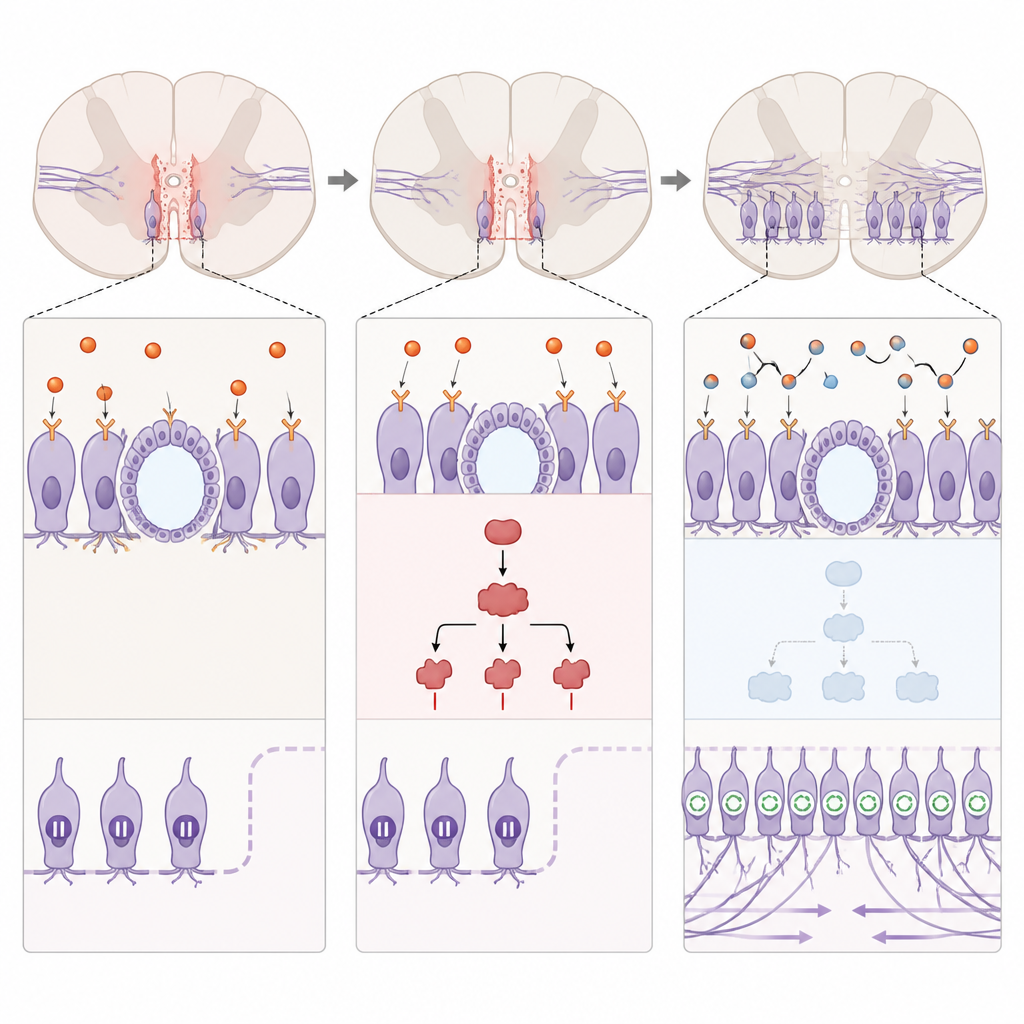
What this means for future treatments
This work shows that the body’s own stress hormones can inadvertently hinder spinal cord repair by telling local stem cells to stop dividing and maturing, and that shutting down glucocorticoid receptors for a short period after injury can improve recovery in mice. For lay readers, the key message is that not all natural responses to trauma are helpful; some, like a prolonged stress hormone surge, may slow the nervous system’s built-in repair crew. While the findings are early and in animals, they suggest that future treatments for spinal cord injury might pair physical and surgical care with careful control of stress hormone signaling to give the spinal cord’s own stem cells a better chance to rebuild damaged circuits.
Citation: Zhang, X., Zhou, S., Tang, S. et al. Inhibiting glucocorticoid receptors enhances adult spinal cord neural stem cell activity and improves outcomes in spinal cord injury. Commun Biol 9, 652 (2026). https://doi.org/10.1038/s42003-026-09901-7
Keywords: spinal cord injury, glucocorticoids, neural stem cells, glucocorticoid receptor, motor recovery