Clear Sky Science · en
Mixotrophy emerges as an optimal strategy in mature waters of the Amazon River plume
River Waters That Transform the Ocean
The Amazon River does more than pour freshwater into the Atlantic; it creates a vast, slowly moving lens of river water that reshapes life in the sea. As this plume drifts hundreds of kilometers offshore, microscopic drifters at the base of the food web change how they make a living. This study shows that in “middle‑aged” parts of the plume, many of these microbes stop behaving like simple plants and instead adopt a flexible, partly animal‑like lifestyle that may strengthen the ocean’s ability to store carbon and support marine food chains.
A Giant Freshwater Lens at Sea
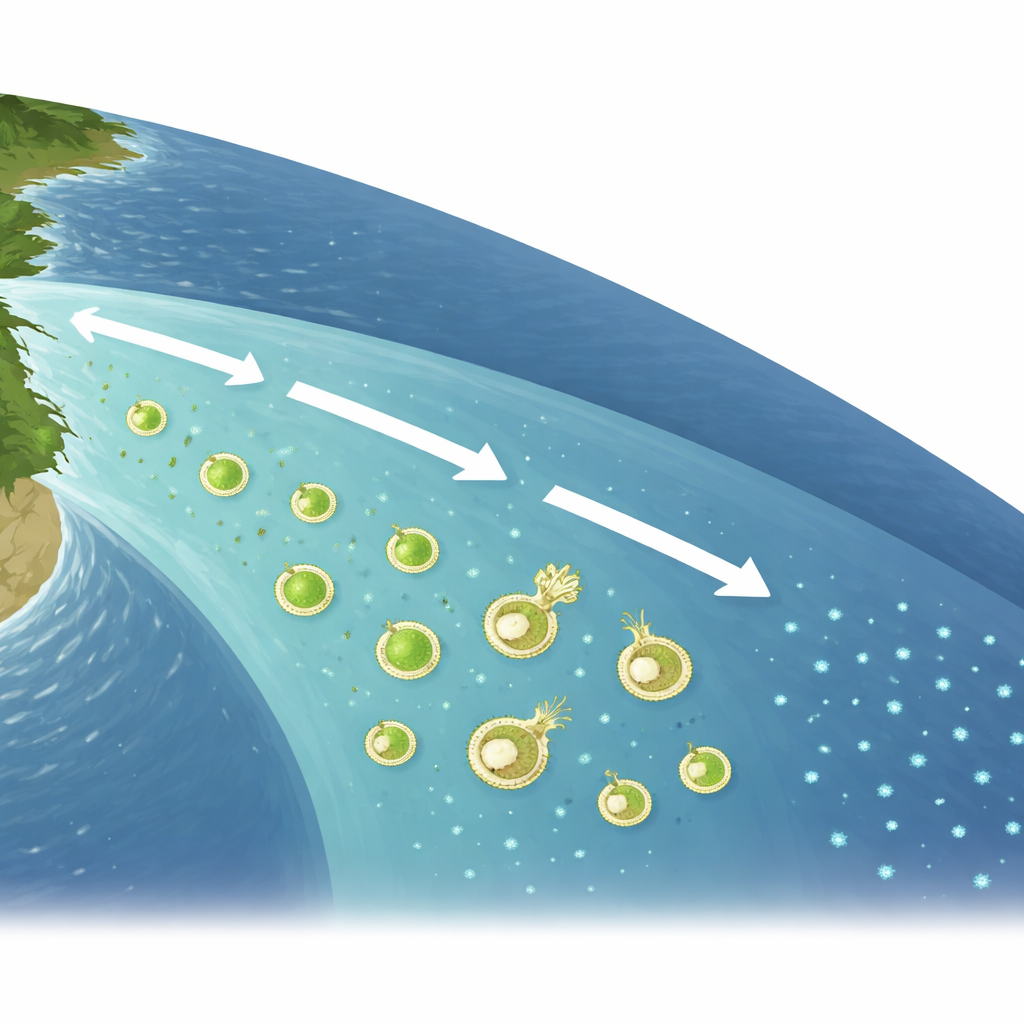
Each year, the Amazon releases enormous amounts of freshwater and nutrients into the tropical Atlantic. This water spreads out as a thin, buoyant surface layer that can stretch as far as 15 degrees north of the equator. The plume is not uniform: near the river mouth it is fresh, muddy, and rich in nutrients; farther offshore it becomes saltier, clearer, and poorer in nutrients as it mixes with the open ocean. Because the fresh surface layer blocks mixing with deeper water, the plume behaves like a slowly evolving, semi‑enclosed pond sitting on top of the sea, capturing different “ages” of water and stages of plankton succession along its path.
Who Lives in the Plume, and Where
Using light‑absorbing pigments as fingerprints, the researchers identified four main communities of microscopic algae along the plume. Near the estuary, large diatoms and freshwater cyanobacteria dominate, sometimes joined by cryptophytes. In more mature margin waters, the community shifts toward haptophytes and filamentous cyanobacteria such as Trichodesmium, which can tap nitrogen from the air when river‑supplied nitrate runs low. Farther offshore, the plankton community looks more like the open ocean, ruled by tiny cyanobacteria that thrive in nutrient‑poor, clear waters. These communities overlap and blend gradually, reflecting how the plume’s water ages and mixes as it drifts.
Reading Diets from the Chemistry of Cells
To understand how these microbes feed, the team turned to a powerful chemical tracer: the ratio of heavy to light nitrogen in individual amino acids, the building blocks of proteins. Some amino acids preserve the nitrogen signal from the original nutrient source, while others change predictably as nitrogen is passed up the food web. By comparing these signals in suspended particles, the scientists could tell whether the community behaved like pure “plants,” using only inorganic nutrients and sunlight, or like “mixotrophs” that also absorb dissolved organic matter or engulf prey. They focused on two amino acids that respond differently to two kinds of feeding: osmotrophy (absorbing dissolved organic nitrogen) and phagotrophy (eating other microbes).
Mixotrophs Take Over in Middle‑Aged Waters
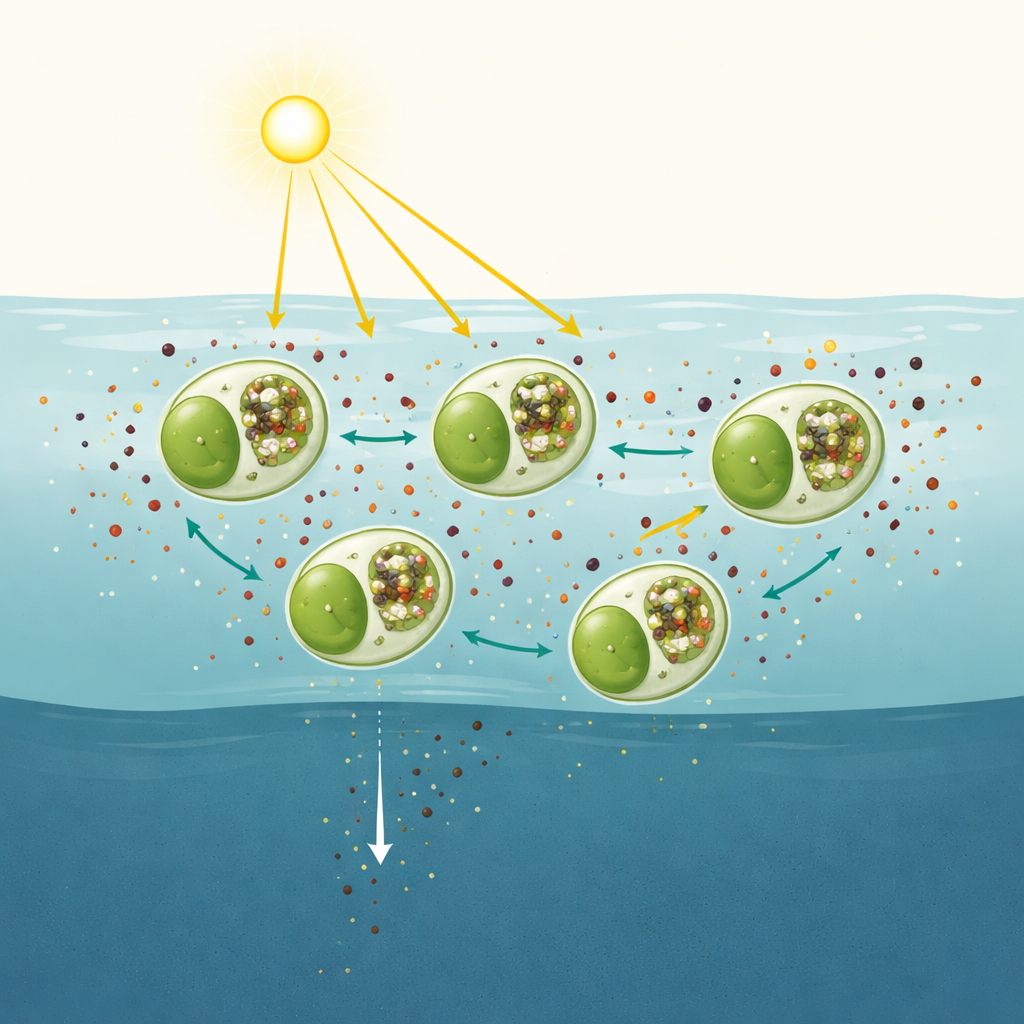
The chemical fingerprints revealed that most of the plume and neighboring ocean is dominated by classic plant‑like nutrition. However, a striking exception emerged in the Outer Plume Margin, where the water is typically around 27 days old. There, many samples bore the signature of mixotrophy: microbes that still use sunlight but also draw on dissolved organic nitrogen and, in some cases, ingest smaller prey. A machine‑learning analysis showed that this flexible feeding mode is favored in areas with shallow mixed layers, slightly oxygen‑poor but still well‑lit surface waters, and relatively high chlorophyll. In these conditions, mixotrophs seem to outcompete both strict algae and strict grazers, building up more biomass and likely producing tougher dissolved organic matter that can persist and help lock away carbon.
Why This Matters for Climate and Food Webs
By showing that mixotrophs flourish in mature Amazon plume waters, this study suggests that Earth’s largest river outflow nurtures a special kind of plankton community that may enhance both carbon storage and the quality of food available to larger animals. Flexible feeders can turn patchy supplies of light, nutrients, and prey into steady growth, potentially fueling richer food webs while also driving more carbon into long‑lived dissolved forms and sinking particles. The work also highlights that many “phytoplankton” are not simple plants but shape‑shifting hybrids, and that understanding their true diets—through tools like amino acid nitrogen isotopes—is essential for predicting how ocean life and the climate system will respond as rivers, circulation, and nutrients change.
Citation: Fernández-Carrera, A., Choisnard, N., Wodarg, D. et al. Mixotrophy emerges as an optimal strategy in mature waters of the Amazon River plume. Commun Biol 9, 434 (2026). https://doi.org/10.1038/s42003-026-09893-4
Keywords: Amazon River plume, mixotrophy, marine plankton, carbon cycle, nitrogen isotopes