Clear Sky Science · en
Glycine alleviates ovarian granulosa cell ferroptosis induced by ERα-mediated internalization of polystyrene microplastics
Why tiny plastics in our bodies matter
Every day we eat and drink small fragments of plastic that have broken off from bottles, packaging, and many other products. These pieces, called microplastics, have been found in human blood, the placenta, and even reproductive fluids. This study asks a pressing question for anyone who cares about fertility and long term health: can a common type of microplastic damage the cells that help eggs grow in the ovary, and if so, is there a simple nutrient that can soften that harm?
How plastic fragments reach the ovary
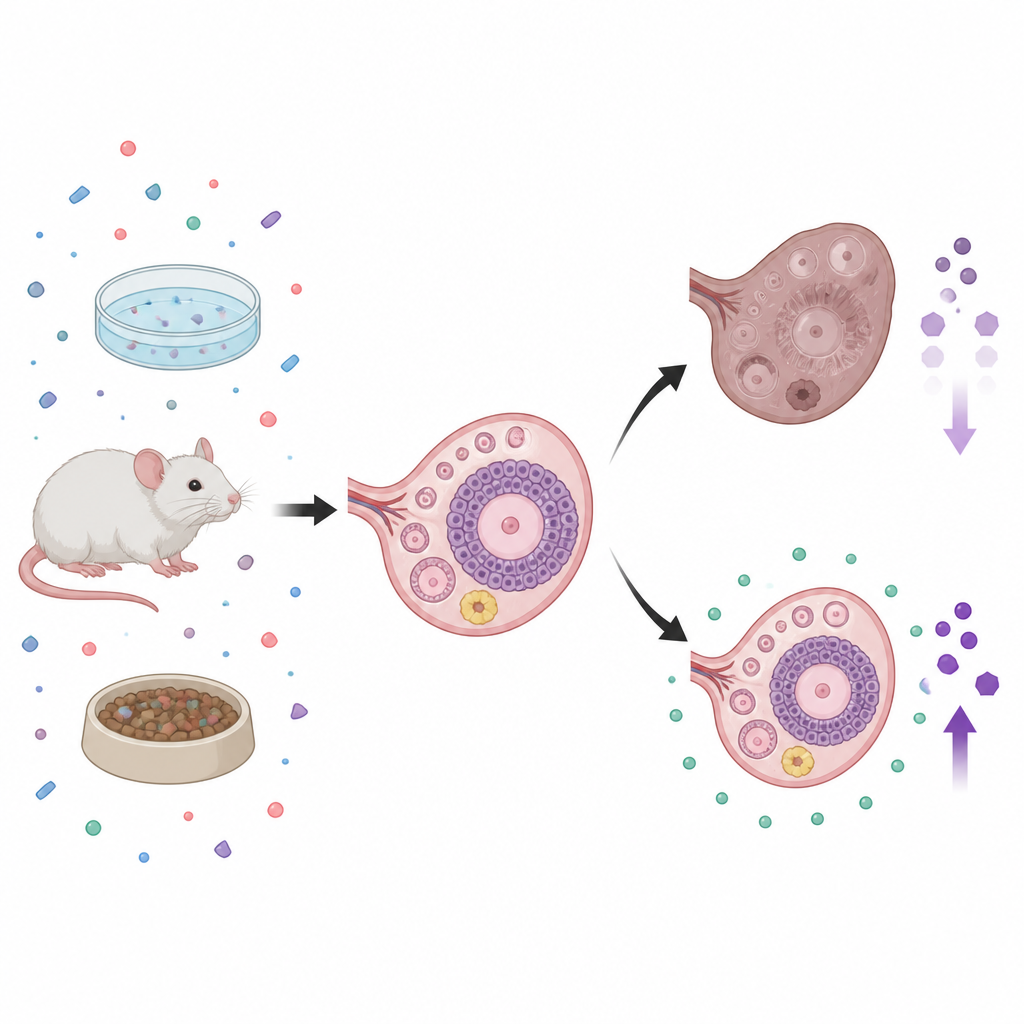
The researchers focused on polystyrene, a plastic widely used in food containers and many consumer goods. They exposed young female mice to tiny polystyrene particles through oral dosing for four weeks, mimicking ongoing intake from food and water. Although the mice did not lose weight, the plastic particles were detected in their ovaries, and their ovaries shrank in size. Under the microscope, the outer cell layers around the eggs looked loose and disorganized, and blood tests showed lower levels of key hormones that reflect healthy ovarian function. These changes suggested that the support cells surrounding each egg, known as granulosa cells, were being harmed.
A special kind of cell death driven by iron and fat damage
To uncover what was going wrong inside these cells, the team examined gene activity and chemical markers in the ovaries and in a cultured mouse granulosa cell line. Their analyses pointed to ferroptosis, a recently described form of cell death fueled by iron overload and the rusting of cell membrane fats. In both mouse tissue and cultured cells, polystyrene exposure raised levels of reactive oxygen molecules, increased products of fat damage, lowered the antioxidant glutathione, and altered key proteins that control ferroptosis. Mitochondria, the cell’s powerhouses, showed structural injury and loss of membrane potential, hallmarks of this death pathway. When the scientists added a known ferroptosis blocker, it rescued cell survival and mitochondrial health, confirming that ferroptosis was central to the damage.
How the plastic is taken up and switched into damage mode
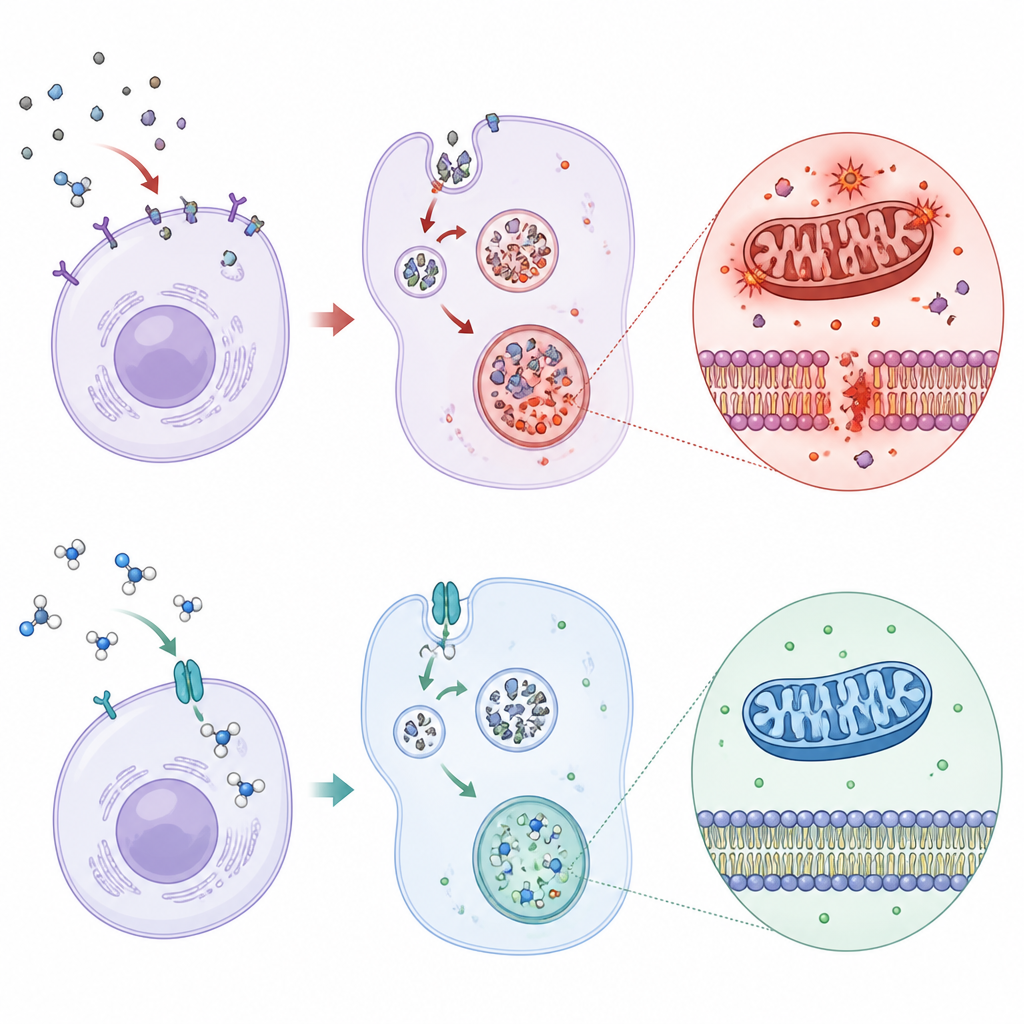
The study also mapped the chain of events that links polystyrene particles to ferroptosis. Using imaging and docking simulations, the authors found that the particles bind to estrogen receptor alpha on granulosa cells, a protein normally involved in hormone signaling. This interaction promotes internalization of the plastic into the cells. Once inside, the particles activate a signaling route involving the protein YAP1 and the enzyme ACSL4. YAP1 moves into the nucleus and increases ACSL4, which helps load certain fats into membranes where they become easy targets for oxidation. Silencing either YAP1 or ACSL4 reduced fat damage, lowered iron buildup, and improved cell survival, placing this pathway at the heart of polystyrene induced cell injury.
A simple amino acid offers partial protection
Because ferroptosis depends on both fat damage and iron mismanagement, the team tested whether glycine, a small amino acid used by cells to make the antioxidant glutathione and to control iron handling, could help. In cultured granulosa cells, adding glycine alongside polystyrene lowered reactive oxygen levels, reduced free iron inside cells and mitochondria, and restored mitochondrial function, even though it did not switch off the ACSL4 arm of the pathway. The researchers discovered that glycine instead acted on another front: it calmed a selective recycling process called ferritinophagy, in which the iron storage protein ferritin is broken down, releasing extra iron. By dampening this process through a transporter protein named PAT1, glycine helped keep iron in a safer, stored form and limited the fuel available for ferroptosis.
What this means for reproductive health
Finally, the scientists tested glycine in mice exposed to polystyrene. Glycine supplementation did not change body weight, but it did restore ovary size, hormone levels, and the delicate projections that connect support cells to the egg. Markers of ferroptosis in the ovary moved back toward normal, and proteins involved in ferritin breakdown and storage were rebalanced, again without changing ACSL4. For a lay reader, the takeaway is clear: long term exposure to common plastic fragments can injure ovarian support cells by driving an iron fueled, rust like form of cell death, but the nutrient glycine can help rebalance iron handling and preserve ovarian function in this model. While more work is needed to translate these findings to people, the study strengthens concerns about microplastics and highlights a potential nutritional tool to reduce their impact on female fertility.
Citation: Liu, G., Lv, J., Zhang, J. et al. Glycine alleviates ovarian granulosa cell ferroptosis induced by ERα-mediated internalization of polystyrene microplastics. Commun Biol 9, 616 (2026). https://doi.org/10.1038/s42003-026-09879-2
Keywords: microplastics, ovarian health, ferroptosis, glycine, reproductive toxicity