Clear Sky Science · en
Hypoxic regulation of chromatin and gene transcription
How Low Oxygen Rewrites Our DNA’s Bookmarks
Every cell in our body must cope when oxygen runs low, as happens in strokes, heart attacks, or inside fast-growing tumors. This study asks a deceptively simple question: when oxygen drops, how does the cell’s packaging of DNA change, and do those shifts really explain which genes turn on or off? The answer reveals a surprising disconnect between sweeping chemical changes on our chromosomes and the actual instructions that cells read.
Oxygen Shortage and the Cell’s Control Switches
Cells sense low oxygen through proteins called HIFs, which act like emergency switchboards for genes. At the same time, many enzymes that normally erase small chemical tags from DNA-packaging proteins slow down when oxygen is scarce. Because these tags, known as methyl marks, help mark genes as active or quiet, scientists suspected that the buildup of marks in low oxygen might be a major reason why certain genes respond.
A Better Way to Measure Genome-Wide Changes
Earlier studies often measured these marks in bulk, finding that low oxygen boosts several types of them. But when researchers tried to map where along the genome these changes occurred, standard data-processing methods quietly “flattened out” global increases, hiding the true scale of the effect. In this work, the team solved that problem by adding a fixed amount of fly chromatin to human cell samples as an internal reference. By comparing human signals against this constant yardstick, they could see real, genome-wide shifts in methyl marks between normal and low oxygen conditions.
Global Changes That Do Not Predict Gene Behavior
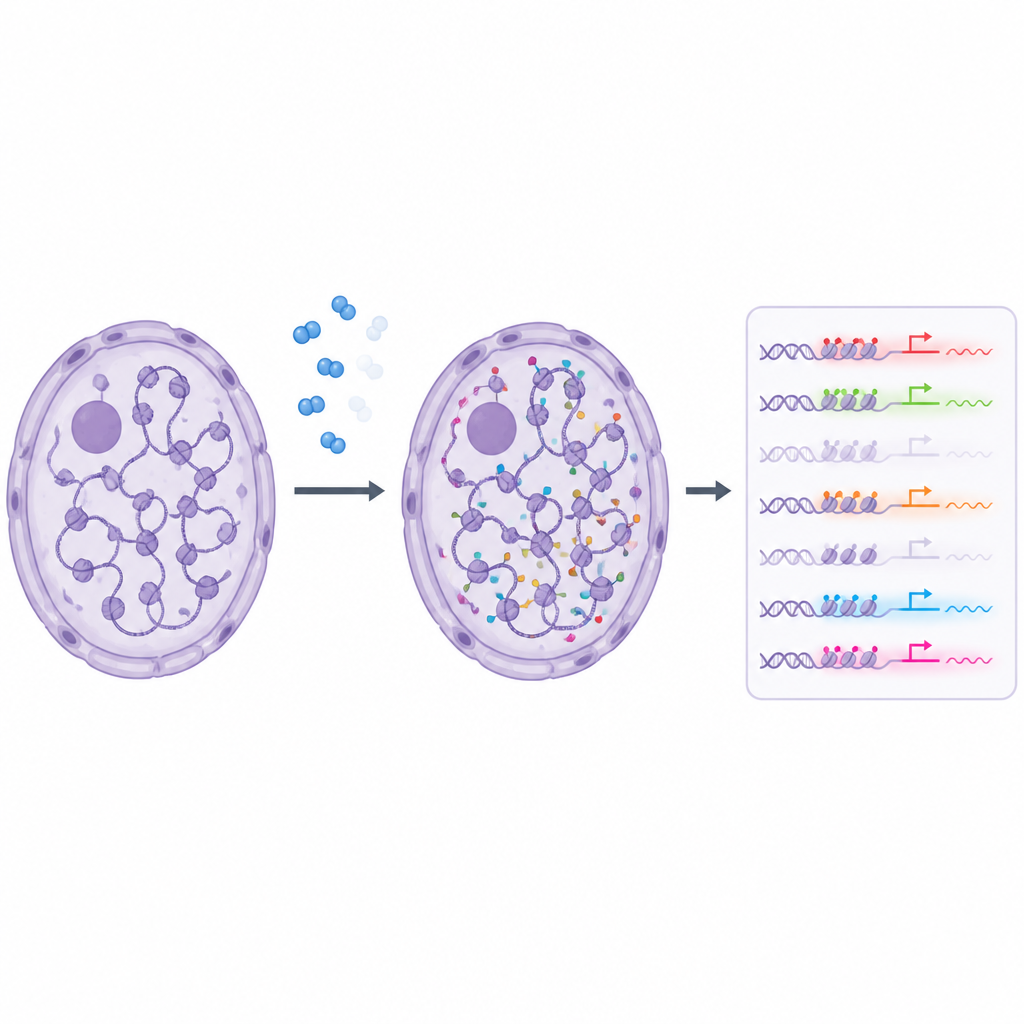
Using this improved approach, the scientists studied four common methyl marks across the genomes of human cancer cell lines exposed to low oxygen. They discovered that all four marks rose across the vast majority of genes, not just at a handful of hotspots. Both tags usually linked with active genes and those linked with silent genes increased. Yet measurements of messenger RNA showed that overall gene output did not rise or fall in bulk, and that roughly equal numbers of genes went up and down. In other words, while the chromatin landscape was broadly repainted, these global changes alone did not forecast whether any given gene would become louder or quieter.
Where the Hypoxia Switch Directly Leaves Its Trace
When the researchers zoomed in on genes directly controlled by HIF, a different picture emerged. At these genes, two activation-linked marks became especially enriched under low oxygen, and this enhancement tracked more closely with how strongly those genes were turned on. The team also observed increased engagement of the cell’s transcription machinery at the same spots. To test whether HIF was truly responsible, they removed a core HIF component, HIF-1β, cutting off the low-oxygen gene response. The broad, genome-wide rise in methyl marks still occurred, but the extra boost at HIF target genes largely disappeared.
Two Overlapping Layers of Chromatin Change
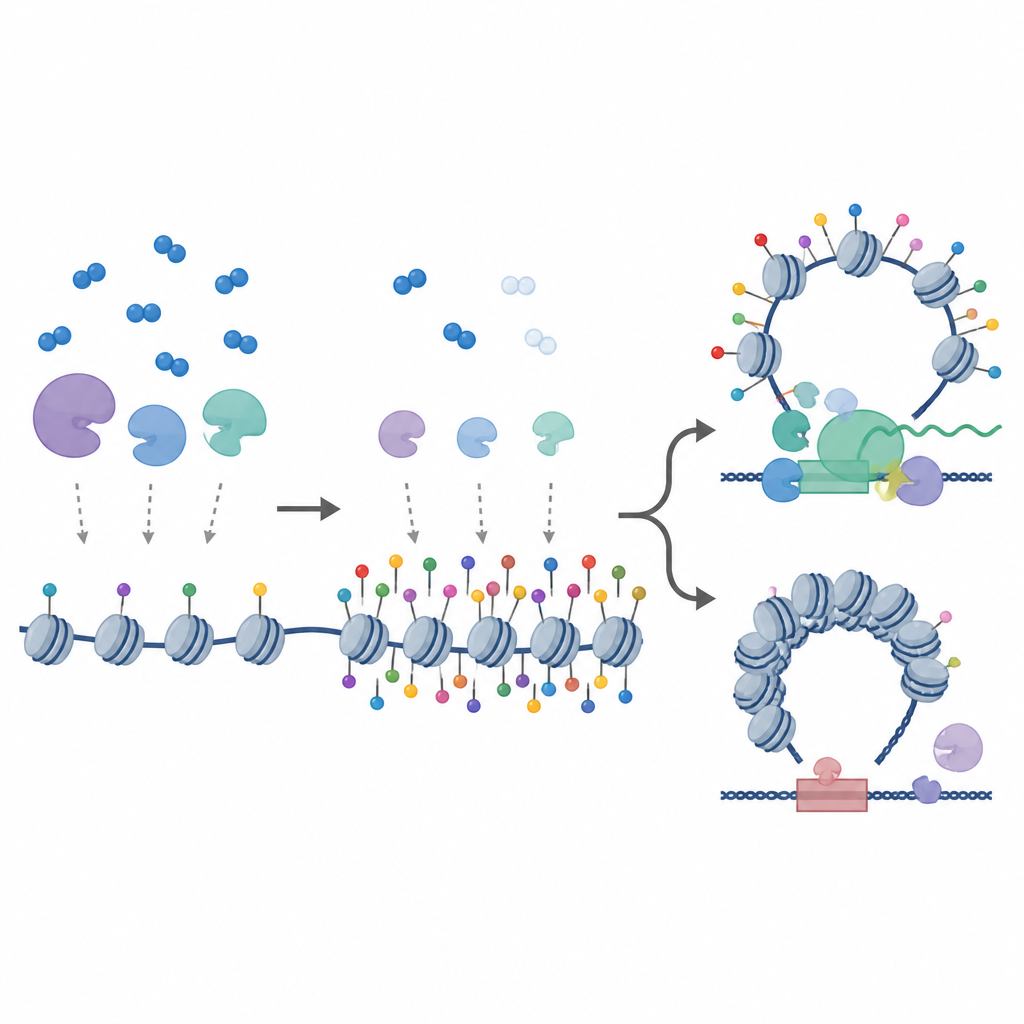
These findings suggest that low oxygen shapes chromatin in two overlapping ways. First, by slowing enzymes that usually erase methyl marks, it drives a sweeping, energy-saving buildup of tags across much of the genome, with little immediate effect on overall gene activity. Second, at a selected set of genes where HIF binds and recruits other factors, local chromatin marks are further adjusted in step with active transcription, amplifying the hypoxia response at those sites.
What This Means for Health and Disease
For non-specialists, the key message is that not every chemical mark on our DNA packaging directly “tells” genes what to do. Under low oxygen, cells lay down extra marks almost everywhere, but only where the hypoxia switchboard and transcription machinery converge do these marks clearly support changes in gene activity. Understanding this layered control may help researchers interpret tumor genomes, design better drugs that target epigenetic enzymes, and clarify how tissues adapt when oxygen is in short supply.
Citation: Kindrick, J.D., Lombardi, O., Halim, S. et al. Hypoxic regulation of chromatin and gene transcription. Commun Biol 9, 665 (2026). https://doi.org/10.1038/s42003-026-09875-6
Keywords: hypoxia, chromatin, histone methylation, HIF pathway, gene regulation