Clear Sky Science · en
Linguistic structure and language familiarity sharpen phoneme encoding in the brain
How the brain makes sense of speech sounds
Everyday conversation feels effortless, yet our brains must turn a rush of sound waves into clear words and ideas. This study explores how the brain uses both the structure of language and our past exposure to it to sharpen its handling of tiny speech sounds called phonemes. The findings reveal that even when we do not understand a language, simple familiarity with its sound patterns can reshape brain activity.
From raw sound to building blocks of speech
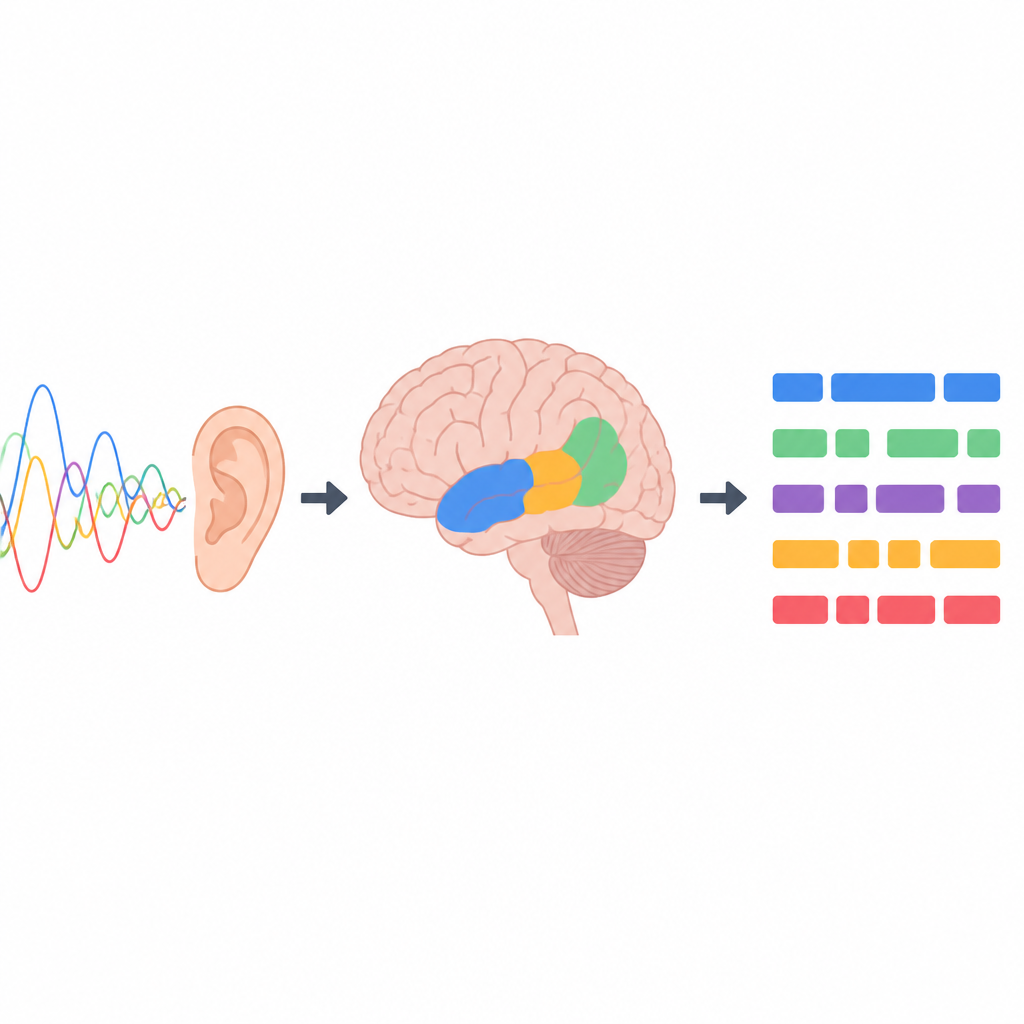
Speech starts as fluctuating air pressure that the ear turns into electrical signals. The brain first follows broad acoustic features such as rises and falls in loudness, then carves these into phonemes, the small sound units that distinguish words. Using magnetoencephalography, a technique that detects faint magnetic fields from brain activity, the researchers measured how closely brain signals followed either low-level acoustic edges or higher-level phoneme patterns while people listened to spoken material in Dutch, Mandarin Chinese, and Turkish.
Sentences help the brain focus on useful details
The team compared brain responses when native speakers listened to full sentences versus lists of isolated words. Sentences and word lists carried similar sounds, but only sentences had a rich internal structure linking words together. In the brain regions that process sound and speech, phoneme-related activity was stronger when words were part of sentences than when they stood alone. This suggests that once the brain starts building a sentence, it pays extra attention to the precise identity of speech sounds, using them to support meaning and grammar. At the same time, responses to simple acoustic edges did not rise in the same way, hinting that the brain is selectively boosting the most informative aspects of the signal.
Words beat random syllables, even without understanding
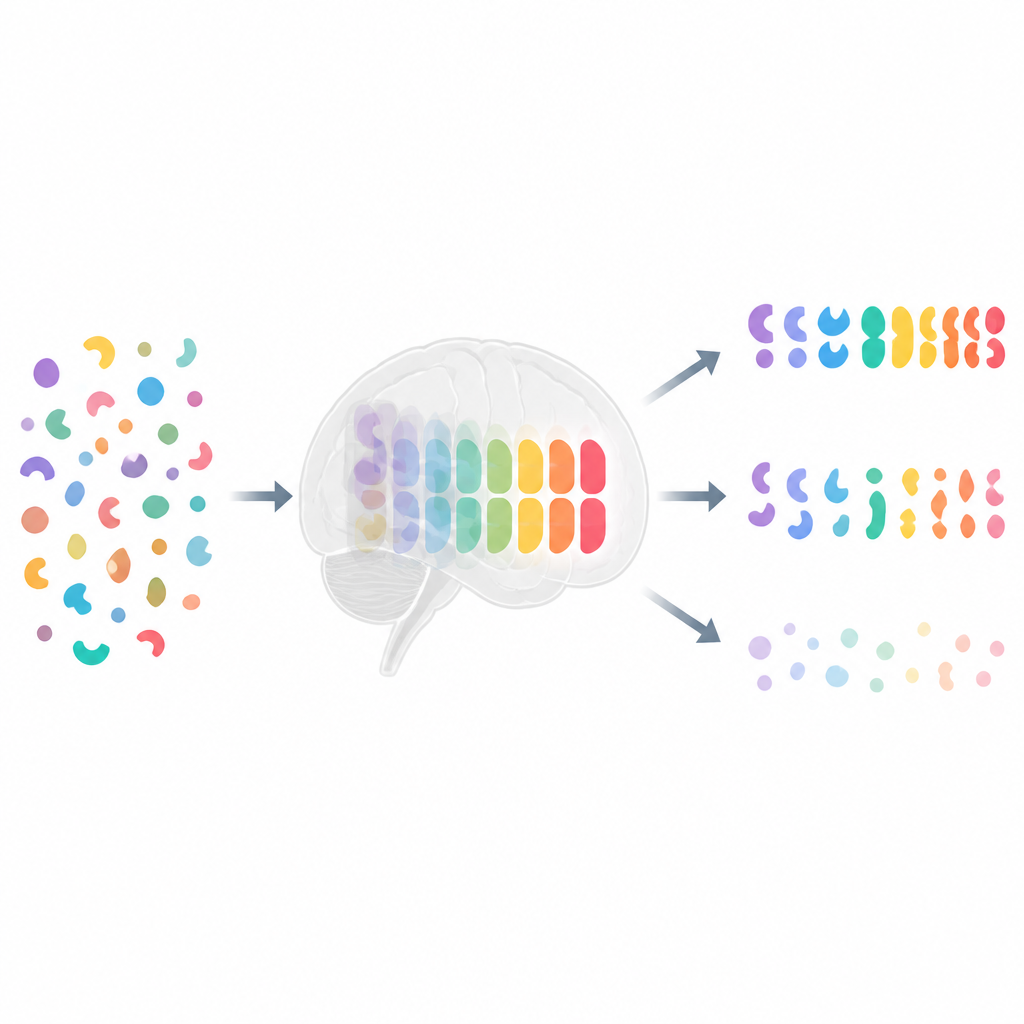
Next, the researchers created artificial streams of speech with a metronome-like rhythm. In some streams, syllables combined into real words; in others, the same syllables were shuffled into random sequences that never formed words. Across all three languages and listener groups, phoneme tracking in the brain was stronger for real words than for random syllables. This effect appeared even when listeners did not understand the language at all. Repeated exposure to stable syllable pairings seemed enough for the brain to treat those patterns as special, sharpening its encoding of phonemes while leaving the tracking of raw acoustic edges largely unchanged.
Familiar yet foreign speech reshapes brain activity
A key question was whether simply living around a language, without learning its words, changes how the brain reacts to it. Mandarin speakers living in the Netherlands regularly heard Dutch but could not follow it; Dutch speakers had almost no exposure to Mandarin. When both groups listened to word streams, Mandarin listeners showed phoneme tracking for Dutch that was nearly as strong as for their native tongue, although the peak response arrived slightly later in time. Dutch listeners, by contrast, showed weaker phoneme tracking and leaned more on acoustic edges when hearing Mandarin. This pattern indicates that everyday exposure tunes the brain to the sound statistics of a foreign language, even without true comprehension.
What this means for everyday listening
Overall, the study shows that the brain does not passively echo the sounds it hears. Instead, it combines knowledge about how syllables form words and how words form sentences with the sound patterns it has absorbed over months or years. Sentences and familiar word forms push the brain to encode phonemes more precisely, while basic acoustic edges can be toned down once they are no longer needed for recognition. In simple terms, our brains learn the rhythm and structure of the languages around us, and this hidden knowledge helps turn noisy chatter into meaningful speech.
Citation: Tezcan, F., Ten Oever, S., Bai, F. et al. Linguistic structure and language familiarity sharpen phoneme encoding in the brain. Commun Biol 9, 638 (2026). https://doi.org/10.1038/s42003-026-09865-8
Keywords: speech perception, phoneme encoding, language familiarity, brain oscillations, neural tracking