Clear Sky Science · en
Thalamic dynamics orchestrate the recovery of tonic alertness during nocturnal sleep inertia
Why Waking Up Can Feel So Hard
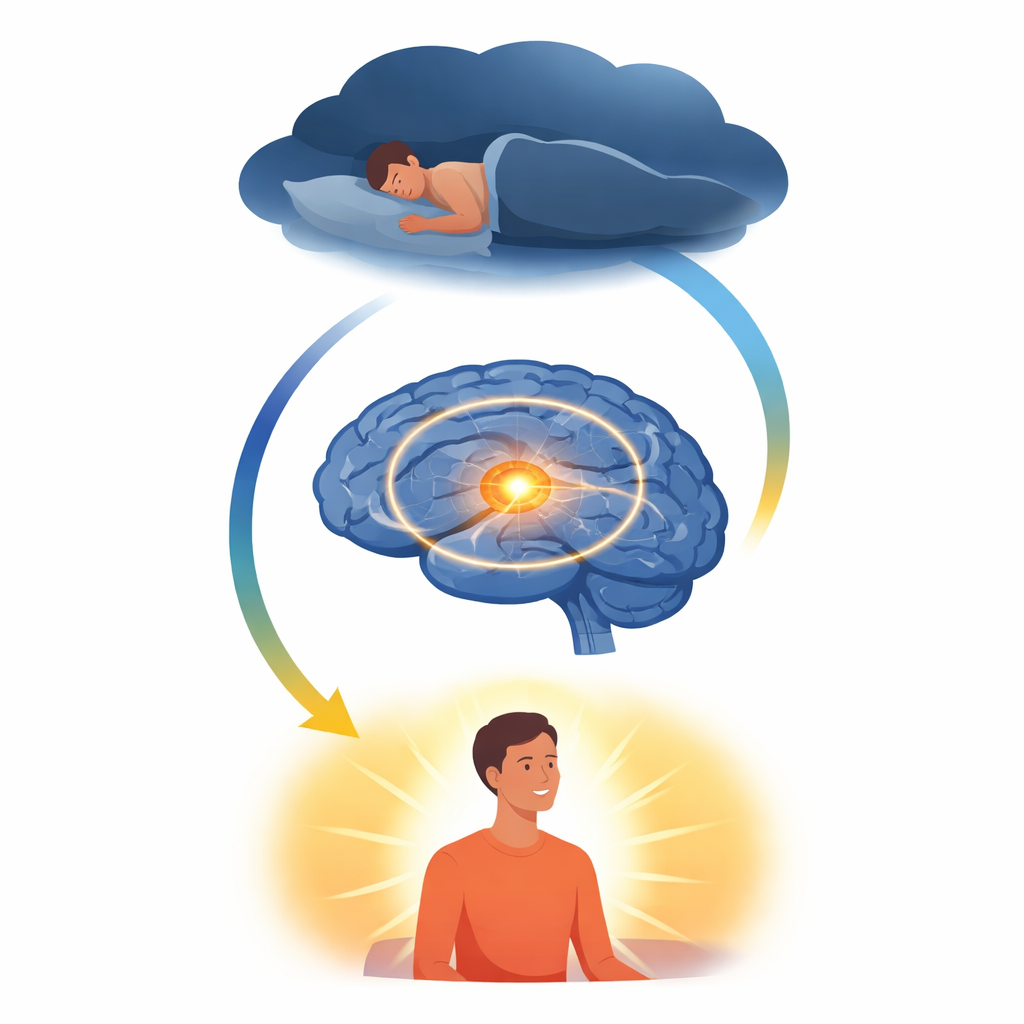
Many people know the strange foggy feeling that lingers right after waking up—when the alarm rings, your body is upright, but your mind is still half asleep. This brief period, called sleep inertia, can slow your reactions and cloud your thinking, which matters a lot if you need to make quick decisions, drive, or handle emergencies in the middle of the night. This study explores what happens inside the brain during those first minutes after awakening and pinpoints which brain structures help us regain steady, sustained alertness.
A Closer Look at Groggy Wake-Ups
The researchers focused on “tonic alertness,” our ability to maintain steady attention over time, which is crucial for tasks like monitoring a radar screen or driving on a long highway. To probe this, they used a simple reaction-time test called the psychomotor vigilance task, where participants respond as quickly as possible to a repeating visual signal. Twenty-six young adults spent a night in an MRI scanner, where their brain activity was measured with functional MRI while their brain rhythms were tracked with EEG. The team collected data before sleep, during a nocturnal nap, and three times after waking—about 5, 20, and 35 minutes after the end of the sleep session—to capture the time course of recovery from sleep inertia.
The Brain’s Alertness Hub
The study centered on a brain network known for keeping us generally “on task,” which includes a deep relay structure called the thalamus and regions on the brain’s surface involved in maintaining focus. When participants performed the reaction-time test before going to sleep, this alertness network was strongly active. Right after awakening, however, its activity dropped, especially in the thalamus, and then gradually rose again over the next half hour. People who had just recently woken up from deeper non-REM sleep showed the biggest dip in thalamus activity and the slowest responses, highlighting this region as a key player in early-morning sluggishness.
How Prior Sleep Shapes Your Morning Brain
The researchers then asked what aspects of the prior night’s sleep influenced this brain pattern. They found that, in people who woke directly from sleep inertia, shorter time spent awake before ending the nap and more time spent in deeper sleep stages were linked to lower thalamus activity right after awakening. In turn, that low thalamus activity predicted slower reaction speeds. Statistical analyses suggested that the thalamus acts as a middleman: the depth and timing of prior sleep shape thalamus activity, which then determines how quickly people can respond when they first wake. Interestingly, a measure based on each person’s fastest responses during the task was particularly sensitive to these effects, capturing subtle improvements in performance as sleep inertia faded.
Brain Networks Working Together
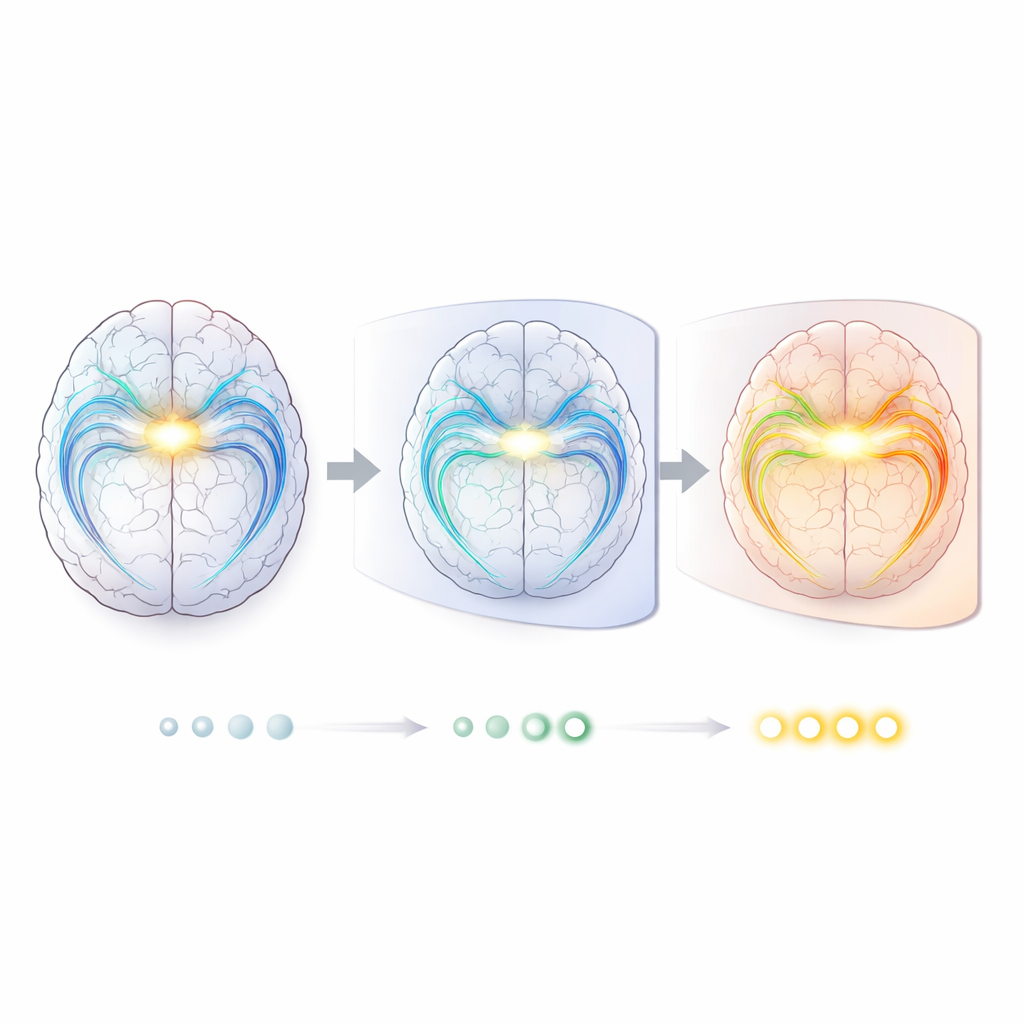
The story did not stop at one structure. The team also examined how the thalamus communicates with a separate “control” network across the front and sides of the brain, often involved in flexible, goal-directed thinking. While overall connection strength between the thalamus and this control network did not simply rise or fall with time, changes in this communication pattern were linked to how quickly thalamus activity and reaction speed recovered. People whose thalamus–control-network connections adjusted more strongly right after waking tended to show greater improvement in both brain activity and their fastest reactions as time passed. This suggests that some individuals may actively recruit higher-level control systems to help pull themselves out of the sleep inertia fog.
What This Means for Everyday Life
In plain terms, the study shows that the deep relay hub of the brain—the thalamus—and its conversation with frontal control areas are central to how we shake off grogginess after sleep. The depth and timing of your sleep set the initial “sleepiness load” on the thalamus, and the way your control networks ramp up may help you regain stable alertness more quickly. Understanding this interplay could guide strategies for safer scheduling of night shifts, emergency call duties, or early-morning surgeries, and might inspire new approaches to help people with conditions that make waking up especially difficult.
Citation: Chen, S., Kung, YC., Hsiao, FC. et al. Thalamic dynamics orchestrate the recovery of tonic alertness during nocturnal sleep inertia. Commun Biol 9, 601 (2026). https://doi.org/10.1038/s42003-026-09839-w
Keywords: sleep inertia, alertness, thalamus, brain networks, reaction time