Clear Sky Science · en
Global genomic diversity of temperate P2-like viruses
Hidden Helpers Inside Everyday Microbes
Viruses are often cast as villains, but many quietly live inside bacteria, shaping the health of our bodies and the balance of entire ecosystems. This study zooms in on one such group—P2-like viruses—that slip their DNA into bacterial genomes, including those in the human gut and the ocean. By piecing together thousands of viral genomes from public databases, the authors reveal how widespread these viruses are, how diverse they have become, and how they may subtly rewire their hosts’ metabolism, from antibiotic resistance in our intestines to nutrient scavenging in the sea.
Looking for Hidden Viral Passengers
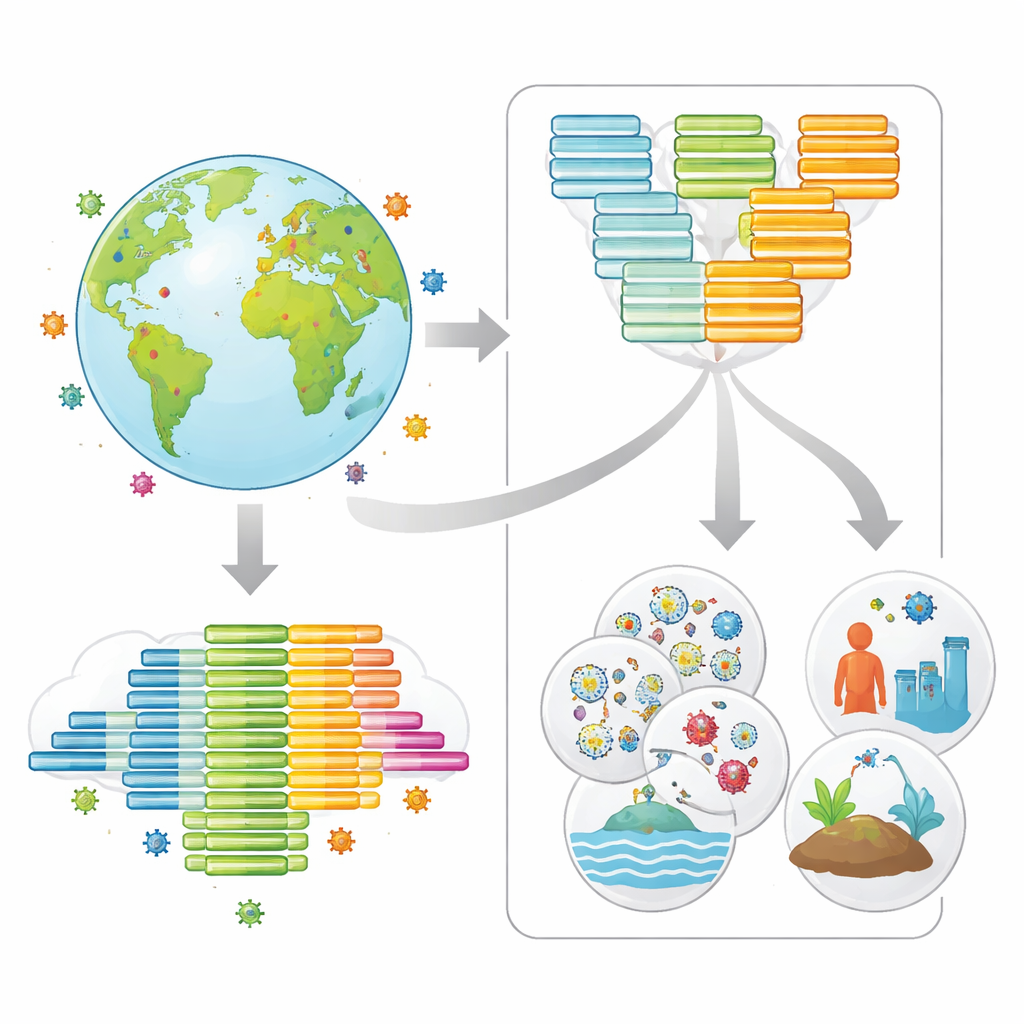
Instead of hunting viruses in the lab, where this temperate group is hard to grow, the researchers mined huge collections of DNA sequences from around the world. They used sensitive pattern-recognition tools to search for seven “hallmark” proteins that define P2-like viruses, then built a curated catalog called the P2V Genome Dataset. This effort uncovered 5,945 P2-like viral genomes—about 48 times more than were previously known. The genomes came from classic lab isolates, viral fragments recovered directly from environmental samples, and viral DNA embedded inside bacterial chromosomes, reflecting the stealthy lifestyle of these phages.
Viruses Across Guts, Soils, and Seas
Mapping the source of each genome showed that these viruses turn up almost everywhere scientists have looked. Most known examples come from host-associated environments, especially the human gut, but many were also found in engineered systems such as wastewater treatment plants, as well as in soils, freshwater, and the open ocean. When the authors corrected for the fact that far more human and clinical samples have been sequenced than natural ones, the richness of P2-like viruses per dataset was surprisingly similar across land, water, and host-linked habitats. Even the relatively small set from the sea—over a hundred marine genomes—was confirmed by additional analyses as a real and previously overlooked ocean reservoir.
Family Tree of a Vast Viral Clan
With thousands of genomes in hand, the team reconstructed the family tree of P2-like viruses by comparing their shared genes. They grouped the viruses into 169 clusters and then into 13 larger “superclades,” each representing a broad lineage with its own preferred hosts and habitats. One major superclade was tightly tied to a single order of bacteria common in animal guts, while another spanned a much wider array of bacterial families, hinting at different strategies for host specialization versus flexibility. When the authors applied formal taxonomic rules, they found evidence for more than 4,600 candidate genera—more than a hundredfold increase over the officially recognized groups—showing how fragmentary our view had been when it relied only on viruses that could be cultured.
Viruses That Tune Their Hosts’ Metabolism
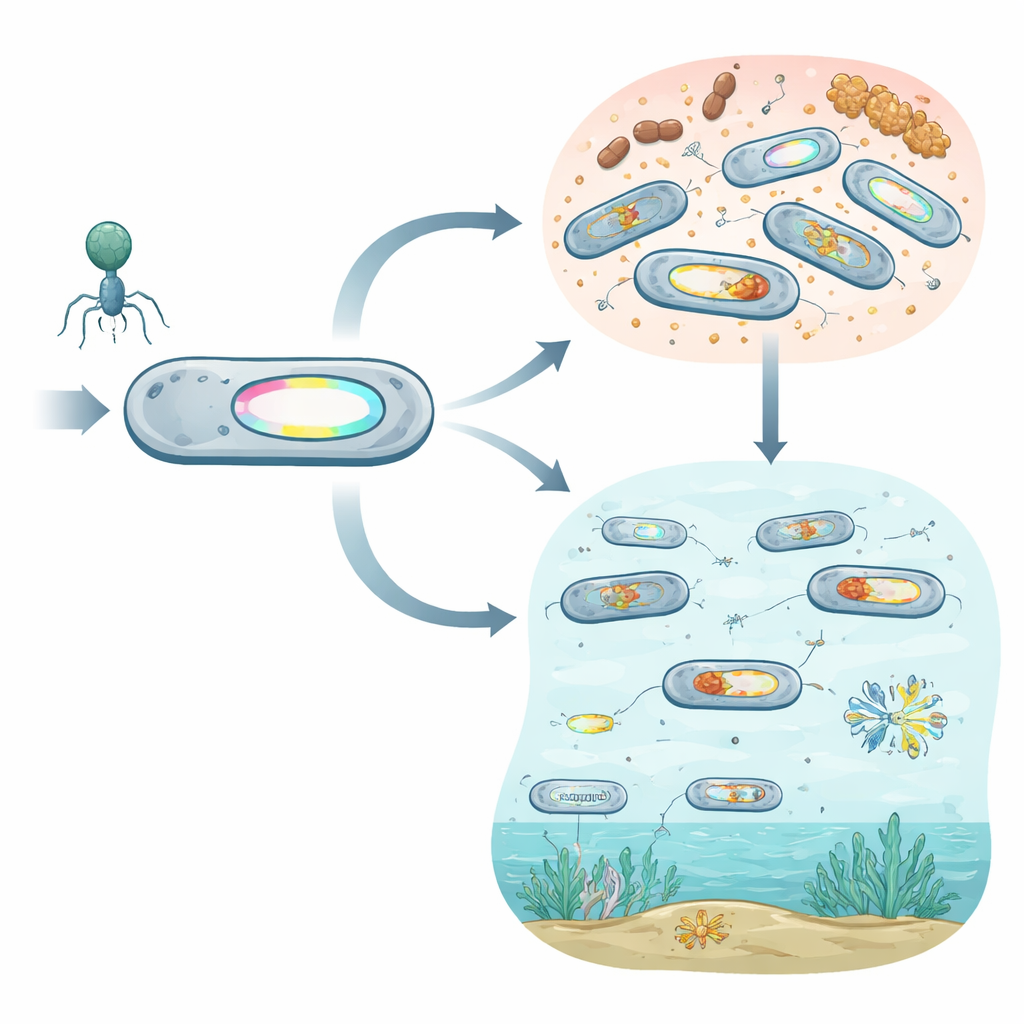
Beyond who these viruses infect, the study asks what they can do once inside. Many P2-like viruses carry auxiliary metabolic genes—extra tools borrowed from their hosts that tweak cellular chemistry. The authors cataloged 757 such genes, involved in nitrogen and carbon use, energy production, and membrane transport. In human gut data, several of these genes were actively transcribed, including transporters known to pump out antibiotics and enzymes that remodel the bacterial cell wall. In marine samples, a different set of viral genes was switched on, including enzymes that help bacteria break down stubborn sugar-rich molecules drifting in nutrient-poor waters. These patterns suggest that the viruses fine-tune their hosts in ways that fit each environment: helping gut bacteria withstand drug pressure, or helping marine bacteria tap hard-to-use food sources.
What This Means for Microbes and for Us
Taken together, the work shows that P2-like viruses are not rare curiosities but widespread players embedded in bacterial communities worldwide. By vastly expanding their known genomic diversity and mapping their distribution, the study provides a foundation for understanding how these temperate phages influence microbial evolution and ecosystem processes. For a lay reader, the key message is that many bacteria in our bodies and in nature carry viral “passengers” that can grant them new abilities—from resisting antibiotics to exploiting scarce nutrients. Recognizing these quiet partnerships is essential for grasping how microbiomes function, how resistance traits spread, and how microscopic interactions ripple up to affect human health and global biogeochemical cycles.
Citation: Liu, Y., Liu, R., Zheng, K. et al. Global genomic diversity of temperate P2-like viruses. Commun Biol 9, 554 (2026). https://doi.org/10.1038/s42003-026-09823-4
Keywords: bacteriophages, human gut microbiome, marine viruses, auxiliary metabolic genes, viral diversity