Clear Sky Science · en
Physical exercise protects against Toxoplasma gondii infection-induced muscle atrophy and microvascular rarefaction
Why exercise matters for a common hidden infection
Many people around the world carry the parasite Toxoplasma gondii without knowing it. This microbe, often picked up from undercooked meat or contaminated food, can silently settle into our muscles and brain. While most healthy people feel little or nothing, some develop muscle pain, weakness, or lingering fatigue. This study asks a simple but powerful question with big everyday implications: can regular physical exercise shield our muscles and blood vessels from the damage caused by this quiet infection?
How a stealthy parasite affects different muscles
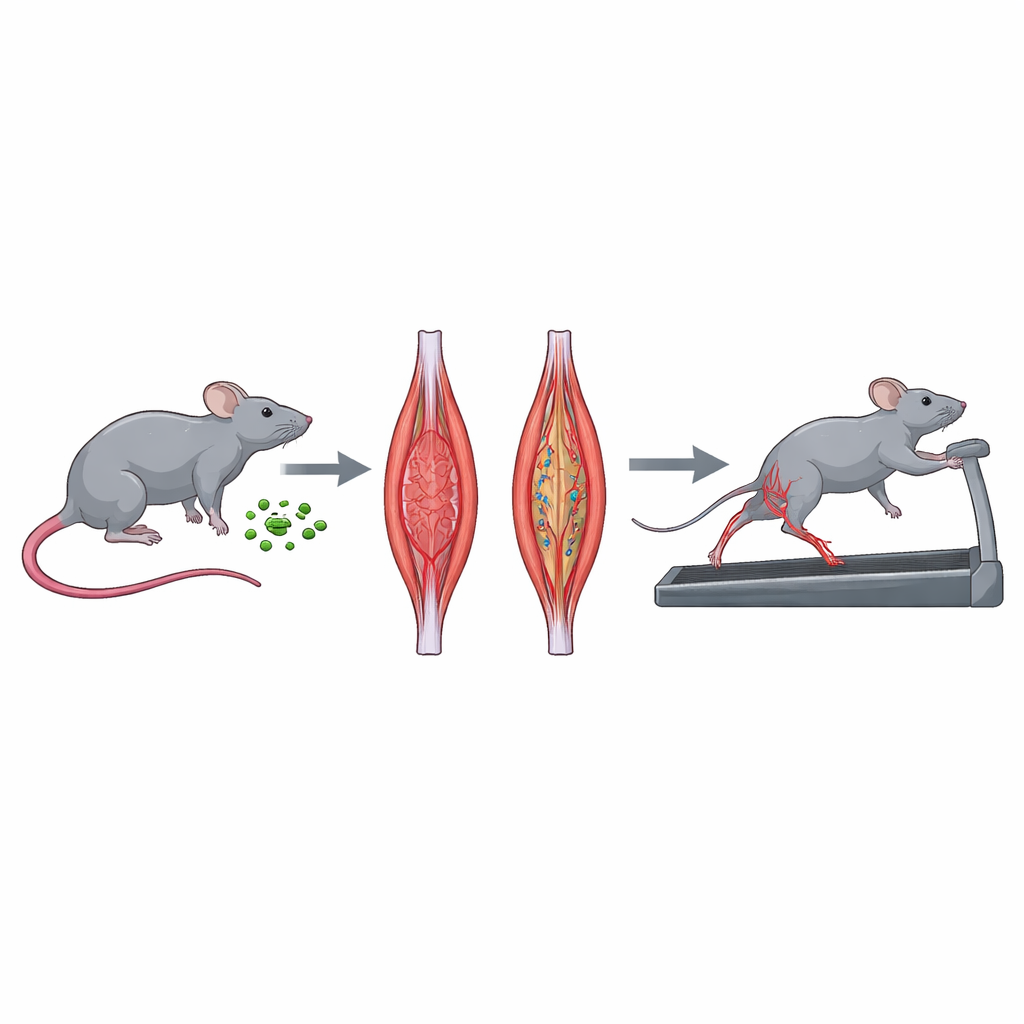
The researchers worked with mice to follow what happens in two major leg muscles after infection: the tibialis anterior, which relies mostly on quick-burning, "fast" energy, and the soleus, which is built more for endurance and continuous activity. They tracked the animals’ body weight, grip strength, muscle structure, and signs of inflammation at early (10 days) and later (40 days) stages after infection. They found that the parasite hit the fast, glycolytic tibialis muscle harder and sooner. Muscle fibers there shrank, inflammatory patches appeared, and genes linked to muscle wasting switched on strongly. By contrast, the slower, more oxidative soleus muscle was initially spared from obvious shrinkage, even though it gradually changed its internal makeup.
Muscle repair, fiber switching, and inflammation
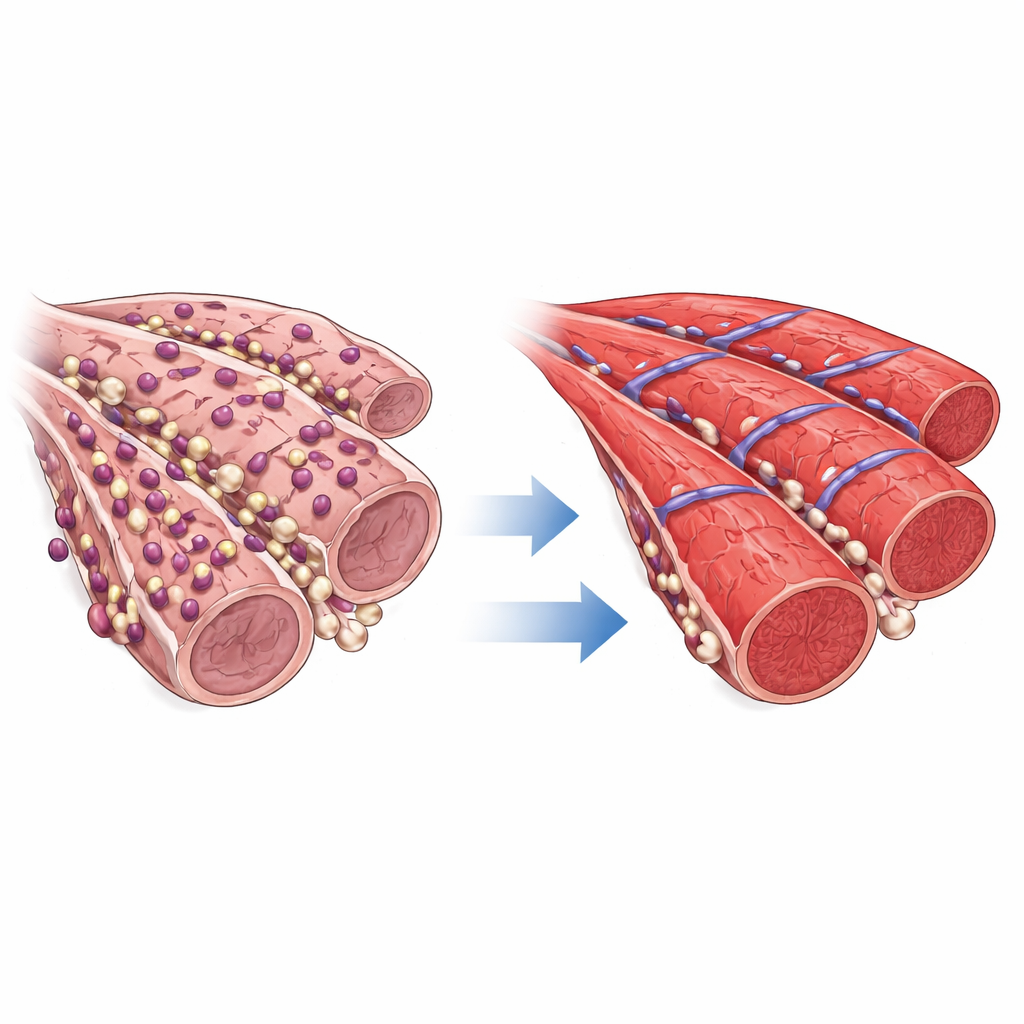
Muscles are not passive victims; they can attempt to repair themselves. The team looked for hallmarks of regeneration, such as fibers with nuclei shifted toward the center and activity of stem-cell related genes. Both muscles showed signs of repair over time, but in different ways and on different schedules. The soleus muscle, in particular, shifted from primarily slow, endurance-type fibers toward a somewhat faster profile after several weeks of infection, a pattern also seen in some wasting diseases. At the same time, the infection stirred up the immune system. Levels of inflammatory molecules such as interleukin-6, interferon-gamma, and tumor necrosis factor rose in the blood and in muscle signaling pathways, especially in ways known to drive muscle breakdown and fatigue.
Exercise training as a protective habit
To test whether fitness could alter this picture, a separate group of mice was put through eight weeks of treadmill endurance training before being infected. These trained animals developed higher aerobic capacity and stronger grip even before encountering the parasite. After infection, something striking happened: while sedentary infected mice lost aerobic capacity and could not hold their grip as long, the exercised infected mice largely maintained these abilities. In their fast tibialis muscles, a key wasting marker dropped back toward normal, suggesting that prior training prevented the most severe muscle breakdown. Importantly, this protection did not come from erasing the parasite itself; parasite levels in muscle and brain were similar whether mice had exercised or not.
Guarding the tiny blood vessels in muscle and brain
Beyond the muscle fibers, the team zoomed in on the smallest blood vessels that feed muscles and the brain. Using live imaging, they saw that infection cut down blood flow and disturbed the normal widening response of vessels in sedentary mice, a sign of microvascular rarefaction and dysfunction. White blood cells stuck to vessel walls more often, reflecting ongoing inflammation. In trained animals, however, muscle and brain blood flow stayed close to normal despite infection, vessels responded properly to signals to widen, and far fewer immune cells clung to the vessel lining. Exercise also shifted the balance of blood-borne immune molecules so that pro-inflammatory signals were not overwhelmingly dominant, even though the body was still mounting a defense against the parasite.
What this means for everyday health
Put simply, this work shows that a common parasite can quietly weaken fast-twitch muscles and damage the fine web of blood vessels in both muscle and brain, even when symptoms are mild. Regular endurance-style exercise, started before infection in this study, does not eliminate the parasite but helps muscles keep their size and function, maintains healthy blood flow, and reins in runaway inflammation. For people, this suggests that staying physically active may be a powerful, low-cost way to build resilience against hidden infections and the muscle weakness, fatigue, and vascular problems they can cause.
Citation: Vieira, P.d.C., Epifânio, C., Horita, S.I. et al. Physical exercise protects against Toxoplasma gondii infection-induced muscle atrophy and microvascular rarefaction. Commun Biol 9, 562 (2026). https://doi.org/10.1038/s42003-026-09810-9
Keywords: toxoplasmosis, skeletal muscle, physical exercise, microcirculation, inflammation