Clear Sky Science · en
Manganese supplementation enhances cnidarian–dinoflagellate symbiosis under thermal stress
Why a Tiny Metal Matters for Coral Survival
Coral reefs around the world are bleaching as ocean heat waves grow more frequent and intense. When corals bleach, they lose the microscopic algae that live inside their tissues and provide most of their food. This study explores an unexpected ally in the fight against bleaching: a trace metal called manganese. By carefully adding small, non-toxic amounts of manganese to a coral stand-in organism, the authors show that this metal can help the partnership between animal and algae survive heat stress.
Hidden Partnership Inside Reef Animals
Reef-building corals, and their close relatives like sea anemones, depend on a tight alliance with photosynthetic algae. The algae live within the animal’s cells, turning sunlight and dissolved nutrients into sugars, fats, and other compounds that feed the host. In return, the animal supplies the algae with carbon dioxide and key nutrients. When temperatures rise too high, this relationship breaks down: the algae’s photosynthetic machinery is damaged, they produce harmful by-products, and the host expels them. The result is bleaching, leaving the animal starved and often dead if heat persists. Understanding what controls this delicate balance is crucial for preserving reefs in a warming world.
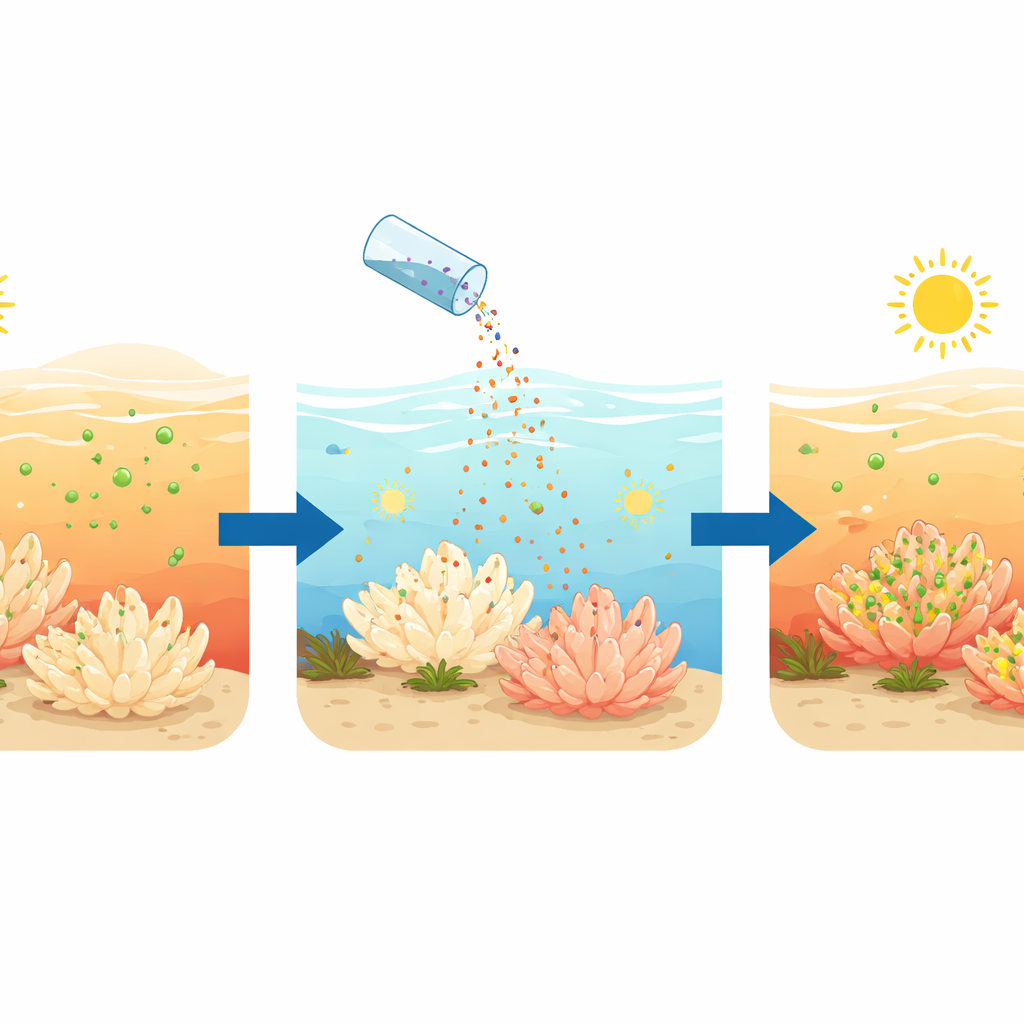
A Gentle Dose of Manganese
Manganese is an essential but very scarce element in clear tropical waters. It is a key component of the photosynthetic machinery that splits water and drives energy capture in algae, and it also supports antioxidant defenses and metabolism. Previous work mostly focused on how high manganese levels can poison corals. In contrast, this study tested whether modest extra manganese, still far below toxic thresholds, could boost thermal tolerance. The researchers used the sea anemone Exaiptasia diaphana, a widely used model for coral biology, and its resident algae Breviolum minutum. They exposed anemones to four manganese levels, spanning natural background up to mildly enriched concentrations, at either normal temperature (26 °C) or heat stress (32 °C). They then tracked algal cell numbers, photosynthetic performance, and thousands of host and algal proteins.
Keeping Algae and Photosynthesis Intact Under Heat
Under heat stress, animals with only background manganese lost many more algal cells and showed a sharper decline in photosynthetic efficiency than those given extra manganese. At the highest non-toxic level tested, the anemones held onto far more algal partners and showed much smaller drops in a key measure of light-use efficiency. Proteomic analyses revealed that, in the algae, manganese supplementation preserved proteins involved in the first steps of photosynthesis and in energy metabolism, while also maintaining enzymes linked to repair and protein folding. In contrast, low-manganese, heat-stressed algae showed reduced levels of crucial photosystem components and metabolic enzymes, and stronger signals of being targeted for removal by the host.
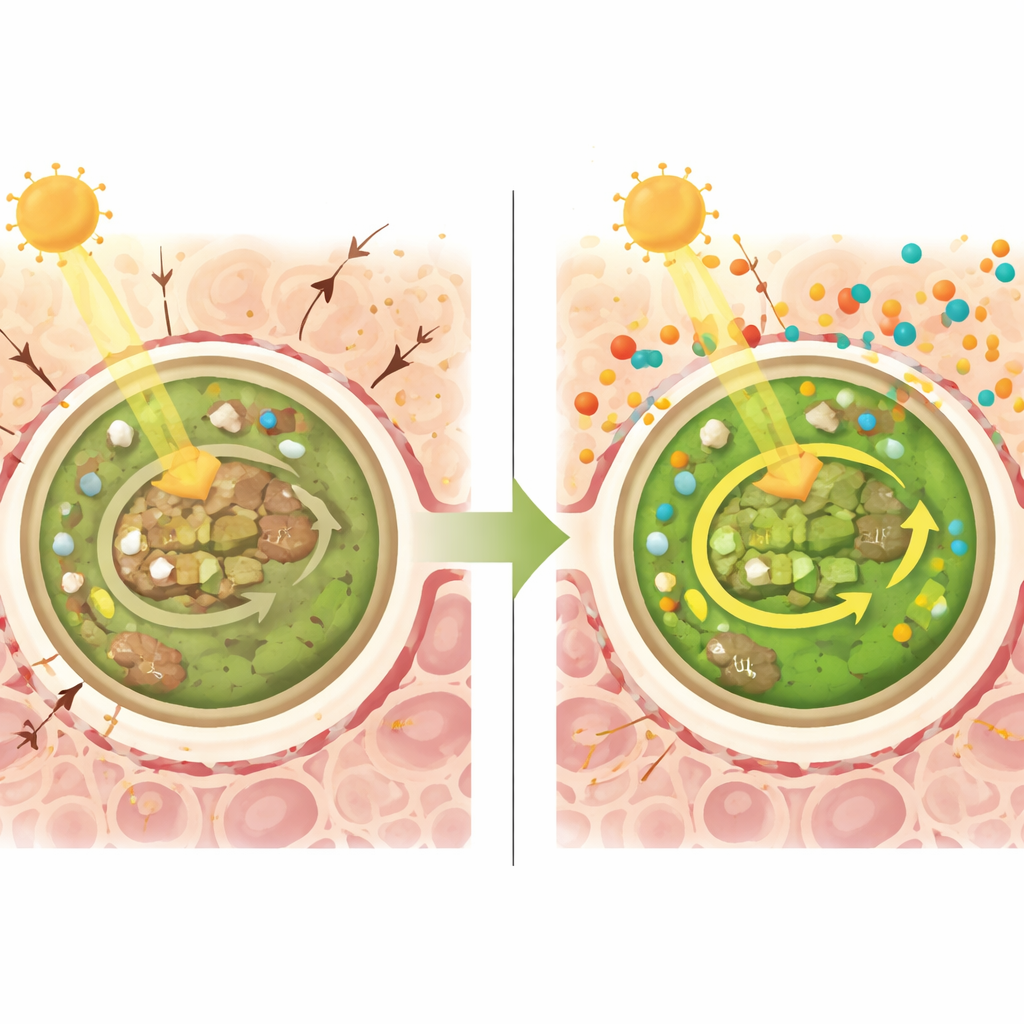
How Manganese Supports the Inner Machinery
Digging deeper, the authors propose a mechanistic chain of events. In normal conditions, the photosynthetic system in the algae is constantly damaged and repaired, a cycle that depends on manganese-rich clusters at its core. Under heat stress and low manganese, these clusters cannot be fully rebuilt, so the light-harvesting machinery degrades, energy flow falters, and downstream metabolic pathways slow. Protective proteins that refold damaged components are less able to keep up, and signals associated with digestion and expulsion of algae increase. With added manganese, the algae retain more of the supporting proteins that stabilize the water-splitting complex, keep energy production running, and maintain the capacity for repair, even though some stress markers still rise. This helps the algal cells continue to function and share resources with their host, reducing the drive toward bleaching.
What This Means for Future Reefs
The study shows that small, carefully controlled increases in manganese can make the algal partners of reef animals more resilient to heat, preserving both photosynthesis and the symbiosis itself. While much remains to be tested in real reefs and with true corals, the work provides a mechanistic blueprint for how a trace metal can shore up the weakest links in the bleaching process. In plain terms, ensuring that these microscopic algae have just enough manganese may help them keep their energy factories running through heat waves, giving coral reef communities a better chance to survive in a warming ocean.
Citation: England, H., Oakley, C.A., Herdean, A. et al. Manganese supplementation enhances cnidarian–dinoflagellate symbiosis under thermal stress. Commun Biol 9, 477 (2026). https://doi.org/10.1038/s42003-026-09748-y
Keywords: coral bleaching, manganese, symbiosis, thermal stress, reef resilience