Clear Sky Science · en
Clemizole inhibits CrtN-driven staphyloxanthin biosynthesis in Staphylococcus aureus to enhance host immune clearance
Turning a Bacterial Shield into a Weak Spot
Antibiotic-resistant staph infections are a growing worry, especially in skin wounds that refuse to heal. This study explores a different way to tackle Staphylococcus aureus: instead of trying to kill the bacteria outright, the researchers strip away one of its protective "shields" so that our own immune system can finish the job. They show that an old allergy drug, clemizole, can disarm staph’s golden pigment and make infections easier for the body to clear.
The Golden Armor of Staph
Staphylococcus aureus often appears as golden colonies in the lab because it produces a bright carotenoid pigment called staphyloxanthin. That color is more than decoration: the pigment sits in the bacterial membrane and acts like a built-in antioxidant, soaking up harmful molecules produced by immune cells. This helps staph survive attacks from neutrophils and macrophages, the front-line defenders that bombard invaders with reactive oxygen and nitrogen species. The pigment also stiffens the bacterial membrane, helping the microbe resist antimicrobial peptides, foster antibiotic resistance, and even assist neighboring species such as Pseudomonas aeruginosa in mixed infections.
Repurposing an Allergy Pill as a Disarming Agent
To find a compound that could safely shut down pigment production, the team screened a library of more than 1,500 FDA-approved drugs. Clemizole, a first-generation antihistamine once used for allergy relief, emerged as a standout. At extremely low concentrations, it sharply reduced staph’s golden color without slowing bacterial growth or showing meaningful toxicity in human cells or insect models. This is crucial for an antivirulence strategy: the goal is to leave the bacteria alive but defenseless, so there is less pressure for them to evolve classical antibiotic resistance.
How Clemizole Knocks Out the Pigment Factory
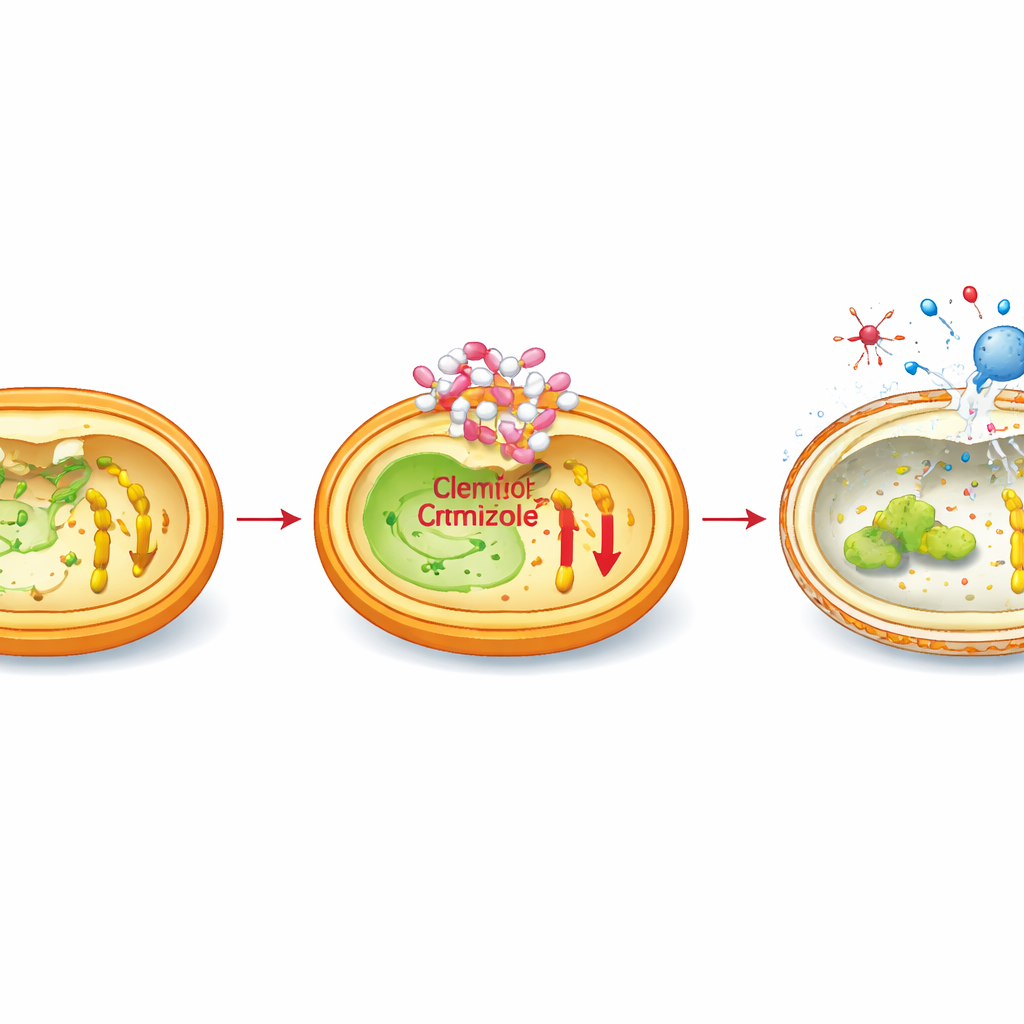
Staphyloxanthin is built step-by-step by a set of enzymes, among them a key player called CrtN. Detailed chemical analyses of bacterial pigments showed that clemizole specifically blocks the stage controlled by CrtN while leaving upstream steps untouched. Purified enzyme assays confirmed that clemizole directly inhibits CrtN’s activity in a dose-dependent way. A series of biophysical tests, including thermal stability measurements, fluorescence changes, and surface plasmon resonance, all pointed to a tight and reversible binding between clemizole and CrtN. Computer modeling suggested that clemizole nestles into the same pocket where the natural pigment precursor binds, occupying a largely oily tunnel inside the protein and preventing the normal reaction from proceeding.
Making Bacteria Easier Prey for Immunity
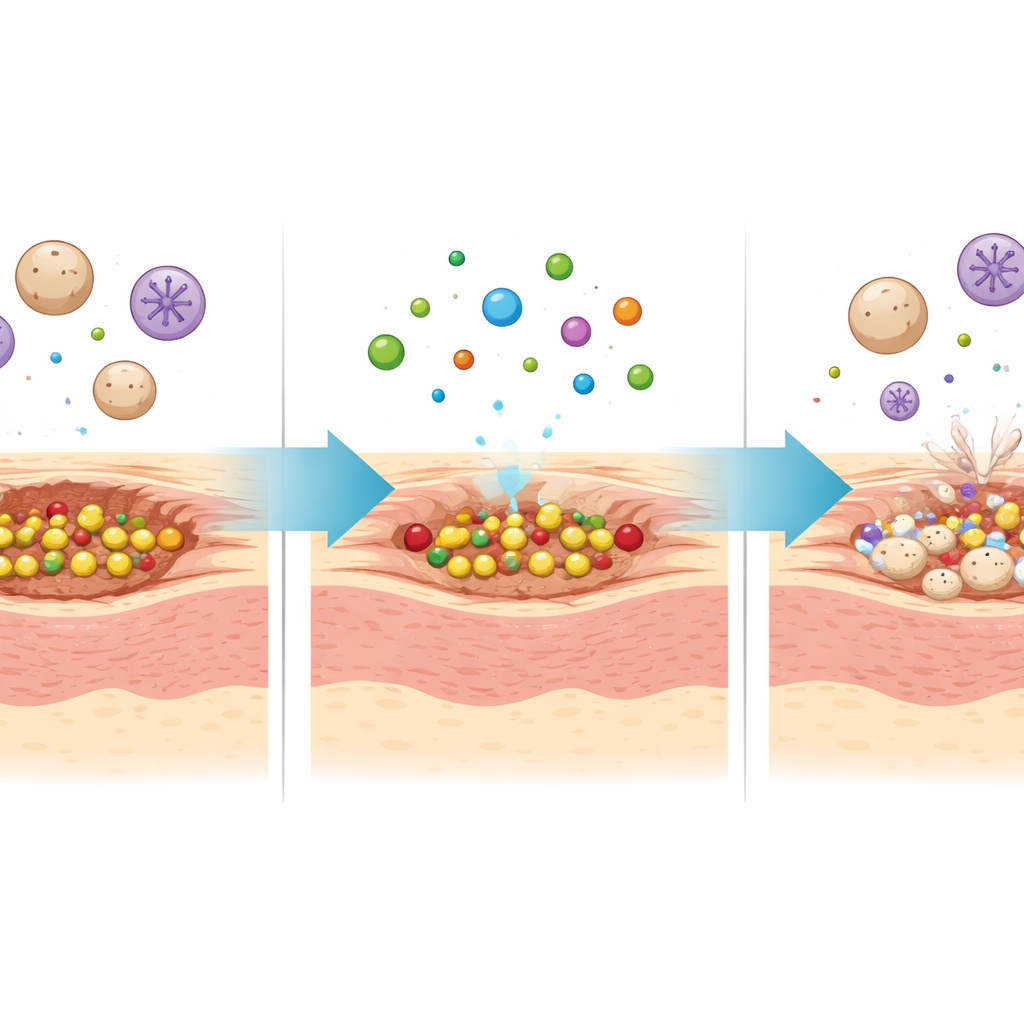
Once its pigment production was blocked by clemizole, S. aureus became far more vulnerable to the body’s defenses. In tests with mouse blood, human immune cells, and hydrogen peroxide, clemizole-treated bacteria were killed more readily than untreated ones. The bacterial membranes became leakier and lost their usual ordered structure, leading to greater loss of proteins and genetic material under oxidative stress. Even when staph was exposed to factors released by Pseudomonas aeruginosa, which normally boost pigment and toughness, clemizole still cut pigment levels and reduced survival. In infected mice with burn-like skin wounds, clemizole treatment lowered bacterial counts, shrank lesion size, reduced inflammatory cell buildup, improved collagen organization, and sped wound closure, performing comparably to a standard antibiotic in these measures.
Why This Strategy Matters for Future Treatments
Instead of acting as a traditional antibiotic, clemizole works as a disarming agent: it takes away staph’s golden armor and allows existing immune tools to work more effectively. Because it does not directly kill the bacteria or halt their growth, it may be less likely to drive rapid resistance. The study also validates CrtN as a promising, bacteria-specific target with no counterpart in human cells, and positions clemizole’s chemical structure as a starting point for safer, stronger antivirulence drugs. For patients with stubborn skin infections, especially those involving drug-resistant strains or mixed bacterial communities, such pigment-blocking strategies could one day complement standard antibiotics and improve healing outcomes.
Citation: Yu, H., Zhang, K., Ge, J. et al. Clemizole inhibits CrtN-driven staphyloxanthin biosynthesis in Staphylococcus aureus to enhance host immune clearance. Commun Biol 9, 484 (2026). https://doi.org/10.1038/s42003-026-09731-7
Keywords: Staphylococcus aureus, antivirulence therapy, staphyloxanthin, clemizole, drug-resistant infections