Clear Sky Science · en
The genetic architecture of human cerebellar morphology supports a key role for the cerebellum in human evolution and psychopathology
Why this tiny brain region matters
The cerebellum, a fist-sized structure tucked under the back of the brain, was long thought to be only a coordinator of movement and balance. This study shows that the cerebellum is also deeply entwined with how our species evolved and with the risk for major mental disorders. By tracing how common genetic differences shape the size and layout of cerebellar regions in tens of thousands of people, the authors reveal that this small structure carries evolutionary signatures unique to humans and shares genetic roots with conditions such as schizophrenia and bipolar disorder.
Reading patterns in the brain’s folds
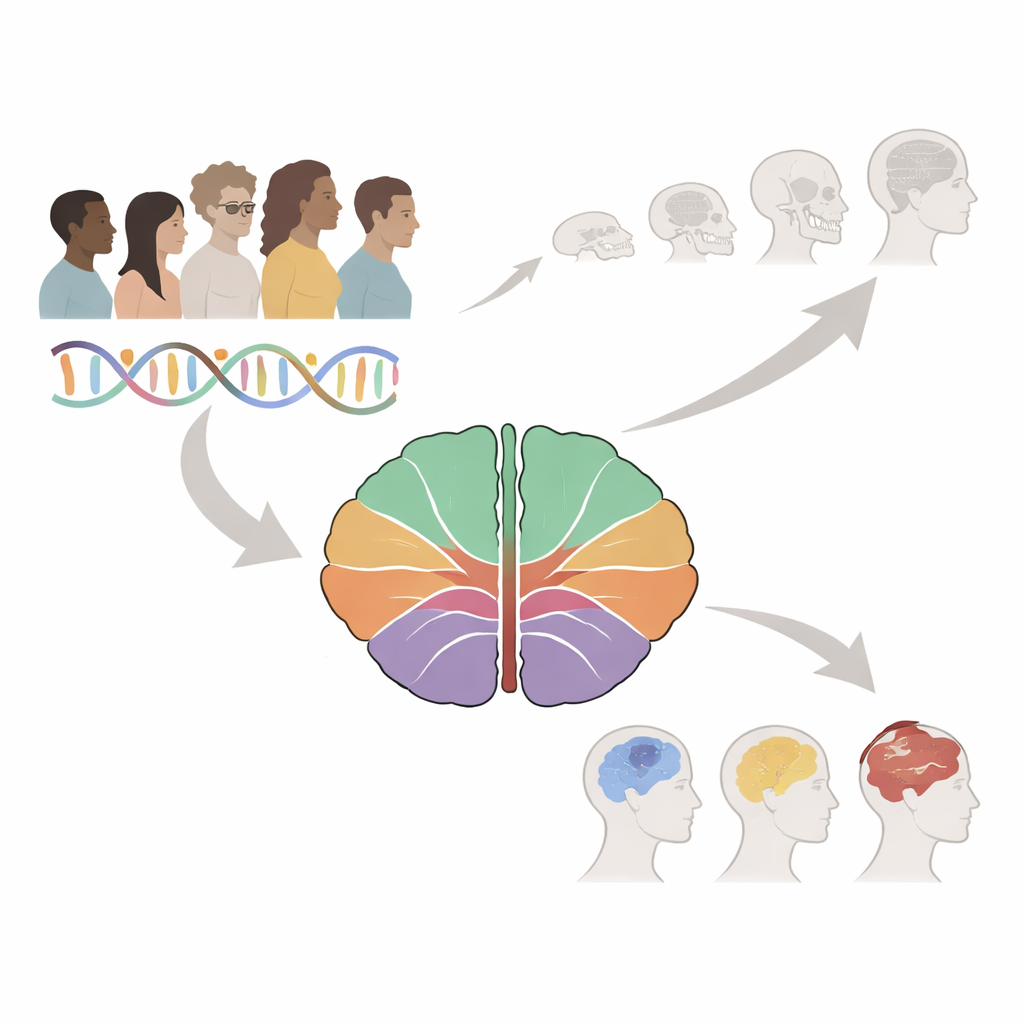
Instead of relying on old anatomical maps, the researchers let the data speak for itself. They used high-resolution MRI scans from more than 28,000 UK Biobank participants to break the cerebellum into 23 regions that naturally vary together in size across people. This data-driven approach showed that the main dividing line in the human cerebellum runs front-to-back along a deep groove called the horizontal fissure, separating upper and lower parts. These regional patterns were strongly influenced by genetics, meaning inherited DNA differences account for roughly one third to almost half of their variation.
Finding hundreds of genetic signposts
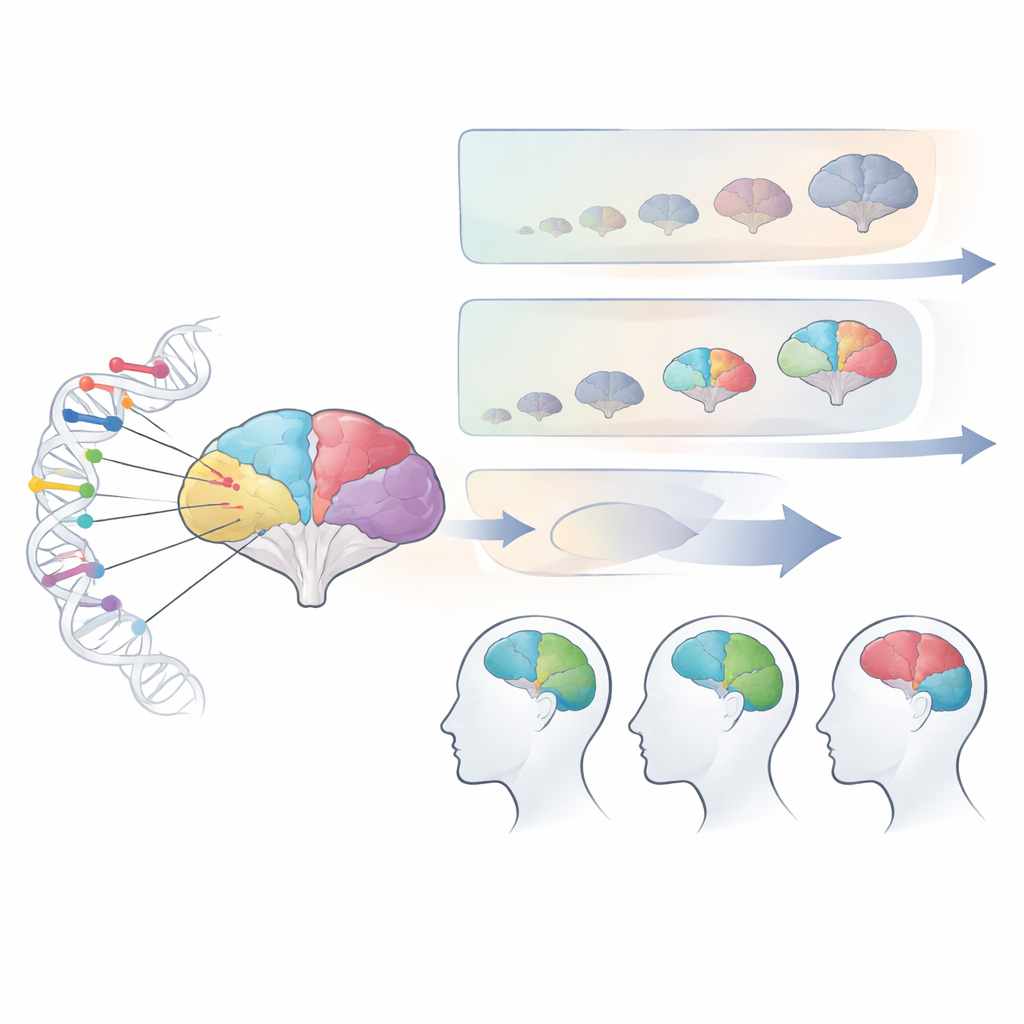
The team then performed a multivariate genome-wide analysis, a method that looks for DNA variants affecting many brain regions at once rather than one at a time. This strategy was far more powerful than traditional single-region tests. It uncovered 351 genetic locations linked to cerebellar structure, about six times more than standard analyses of the same data and roughly 35 times more than studies of total cerebellar volume alone. Most of these locations replicated in an independent sample, and nearly two thirds had not been reported before, revealing a much richer and more distributed genetic landscape than previously appreciated.
Traces of recent human evolution
To ask when these cerebellum-shaping variants arose, the authors compared them with an atlas that estimates the age of millions of DNA changes across the human genome. Variants tied to cerebellar structure were unusually common among mutations that appeared 20,000 to 40,000 years ago, overlapping the Upper Paleolithic period when symbolic art, complex tools, and other hallmarks of “behavioral modernity” emerged. At the gene level, cerebellar variants were enriched in regions of the genome that changed rapidly after humans split from chimpanzees, known as human accelerated regions. Many of the implicated genes are active in the developing brain, especially before birth, and participate in pathways that guide neuron growth and wiring, notably the Reelin signaling pathway.
Links to mental health and disease
The same genetic variations that sculpt the cerebellum also intersect with risk for common psychiatric conditions. Using statistical methods that detect shared genetic influences, the researchers identified dozens of DNA regions jointly associated with cerebellar structure and schizophrenia or bipolar disorder, and smaller but clear overlaps with depression, attention-deficit/hyperactivity disorder, and autism. Overall, genetic factors that increase risk for these disorders tended to be associated with slightly smaller cerebellar regions. Several of the shared genes again pointed to the Reelin pathway, which is already implicated in brain development and in a range of neurodevelopmental and psychiatric syndromes.
What this means for our understanding of the brain
Taken together, the findings portray the human cerebellum as both a product and a driver of our evolutionary story. Genetic changes that fine-tuned its shape and internal architecture over the last several hundred thousand years likely supported more flexible thinking, language, and social behavior, alongside more precise movement. The same genetic networks that built this expanded cerebellum now help explain why some people are more vulnerable to mental illness. Rather than a simple “motor control box,” the cerebellum emerges as a central hub whose development, structure, and disorders are tightly linked to the genetic forces that made the human brain unique.
Citation: Moberget, T., van der Meer, D., Bahrami, S. et al. The genetic architecture of human cerebellar morphology supports a key role for the cerebellum in human evolution and psychopathology. Commun Biol 9, 445 (2026). https://doi.org/10.1038/s42003-026-09664-1
Keywords: cerebellum, brain evolution, genetics, psychiatric disorders, brain imaging