Clear Sky Science · en
Integration of multiomic and multi-phenotypic data identifies biological pathways associated with physical fitness
Why Peak Performance Is More Than Just Training Hard
Some people seem naturally built for demanding physical challenges, from elite sports to military service. This study asks a simple but powerful question: can we read a person’s “hidden biology” to understand why some bodies perform so well—and even predict who will excel—using only a small group of volunteers? The authors combine detailed fitness tests with deep biological measurements to show that our blood chemistry and cellular machinery reveal networks of processes linked to high performance.
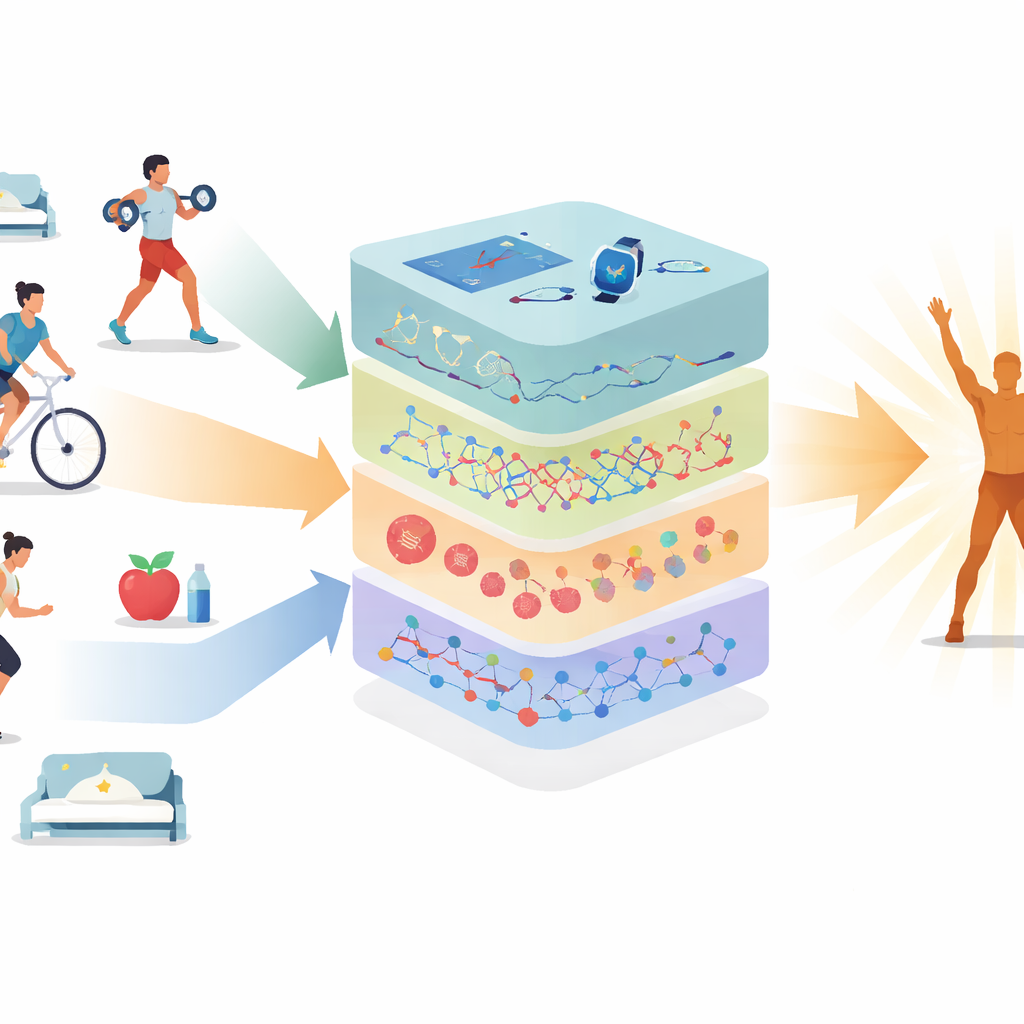
Following Cadets Through Workouts and Daily Life
The researchers followed 86 highly active cadets at the U.S. Military Academy over three months. All were already fit and undergoing intense training. Each cadet completed the Army Combat Fitness Test, a demanding six-part exam that includes lifting, sprinting with loads, and a timed run, scored up to 600 points. Sixty percent of the men in this study scored above 540—a threshold the Army views as exceptional—so the team was probing differences among already high performers. Alongside these tests, the cadets wore devices to track sleep and daily activity, completed cognitive and personality assessments, and cycled in the lab at a fixed fraction of their maximum oxygen uptake while researchers drew blood before and after exertion.
Turning Thousands of Measures Into a Coherent Picture
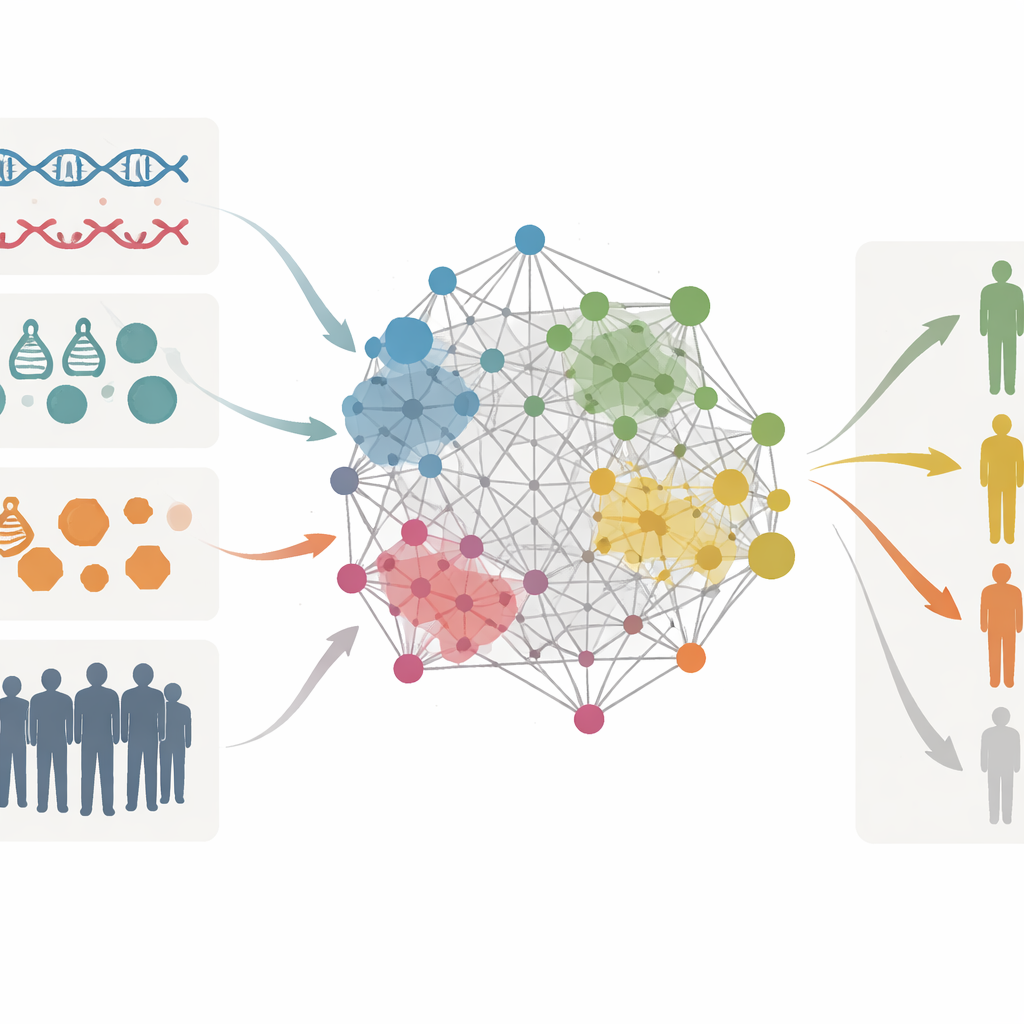
From the blood alone, the team captured more than 50,000 molecular measurements: DNA methylation marks, gene activity, proteins, metabolites, and immune and clinical markers. A classic statistical approach might search each molecule one by one for correlations with fitness scores, but with so many variables and only dozens of people, this almost guarantees noisy, misleading hits. Instead, the authors built a framework they call PhenoMol, which starts by asking which molecules show even modest links to fitness and then weaves those candidates into known maps of how genes, proteins, and metabolites interact in human biology. Using tools from graph theory, the method trims away isolated signals and preserves groups of molecules that form connected “expression circuits” plausibly tied to performance.
Networks That Predict Who Will Excel
With these circuits in hand, the team trained models to predict each cadet’s fitness score. Compared to models that ignored network information and simply tried to select the best individual molecules, the PhenoMol models were meaningfully more accurate, even though they used far fewer features. The network could also be broken into modules—tightly knit clusters of molecules—that each captured a different biological theme. When these modules were combined into “ensemble” models, they predicted total fitness scores about as well as models built only from traditional measures such as body composition, oxygen uptake, and sleep. Notably, the predictions were strongest for already high-performing cadets, reflecting that the cohort contained relatively few low scorers.
What the Body’s Pathways Reveal About High Fitness
Because PhenoMol is rooted in known biology, the authors could interpret which pathways mattered most. They found strong signals in systems involved in blood clotting and immune defense, in the processing of bile acids that influence muscle metabolism, and in pathways handling amino acids such as arginine, proline, and tryptophan. These processes connect to blood flow, energy use, muscle repair, and resilience to stress—key ingredients of sustained performance. Molecules related to the urea cycle, which helps clear fatigue-associated ammonia, also tracked with better scores. Rather than single “magic” biomarkers, the results highlight coordinated shifts across multiple pathways that together distinguish higher performers from their peers.
From Molecular Circuits to Personalized Training
In plain terms, this study shows that it is possible to use deep but noisy molecular data from a relatively small group of people to uncover biologically sensible patterns that predict physical fitness. By embedding measurements in known interaction networks, PhenoMol sifts signal from noise and points to concrete pathways—such as immune responses, bile acid signaling, and nitrogen handling—that may help explain why some individuals perform and recover better. The authors argue that this general approach could guide personalized training, nutrition, and recovery plans, and could be adapted to other areas such as wellness, disease risk, or rare conditions where only small cohorts can be studied.
Citation: Alizadeh, A., Graf, J., Misner, M.J. et al. Integration of multiomic and multi-phenotypic data identifies biological pathways associated with physical fitness. Commun Biol 9, 464 (2026). https://doi.org/10.1038/s42003-026-09663-2
Keywords: physical fitness, multi-omics, biomarkers, exercise biology, systems biology