Clear Sky Science · en
Bone marrow endosteum houses Hedgehog-susceptible Dlx5-expressing osteoblast precursor cells
Why Bone-Building Cells Matter
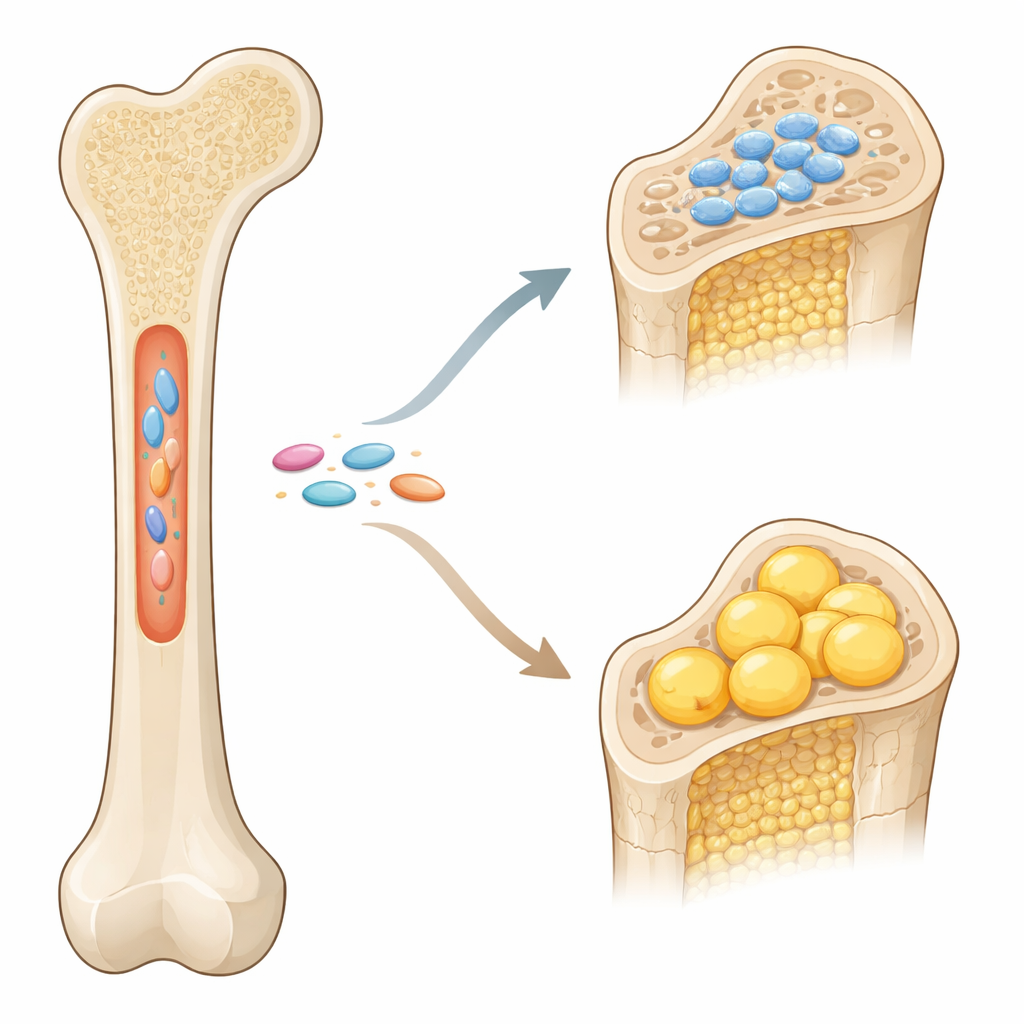
Our bones are constantly renewing themselves, especially while we grow. Hidden inside them is a bustling community of cells that decide whether new bone is formed, old bone is repaired, or—even more surprisingly—fat is stored. This study reveals a previously underappreciated group of such cells on the inner surface of bone and shows how a powerful chemical signal can flip their fate from bone-makers to fat-storers, with serious consequences for bone strength.
Hidden Helpers on the Inner Bone Surface
On the inside of long bones, just beneath the hard outer shell, lies a delicate interface called the endosteum. It is a key base camp for cells that build and maintain bone. The researchers focused on cells marked by a gene called Dlx5, which had been known to guide early bone development in embryos but whose role after birth was unclear. Using genetically engineered mice in which Dlx5-marked cells glow under the microscope, the team traced where these cells live and what they become over time.
From Precursors to Bone and Support Cells
By giving young mice a timed pulse of a drug that permanently labels Dlx5-expressing cells and their descendants, the scientists followed these cells from early life through adulthood. Soon after labeling, Dlx5-positive cells were found hugging the inner bone surface but were not yet fully mature bone cells. Over the next days and weeks, many of them turned into classic bone-forming cells and the embedded cells inside hardened bone, especially in the spongy interior near the growing ends of the bones and in the sturdy outer cortical layer. They also gave rise to delicate, web-like support cells in the marrow that help nurture blood-forming cells. Interestingly, their contribution to rapidly remodeling spongy bone waned with age, but they continued to feed the pool of cortical bone cells and marrow support cells for many months.
Comparing Different Bone-Building Families
The endosteum hosts more than one family of stem-like cells. Another well-studied group, marked by a receptor called Fgfr3, can generate both bone and cartilage-like cells. To see how Dlx5-marked cells fit into this family tree, the team used single-cell RNA sequencing—a technique that reads out the active genes in thousands of individual cells. They found that Dlx5-derived cells populate the same broad compartments as Fgfr3-derived cells: true bone-forming cells and two types of marrow support cells, one leaning more toward bone traits and one more toward fat traits. But there was a key difference: descendants of Fgfr3 cells often carried a mixed bone–cartilage identity, while those from Dlx5 cells were more firmly aligned with mature bone features. This suggests that even within the same niche, cells carry a lasting memory of their developmental origins, which shapes how they behave.
When a Growth Signal Goes Wrong
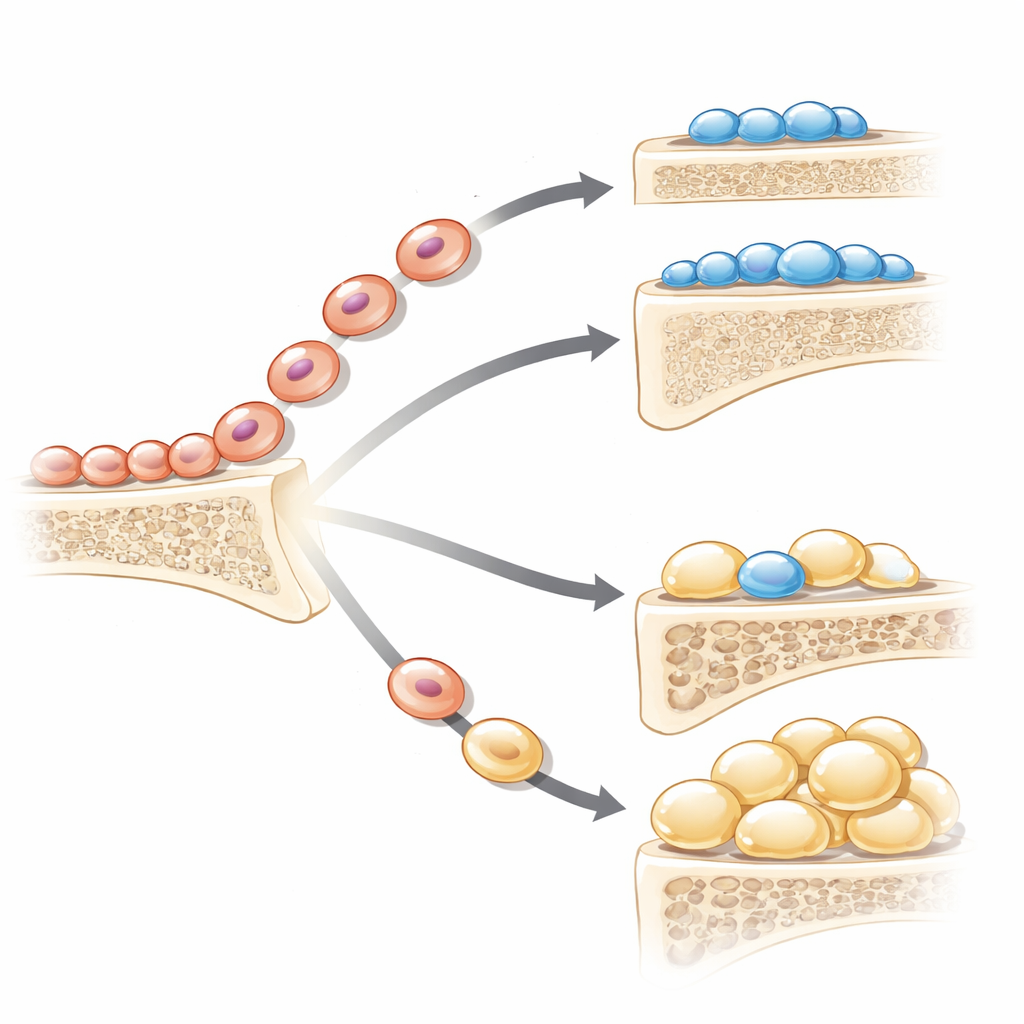
The story takes a surprising turn with a signaling pathway known as Hedgehog, which is famous for its role in shaping the skeleton in the embryo. The authors asked what happens if this pathway is permanently switched on specifically in Dlx5-marked precursor cells after birth. Using genetic tricks, they removed a molecular “brake” on Hedgehog signaling in these cells or forced a key Hedgehog relay protein to stay active. Instead of boosting bone, this persistent signal thinned the cortical shell and the spongy interior of the bones. Many mice developed spontaneous fractures in their lower legs around the time they began walking, and the usual healing response was weak. Microscopy and further analysis revealed why: Dlx5-lineage cells were no longer reliably becoming bone-forming cells. Instead, many matured into fat cells filling the marrow space, while bone-forming cells and embedded bone cells decreased.
What This Means for Bone Health
This work identifies Dlx5-marked cells on the inner bone surface as a crucial, long-lived source of new bone cells and supportive marrow cells. It also shows that these cells are unusually sensitive to Hedgehog signaling: when that pathway stays on at the wrong time, they are pushed away from building bone and toward storing fat, leaving bones thin and fragile. For non-specialists, the key message is that bone health depends not only on how much bone is turned over, but on how specific precursor cells are steered down one developmental path or another. Understanding these switches could help explain why bones sometimes lose density and fill with fat with age or disease, and may point toward future strategies to keep our skeletons stronger for longer.
Citation: Kondo, K., Matsushita, Y., Orikasa, S. et al. Bone marrow endosteum houses Hedgehog-susceptible Dlx5-expressing osteoblast precursor cells. Commun Biol 9, 498 (2026). https://doi.org/10.1038/s42003-026-09649-0
Keywords: bone marrow, osteoblast precursors, Hedgehog signaling, bone fragility, marrow adipocytes