Clear Sky Science · en
Comparative analysis of milk and brain fatty acids reveals human-specific signatures in brain development
Milk, Brains, and Early Life
Parents are often told that breast milk is good for a baby’s brain, but the reasons usually remain vague. This study looks under the hood by comparing the fats in milk and the fats in the brains of several mammals, including humans. By tracking these tiny molecules across species, the researchers uncover how human milk appears specially tuned to fuel the growth of the parts of the brain that support thinking, planning, and learning.
What the Scientists Measured
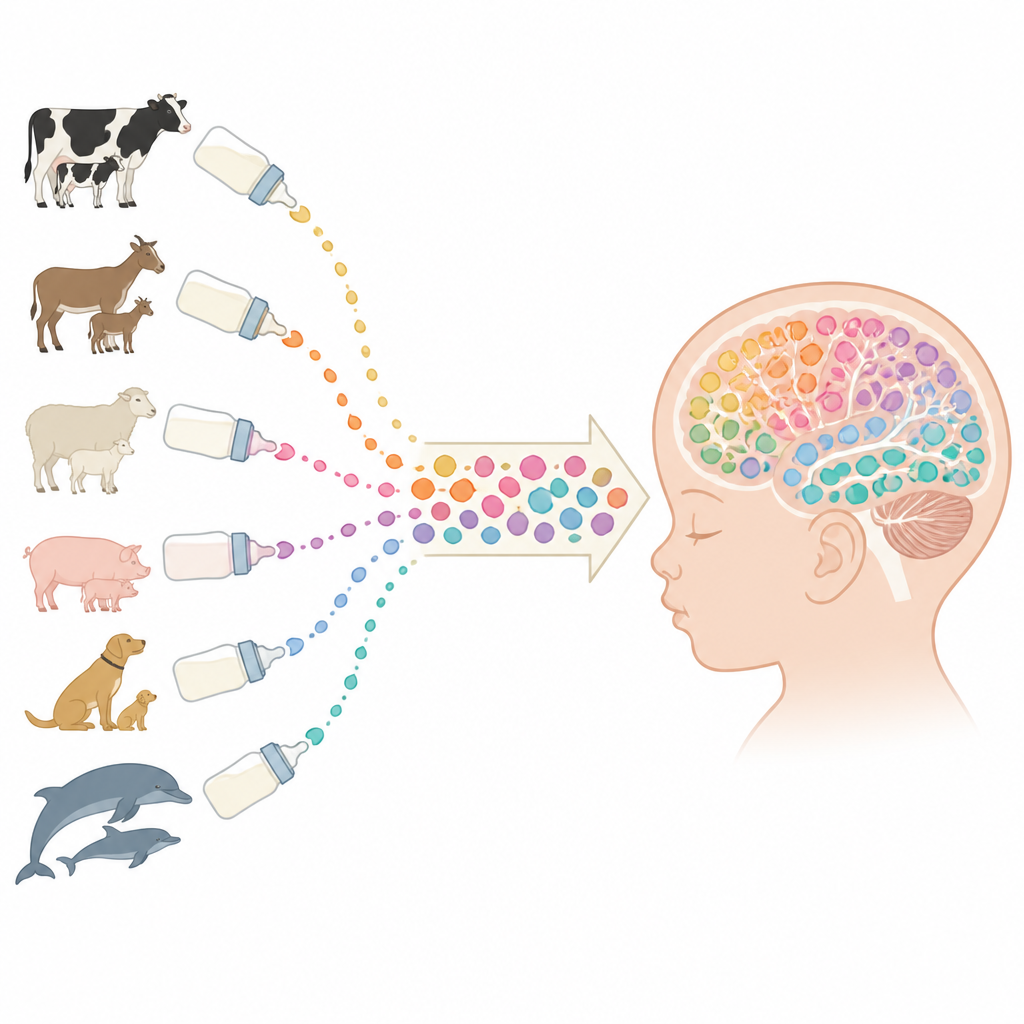
To connect diet to brain growth, the team analyzed 837 milk samples from humans, monkeys, cows, goats, pigs, and yaks, as well as commercial infant formula. They also measured fats in 194 brain samples from newborn humans, chimpanzees, macaques, goats, and pigs. Using sensitive mass spectrometry, they identified dozens of fatty acids in both milk and brain tissue and compared how common each one was across different species and brain regions, focusing on the prefrontal cortex and cerebellum, which mature rapidly after birth.
Patterns Shared Across Mammals
Despite the wide range of species and lifestyles, there was a clear overall pattern: the mix of fatty acids in milk matched the mix in the developing brain. Species whose brains contained more of certain unsaturated fats also tended to have more of those same fats in their milk. This link was strongest in humans and macaques, particularly for the prefrontal cortex and during the first four weeks after birth. In that early window, week-by-week changes in human milk closely tracked changes in macaque brain fats, suggesting that early milk supply is finely tuned to support rapid brain growth.
What Makes Human Milk Stand Out
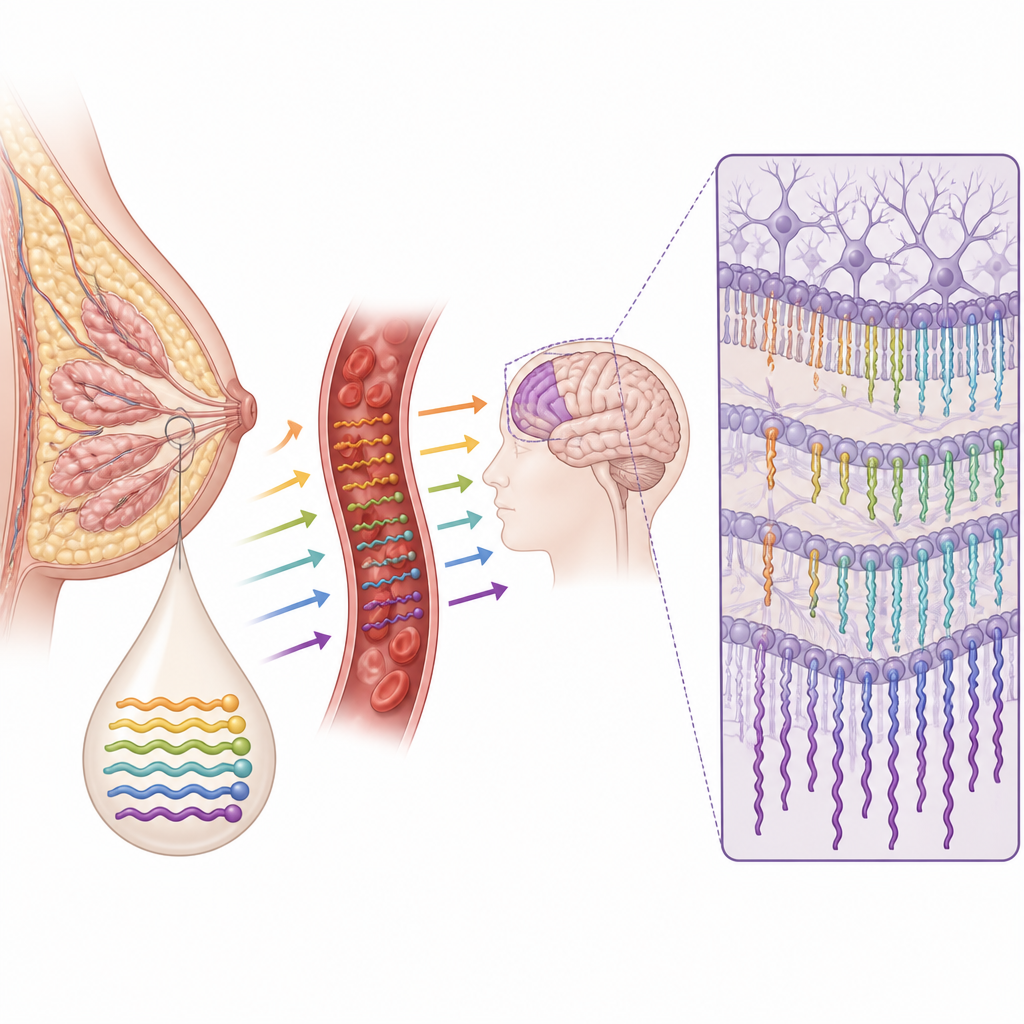
When the researchers zoomed in on which fatty acids differed between species, human milk and human infant brains showed a unique signature. Humans were enriched in very long and ultra long unsaturated fatty acids, containing 24 or more carbon atoms. These rare fats were especially abundant in early human milk and increased with age in the human brain. Earlier work suggests that such long-chain fats help keep cell membranes flexible and support the formation and function of synapses, the contact points where brain cells communicate. This pattern hints that human milk may have evolved to deliver an extra supply of these special fats to support the extended development of the human brain.
How Other Milks and Formula Compare
The study also revealed strong differences among animal milks. Cow, goat, and yak milks were richer in shorter, more saturated fats, which are associated with rapid body growth rather than brain specialization. Pig milk was enriched in a different set of unsaturated fats. Human and monkey milks, in contrast, tilted strongly toward polyunsaturated fats known to support neural tissue. Infant formula, which is often based on cow’s milk, clustered between human and bovid milks but closer to the bovids, emphasizing that its fatty acid mix still differs from that of human milk, particularly for the longest unsaturated chains.
What This Means for Early Development
The close match between milk and brain fats across species, together with the distinct profile of human milk, supports the idea that milk has evolved partly to meet the brain’s needs. For humans, the strong alignment with the prefrontal cortex and the early weeks of life suggests that breast milk may be especially important for the growth of brain regions linked to complex thought. The work does not test health outcomes directly but provides a biochemical map that future studies can use to explore how particular fats influence brain wiring and how infant formulas might be adjusted to more closely resemble the fatty acid patterns found in human milk.
Citation: Mitina, A., Wang, Y., Mair, W. et al. Comparative analysis of milk and brain fatty acids reveals human-specific signatures in brain development. Commun Biol 9, 631 (2026). https://doi.org/10.1038/s42003-025-09401-0
Keywords: breast milk, fatty acids, brain development, infant nutrition, human evolution