Clear Sky Science · en
Systematic review and meta analysis of chatbots in the management of depressive and anxiety symptoms
Why talking machines for mood matter
Mental health problems like depression and anxiety affect hundreds of millions of people worldwide, yet many never receive care because of cost, distance, or stigma. In recent years, mental health chatbots have appeared in apps and websites, promising round the clock, low cost support. This article asks a practical question that concerns anyone curious about these digital helpers: Do mental health chatbots actually help people feel less depressed or anxious, and for whom are they most useful?

What the researchers set out to learn
The authors conducted a systematic review and meta analysis, which means they searched the scientific literature, selected only the most rigorous randomized controlled trials, and pooled the results. They focused on two very specific outcomes that matter directly to people using these tools: changes in symptoms of depression and anxiety, measured with standard questionnaires. To keep the comparison fair, they included only studies where a chatbot was the main part of the intervention and was tested against some form of control group, such as usual care, information only material, or wait list conditions.
How the studies were chosen and combined
Using five major medical and psychological databases, the team searched for trials published from 2017 to late 2025, a period when modern artificial intelligence and large language models began to influence chatbot design. Out of more than 14,000 records, 39 studies met the strict inclusion criteria. Together, these trials involved over 7,400 people for depression outcomes and more than 7,600 for anxiety outcomes, across countries such as the United States, China, Japan, and several others. Some participants had diagnosed mental health conditions, some had mild to moderate symptoms, and others were from the general population without clear clinical problems. The chatbots themselves varied, from rule based systems that select prewritten responses to newer generative models that craft replies on the fly.
What the results say about benefits
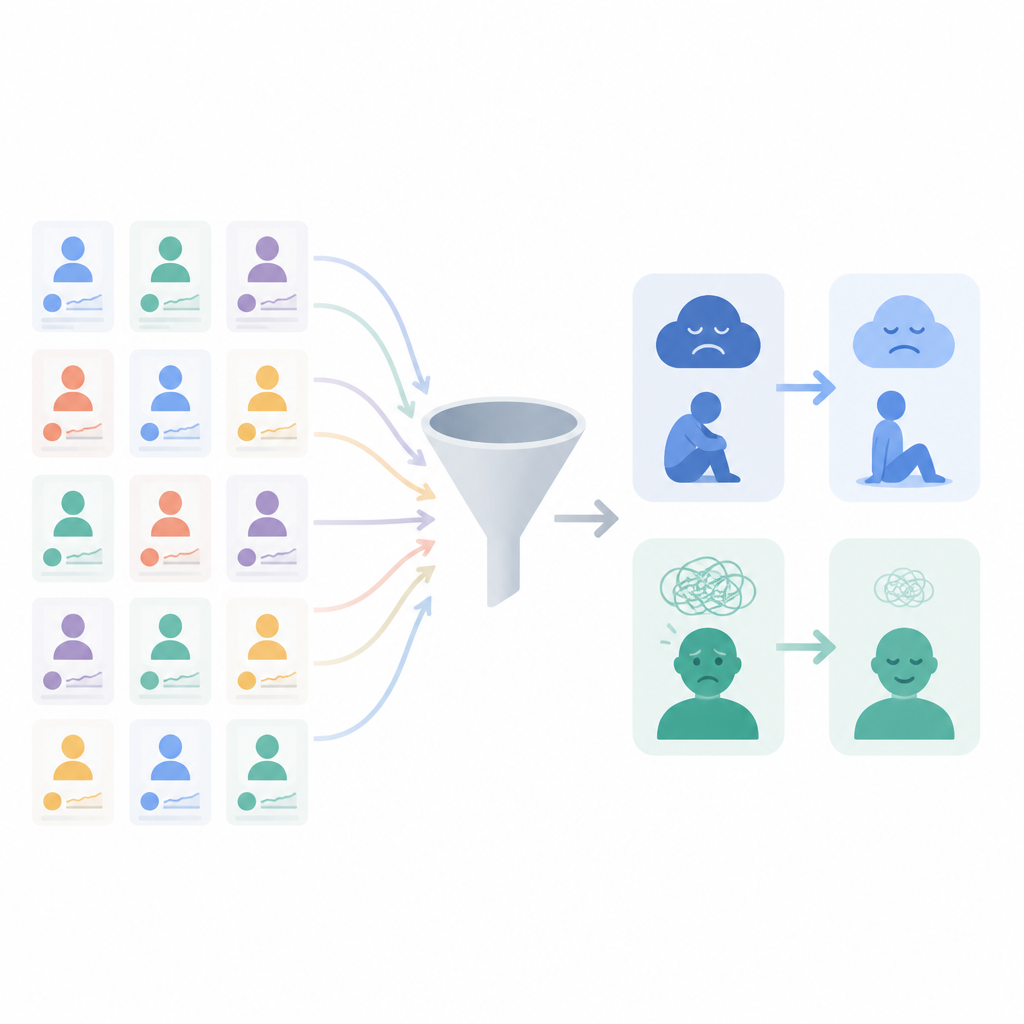
When the data from all trials were pooled, people who used mental health chatbots showed small but statistically reliable reductions in both depressive and anxiety symptoms compared with those in control groups. In everyday terms, chatbots did not erase emotional difficulties, but on average they nudged users in a better direction. The benefit was not the same for everyone. The improvement in depressive symptoms was clearly larger for people who already had clinical depression or at least notable distress, and smaller for those who started with few or no symptoms. For anxiety, the overall pattern was similar, but the evidence for differences between groups was less clear. Importantly, the type of chatbot, whether older retrieval based systems or newer generative ones, did not yet show a clear winner in these trials.
Gaps, safety issues, and unanswered questions
Despite the encouraging signal, the review uncovered important caveats. Most trials relied on people rating their own symptoms, which can exaggerate perceived changes. Many studies were judged to have a high risk of bias because participants could tell whether they were chatting with a bot or not, which might influence how they answered questionnaires. The trials also differed widely in design, length, and comparison groups, making it harder to draw very precise conclusions. Safety monitoring was often minimal or poorly reported; only a minority of studies described clear procedures for handling crises such as suicidal thoughts or for correcting harmful chatbot replies.
What this means for people considering chatbots
Overall, the evidence suggests that mental health chatbots can offer a modest helping hand, especially for people who are already struggling with depression or anxiety and may be waiting for or supplementing traditional care. They appear less useful as generic wellness tools for people who are already feeling emotionally well. The authors argue that future systems should be more tailored to individual symptom levels, use better outcome measures, and pay far more attention to safety and long term follow up. For the public, the takeaway is that chatbots are not a cure or a substitute for professional care, but they can play a supportive role when designed, tested, and monitored with the same care expected of other health tools.
Citation: Sohn, JS., Ha, BG., Park, S. et al. Systematic review and meta analysis of chatbots in the management of depressive and anxiety symptoms. npj Digit. Med. 9, 377 (2026). https://doi.org/10.1038/s41746-026-02566-w
Keywords: mental health chatbots, depression support, anxiety management, digital therapy, large language models